Enel SpA’s Share Repurchase and Its Implications for the Italian Energy Landscape
Enel SpA has completed a buy‑back program that began in February, acquiring nearly 30 million shares on both the regulated market and multi‑liability platforms during a brief window at the end of March. Combined with the approximately 107 million shares previously purchased, the utility now holds roughly 2.4 % of its own equity. The transaction coincided with a moderate uptick in Enel’s market value, with the stock rising about three percent on the Milan exchange. The company’s performance remains robust across broader indices, where it ranks among the top performers in both the STOXX 50 and Euro STOXX 50.
Although the share repurchase itself is a purely financial maneuver, it must be viewed within the broader context of Enel’s strategic objectives in a rapidly evolving power sector. The company’s financial confidence, as evidenced by the buy‑back, underpins its ongoing commitments to modernizing grid infrastructure, integrating renewable energy, and enhancing overall grid stability.
Grid Stability and Renewable Integration
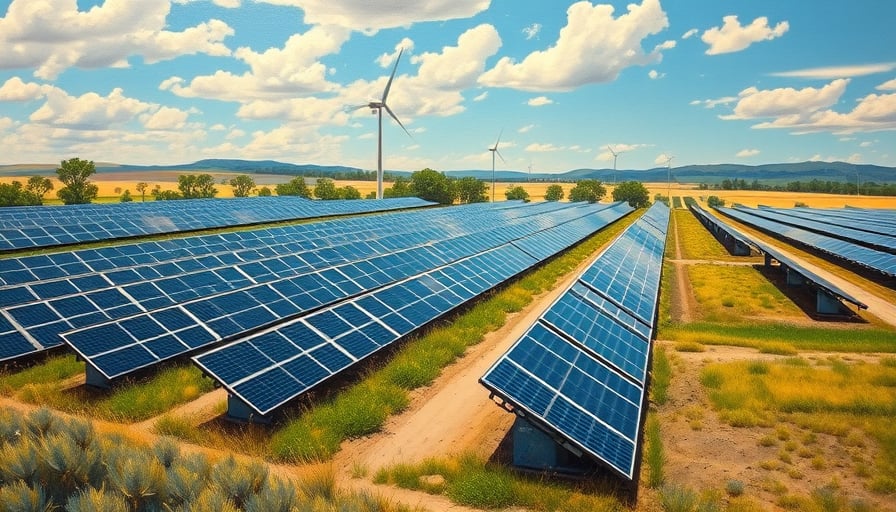
Italy’s electricity system is undergoing a profound transformation driven by an aggressive shift toward renewable generation. Enel’s portfolio now includes significant solar and wind installations that contribute to a higher penetration of variable renewable energy (VRE). The integration of VRE introduces intermittency and reduced predictability, which can jeopardize grid stability if not managed with advanced control systems and flexible generation assets.
To mitigate these risks, Enel is investing in high‑capacity transmission lines and sub‑stations that enhance inter‑regional power flows. These upgrades increase the system’s ability to balance supply and demand in real time, reducing the probability of frequency excursions. Moreover, Enel’s deployment of energy storage systems—ranging from pumped hydro to large‑scale battery arrays—provides a buffer that can absorb excess generation during peak renewable output periods and discharge during low‑generation intervals.
Transmission and Distribution Modernization
The transition to a more renewable‑heavy grid necessitates substantial upgrades to both transmission and distribution networks. Transmission corridors must support higher power transfer capacities to accommodate cross‑border flows, especially from southern regions where solar irradiance is strongest. Enel’s planned upgrades to the 400 kV backbone include the installation of phase‑shifting transformers and advanced monitoring equipment, allowing for more efficient power dispatch and reduced losses.
At the distribution level, the proliferation of distributed energy resources (DERs) such as rooftop photovoltaics and electric vehicles imposes new challenges. Enel is deploying smart‑grid technologies that facilitate two‑way power flows and dynamic load management. These systems rely on high‑speed communication protocols and predictive analytics to anticipate demand shifts and optimize voltage regulation. Such measures are essential to prevent reverse power flows that can damage older equipment and undermine voltage stability.
Regulatory Frameworks and Rate Structures
Italy’s regulatory environment, overseen by the Autorità di Regolazione per Energia Reti e Ambiente (ARERA), sets the parameters within which Enel must operate. Recent reforms have introduced incentives for renewable integration, including feed‑in tariffs and market participation schemes that reward flexibility services. Enel’s financial strategy, highlighted by the buy‑back, signals its capacity to capitalize on these incentives while maintaining fiscal discipline.
Rate structures in Italy are gradually evolving to reflect the changing cost of electricity generation and network investments. The “Tariffa di Rete” (network tariff) has been revised to include components that cover the cost of new transmission projects and grid modernization. Enel’s investment in infrastructure is expected to be reflected in modest rate adjustments over the medium term. However, the regulatory framework aims to balance investment recovery with consumer protection, ensuring that price increases remain within acceptable bounds.
Economic Impacts of Utility Modernization
Modernizing Italy’s power infrastructure yields both direct and indirect economic benefits. Directly, the construction of new transmission lines and the deployment of smart grid technologies create jobs in engineering, construction, and IT sectors. Indirectly, a more reliable and efficient grid reduces the economic costs associated with blackouts, improves industrial competitiveness, and attracts foreign investment in the clean‑energy sector.
Enel’s buy‑back can be interpreted as a reinforcement of shareholder value, signaling confidence in the utility’s long‑term profitability despite the substantial capital expenditures required for grid upgrades. The modest increase in share price reflects market optimism that Enel’s investment strategy will translate into sustainable earnings growth, driven by the demand for renewable integration services and grid resilience solutions.
Engineering Insights into Power System Dynamics
From an engineering standpoint, the successful integration of VRE relies on precise control of power flows and system inertia. Enel’s strategy incorporates synchronous condensers and flywheel energy storage to augment system inertia, thereby enhancing the grid’s response to sudden disturbances. Moreover, the use of phasor measurement units (PMUs) across critical nodes allows for real‑time monitoring of system stability indicators such as voltage magnitude, frequency, and rotor angle.
These technologies facilitate the implementation of automatic generation control (AGC) and voltage regulation schemes that maintain system reliability at all times. By aligning investment in these advanced tools with regulatory incentives, Enel positions itself as a leader in delivering a resilient and sustainable energy transition.
Conclusion
Enel’s ongoing share repurchase program demonstrates the company’s confidence in its valuation and its capacity to fund the extensive infrastructure investments required for Italy’s evolving energy landscape. The financial maneuver serves as a foundation for continued investment in transmission upgrades, smart grid deployment, and renewable integration. Within the framework of Italy’s regulatory environment, Enel’s strategy balances economic viability with the imperative to deliver a stable, resilient, and low‑carbon power system for consumers and industry alike.