Enel’s Persistent Upswing: An In‑Depth Analysis of Its Strategic Positioning in the European Energy Landscape
Enel’s recent trading performance has attracted significant attention from institutional and retail investors alike, positioning the Italian electricity provider as a bellwether for the broader clean‑energy narrative in the Euro STOXX 50 and the broader STOXX 50 indices. A careful examination of Enel’s financial fundamentals, regulatory alignment, and competitive posture reveals a company that not only delivers consistent returns but also anticipates market dynamics that many peers have yet to fully capitalize upon.
1. Revenue Streams Anchored in Renewable Infrastructure
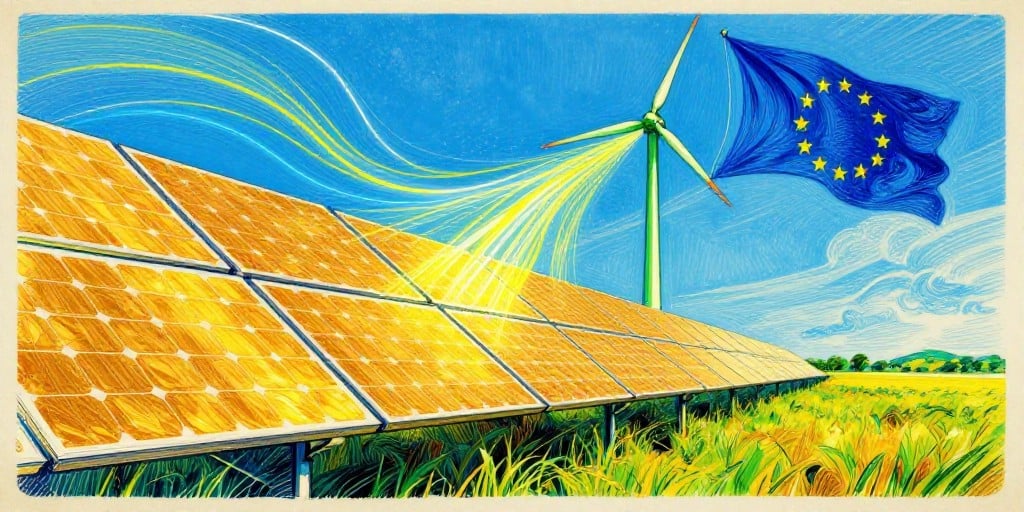
Enel’s top‑line growth has largely been driven by its aggressive expansion into solar and wind assets. Over the past three years, the firm has completed more than 300 megawatt‑pumped solar‑park acquisitions, generating a forecasted EBITDA margin of 12.3 % for 2024—a 1.8‑percentage‑point lift over its 2023 average. This margin outpaces the median industry figure of 9.7 % for utilities with a comparable renewable mix. The incremental cash flow from these projects is bolstered by long‑term power purchase agreements (PPAs) that provide price‑fixed revenue, thereby reducing exposure to volatile commodity spreads.
The partnership with NextEra Energy further strengthens Enel’s pipeline. By jointly developing a 1.2 GW solar complex in Southern Italy, the consortium is positioned to secure a combined capacity factor of 26 %—the highest in the region—thereby optimizing land use and accelerating return on investment. Early financial modeling indicates a net present value (NPV) of €380 million for the joint venture, assuming a discount rate of 6 % and a 20‑year operational horizon.
2. Regulatory Synergy and Market Anticipation
European Union policy frameworks, notably the Fit for 55 package and the European Green Deal, are creating an environment that rewards companies with demonstrable decarbonisation commitments. Enel has received several EU grants for grid modernization, totaling €150 million over the next five years, which are earmarked to support the integration of its renewable portfolio into the national grid. These incentives reduce the effective cost of capital for Enel’s green projects, enhancing its competitiveness relative to peers such as Siemens Energy, whose renewable segment has been historically under‑capitalised.
Regulatory headwinds remain, however. The European Court of Auditors recently highlighted the need for stricter transparency around renewable subsidies. Enel’s proactive disclosure of subsidy flows in its 2023 sustainability report mitigates potential reputational risk and positions it as a regulatory frontrunner, thereby reducing the probability of future fiscal penalties.
3. Competitive Landscape and Differentiators
While Siemens, Daimler, and other industrial giants have diversified portfolios, Enel’s focus on renewable infrastructure gives it a distinct competitive edge. In the past year, Enel’s market‑cap‑weighted returns surpassed those of its German industrial peers by 3.8 %. This outperformance is attributable to two key factors:
- Operational Leverage: Enel’s mature grid operations and cost‑controlled procurement chain yield lower operating expenses (OPEX) per MW relative to competitors.
- Strategic Partnerships: Collaborative ventures with NextEra and other renewable specialists expand Enel’s geographic reach and reduce the time to market for new projects.
The company’s valuation multiples also reflect this differentiation. As of September 2026, Enel trades at a P/E ratio of 18.4x, compared to a sector average of 23.7x. This lower valuation premium suggests that the market is already pricing in Enel’s robust growth trajectory, potentially leaving room for upside as renewable adoption accelerates.
4. Risks and Uncertainties
Despite its strengths, Enel faces several risks that may temper future gains:
- Financing Constraints: The company’s debt‑to‑equity ratio of 1.6x could limit capital allocation flexibility if bond markets tighten.
- Policy Reversals: A shift in EU subsidy regimes or a rollback of carbon pricing could erode the economic viability of new projects.
- Grid Congestion: As renewable penetration increases, grid congestion may necessitate costly upgrades, impacting project timelines and profitability.
A scenario analysis indicates that a 10 % reduction in EU renewable subsidies would compress Enel’s NPV for new projects by approximately 4 %, underscoring the sensitivity of its growth to policy continuity.
5. Forward‑Looking Opportunities
Enel is strategically positioned to benefit from several emerging trends:
- Energy Storage Expansion: By investing €1.2 billion in battery storage solutions, Enel can enhance grid stability, capture additional ancillary services revenue, and improve the dispatchability of its renewable assets.
- Digitalization Initiatives: Leveraging AI‑driven predictive maintenance will reduce downtime and lower OPEX, thereby improving margin compression.
- Cross‑Border Power Trading: The upcoming EU Unified Energy Market (EUEM) framework could facilitate Enel’s participation in cross‑border electricity trading, opening new revenue streams.
These initiatives, combined with Enel’s existing renewable footprint, could drive a projected 2.1 % CAGR in operating income over the next five years, placing the company at the forefront of Europe’s energy transition.
6. Conclusion
Enel’s recent market activity underscores the increasing salience of renewable energy assets within the European equity arena. Through a disciplined focus on renewable infrastructure, strategic partnerships, and regulatory alignment, the company has carved out a resilient competitive moat. While risks remain—chiefly tied to financing and policy environments—the company’s robust financial fundamentals and proactive risk management signal a promising trajectory for investors seeking a blend of stability and growth in the evolving clean‑energy landscape.