
Corporate News
Enel SpA, the Italian multinational power company, has attracted recent analyst attention and modest market activity. On 30 November, five equity research analysts issued a range of recommendations for the stock: three advised buying, one suggested holding, and one recommended selling. The consensus target price hovered around €8.30, slightly below the then‑trading level of roughly €8.90. Over the preceding six months, the rating trend has remained bullish, suggesting that investors perceive a favorable outlook for Enel’s performance.
In the broader European equity environment, movements were modest. The Euro STOXX 50 opened the week in the negative, reflecting a general softness across the region’s markets. No additional company‑specific developments were reported in the cited sources.
Power Generation, Transmission, and Distribution Dynamics
Grid Stability and Renewable Integration
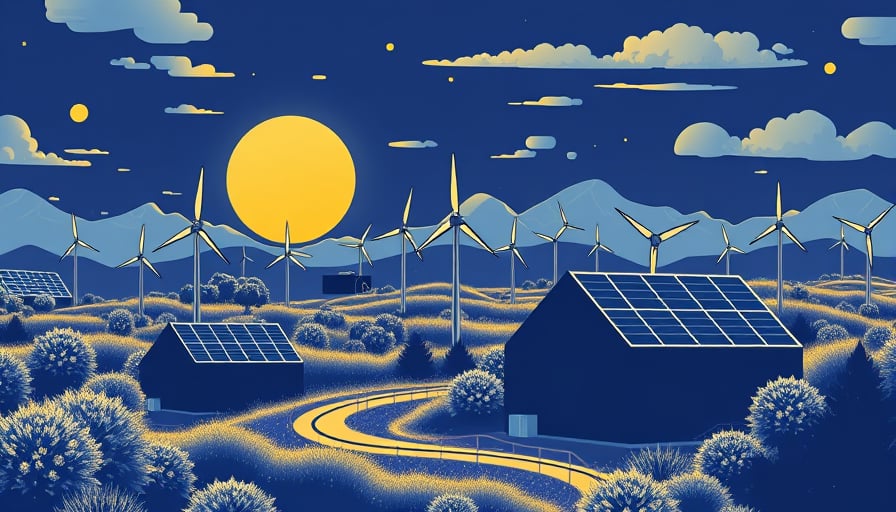
Enel’s generation portfolio is shifting toward a higher share of wind, solar, and hydro resources. The intermittency of these resources introduces variability that challenges conventional frequency and voltage regulation. Advanced control algorithms—such as model‑predictive control for inverter‑based resources—are essential to mitigate oscillations and maintain synchronicity. Additionally, the deployment of high‑capacity FACTS devices (e.g., STATCOMs, SVCs) enhances reactive power support, thereby preserving voltage stability during peak renewable output.
Transmission Infrastructure Requirements
The integration of distributed renewable generation demands extensive reinforcement of the high‑voltage (HV) transmission network. To accommodate bidirectional power flows and prevent congestion, Enel must invest in HVDC converter stations and adaptive protection schemes. Upgrading transformer ratings and installing dynamic line rating (DLR) systems can increase capacity without new cable installations, but these upgrades require rigorous electromagnetic compatibility (EMC) testing and coordination with national grid operators.
Distribution Modernization
On the distribution side, smart grid technologies—such as microgrids, advanced metering infrastructure (AMI), and grid‑edge energy storage—are pivotal for balancing local demand and generation. Enel’s strategy includes deploying 4‑G/5‑G communication networks to facilitate real‑time monitoring and automated fault isolation. The economic justification for these investments hinges on reduced outage durations, improved asset utilization, and the ability to offer demand‑response services that can be monetized through ancillary services markets.
Regulatory and Rate‑Structure Considerations
Regulatory Frameworks
European Union directives, notably the Clean Energy Package and the Electricity Market Directive, mandate the internalization of renewable integration costs and the harmonization of cross‑border market access. In Italy, the Energy Regulatory Authority (ARERA) sets tariffs that reflect investment costs, operational expenses, and allowed rate of return. The recent trend toward “green tariffs” aims to decouple consumer costs from wholesale price volatility while encouraging renewable penetration.
Rate Structures and Consumer Impact
Enel’s multi‑segment tariff design includes a fixed connection charge, a variable consumption charge, and a renewable surcharge. The renewable surcharge is recalibrated annually based on the share of renewables in the generation mix and the cost of integrating variable resources. While this mechanism internalizes grid stability expenses, it also raises consumer bills modestly. To mitigate adverse consumer impacts, Enel can deploy time‑of‑use (TOU) tariffs that incentivize load shifting, thereby aligning demand with renewable output peaks.
Economic Implications of Utility Modernization
Capital Expenditure and Return on Investment
Utility modernization requires substantial capital outlays—often in the range of €15–€25 billion for a mid‑sized European grid operator. Enel’s investment thesis rests on long‑term cost of capital reductions, asset life extension, and the ability to capture ancillary services revenue. Sensitivity analyses indicate that a 1 % reduction in the cost of capital can translate into €200–€300 million annual savings over a 20‑year horizon.
Market Positioning and Competitive Advantage
By advancing its grid digitalization, Enel positions itself as a leader in the European energy transition, potentially capturing market share in the emerging services sector—energy storage leasing, virtual power plants, and distributed energy resource (DER) orchestration. These services can offset traditional generation revenue declines, contributing to a more resilient business model.
Policy Incentives and Funding Mechanisms
European funding instruments—such as the European Fund for Strategic Investments (EFSI) and the Cohesion Fund—offer co‑financing opportunities for grid upgrades. Leveraging these instruments can improve project financing terms, thereby reducing the weighted average cost of capital (WACC) and enhancing project economics.
Conclusion
Enel’s recent analyst sentiment underscores confidence in its ability to navigate the technical and regulatory challenges inherent in modernizing Italy’s power system. Successful integration of renewable resources, coupled with strategic infrastructure investment and adaptive tariff structures, will be pivotal in maintaining grid stability, meeting regulatory mandates, and delivering economic value to stakeholders while managing consumer cost implications.