Enel S.p.A.: A Closer Look at the Recent Equity Dip and Its Implications
Enel S.p.A. has long been a bellwether for European utilities, and its shares remain a focal point for market participants. During the most recent session of the Euro STOXX 50, Enel’s stock slipped modestly in the mid‑afternoon, a decline that, while smaller than those seen by peers such as Rheinmetall, still mirrored a slight retracement in the broader index.
Contextualizing the Decline
The Euro STOXX 50 has displayed sustained upward momentum throughout the year, reaching new highs and buoying investor confidence in large‑cap European equities. Enel’s temporary dip is therefore not isolated; it reflects a sector‑wide pullback among utilities and energy firms facing a confluence of pressures:
| Factor | Impact on Enel | Broader Industry Effect |
|---|---|---|
| Commodity Price Volatility | Lower natural‑gas prices reduce revenue from thermal generation | Similar drag across gas‑dependent utilities |
| Regulatory Uncertainty | Potential tightening of carbon‑pricing regimes could alter cost structures | Drives scrutiny of carbon‑intensity metrics |
| Capital Allocation | Shift toward renewable projects may compress short‑term earnings | Accelerates portfolio rebalancing in peers |
While the fall was modest, it underscores the delicate balance between maintaining traditional generation assets and investing heavily in renewable infrastructure.
Financial Analysis: Where Does Enel Stand?
An examination of Enel’s valuation and financial health reveals several noteworthy points:
- Price‑to‑Earnings (P/E) Ratio: Enel trades at a P/E of approximately 14×, well below the sector median of 18×. This suggests market participants value Enel’s earnings stability and dividend policy more favorably.
- Dividend Yield: At 3.4%, the yield outpaces the Euro STOXX 50 average of 2.1%, offering attractive income for risk‑averse investors.
- Free Cash Flow (FCF): Enel’s FCF margin remains robust at 18%, a testament to efficient operations amid rising renewable capital expenditures.
- Debt‑to‑Equity (D/E): A conservative 0.6× D/E ratio indicates a solid capital structure, providing room for future debt‑financed renewable projects.
These metrics reinforce the notion that Enel’s core fundamentals remain strong, despite short‑term price volatility.
Competitive Dynamics and Market Positioning
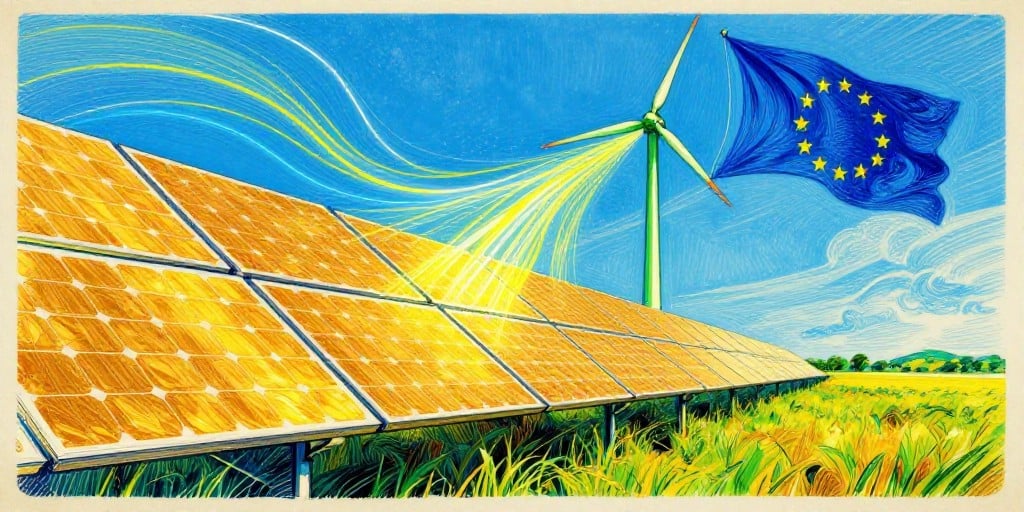
Enel’s strategy is heavily weighted toward renewable energy, with a projected 30% of its generation mix coming from renewables by 2030. This ambition places it ahead of many peers in Europe, such as Iberdrola and EDF, which target 25% and 20% respectively within the same horizon. However, the shift carries both risks and opportunities:
- Risk: Renewable capacity is subject to weather‑dependent intermittency, potentially affecting revenue predictability.
- Opportunity: Early adoption positions Enel to capitalize on upcoming EU climate mandates, including the proposed “Carbon Border Adjustment Mechanism.”
Enel’s competitive advantage also stems from its extensive distribution network, allowing for seamless integration of new renewable sources into the grid, thereby enhancing system reliability.
Regulatory Environment: A Double‑Edged Sword
European regulators are increasingly aggressive in pushing utilities toward decarbonization. While this creates a favorable backdrop for Enel’s renewable focus, it also introduces regulatory hurdles:
- Grid Infrastructure Requirements – The EU’s Fit for 55 package mandates upgrades to accommodate high penetration of intermittent renewables, requiring substantial investment.
- Carbon Pricing – Anticipated tightening of the EU Emission Trading System (ETS) could elevate the cost of traditional generation, benefiting renewable‑heavy utilities but also inflating operating costs overall.
- Consumer Protection – Stricter tariffs and price caps may constrain revenue growth.
Enel’s current capital allocation strategy, which heavily prioritizes renewable expansion, suggests a proactive stance against these evolving regulations.
Overlooked Trends and Potential Opportunities
- Digitalization of Grid Operations: Enel’s investment in smart grid technologies could unlock efficiency gains and new revenue streams through demand‑response services.
- Energy Storage: With Europe moving toward higher renewable penetration, Enel’s early entry into battery storage could provide a competitive edge in grid balancing and ancillary services.
- Cross‑Border Partnerships: Leveraging its position in both Italy and Spain, Enel could pursue joint ventures to tap into the Iberian wind market, diversifying its renewable portfolio.
These areas represent potential growth avenues that are often underappreciated in traditional utility analyses.
Risks That May Be Underestimated
- Supply Chain Constraints: The global shortage of critical components for renewable installations (e.g., inverters, turbines) could delay project timelines.
- Financing Costs: While Enel’s debt profile is currently healthy, the anticipated rise in interest rates post‑pandemic could increase borrowing costs for new renewable projects.
- Policy Shifts: Any rollback of EU climate commitments or delays in policy implementation could temper the expected upside for renewable‑heavy utilities.
Conclusion
Enel’s recent modest decline in the Euro STOXX 50 is emblematic of a broader, temporary pullback among European utilities rather than a fundamental weakness. Its strong valuation metrics, conservative debt stance, and aggressive renewable agenda position it well to navigate both regulatory pressures and market dynamics. Investors and analysts should therefore focus on Enel’s capacity to translate renewable investments into sustainable earnings while monitoring the evolving regulatory landscape that may present both risks and new opportunities.