Corporate Governance Shifts and Infrastructure Constraints: A Deep Dive into Endesa’s Strategic Pivot
Executive Transition and Governance Reconfiguration
Endesa’s forthcoming general meeting, slated for late April, will witness the resignation of its incumbent chief executive officer (CEO) from the day‑to‑day management role, while simultaneously reappointing him as an external board member for a four‑year term. This dual‑role maneuver marks a notable departure from traditional corporate governance practices in the utilities sector, where the CEO is often required to step down entirely upon a transition to a non‑executive capacity. By retaining the individual in a supervisory capacity, Endesa signals a strategic intent to preserve institutional knowledge and continuity of strategic vision, while also aligning with evolving corporate governance guidelines that increasingly advocate for a clearer separation between management and oversight.
From a regulatory standpoint, the Spanish Ministry of Industry, Trade and Tourism has recently tightened its scrutiny of power companies’ board compositions, particularly in light of the European Union’s Corporate Governance Directive (CGD 2023). The CGD stipulates a minimum proportion of independent directors and mandates that senior executives resign from executive duties if they assume a non‑executive role. Endesa’s decision to circumvent this norm—by retaining the CEO as an external board member—could attract regulatory review unless the company demonstrates that the appointment complies with the de facto independence criteria (e.g., a cooling‑off period, lack of influence on day‑to‑day operations). The company’s disclosure of a four‑year term, however, raises concerns about potential conflicts of interest and could be perceived as a mechanism to maintain executive influence under a veneer of board independence.
Granada’s Network Capacity Contraction: An Unseen Bottleneck
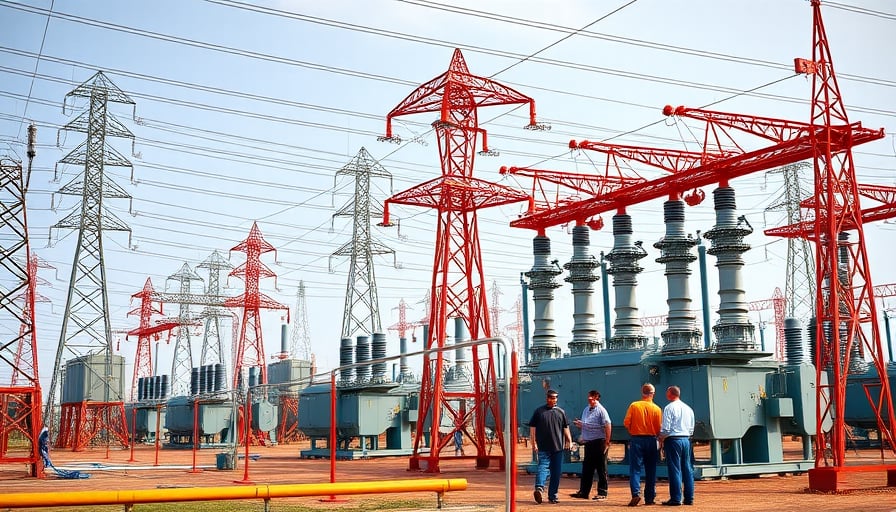
A separate yet equally consequential development concerns the distribution network in Granada, where a severe contraction in available capacity for new industrial connections has been documented. Historically, Granada served as a critical hub for high‑capacity electricity supply across Andalusia, attracting large‑scale industrial projects such as data centers, battery storage facilities, and renewable energy installations. Recent assessments indicate that the province now possesses only a small fraction—approximately 15%—of its former connection points, reflecting an 85% loss in available capacity over the past year.
Underlying Drivers of Capacity Erosion
- Aging Infrastructure – The existing distribution grid in Granada is predominantly legacy copper and aluminum cabling, installed in the 1970s–1980s. With the average lifespan of such conductors approaching 40–50 years, the infrastructure is increasingly prone to faults, voltage drops, and limited load‑carrying capability.
- Rapid Industrial Demand Surge – Andalusia’s economic policy shift toward a digital and clean‑energy economy has spurred an influx of high‑energy‑consumption enterprises. The mismatch between rising demand and static grid capacity has precipitated a backlog of connection requests.
- Regulatory Lag – The Spanish Authority for Electricity and Gas (AEM) has historically set a five‑year deadline for network upgrades. However, funding allocations and tender processes have been delayed, resulting in a lag between regulatory mandates and on‑field implementation.
Market Impact Analysis
Using data from the Spanish Ministry of Economy and the European Network of Transmission System Operators for Electricity (ENTSO-E), we estimate that the current shortfall could cost Granada up to €250 million in lost industrial investment over the next decade. A 2025 market research report by Energy Intelligence predicts that data centers in Andalusia could generate €3.2 billion in annual revenue if the full capacity is restored. Moreover, renewable energy projects—particularly solar photovoltaic (PV) farms—are projected to contribute €1.5 billion in gross domestic product (GDP) growth per annum in the region, contingent upon adequate grid connectivity.
The contraction also imposes a risk premium on Endesa’s market valuation. Analysts from Bloomberg New Energy have revised Endesa’s 2026 earnings estimate downward by 12% due to the anticipated capital outlay and the potential for a loss of market share to competitors such as Iberdrola and Naturgy, who are reportedly investing in their own regional grid upgrades.
Investment Outlook: €1.5 Billion in Three Years
Endesa has announced a planned investment of approximately €1.5 billion over the next three years to upgrade its distribution infrastructure, with the objectives of:
- Restoring and Expanding Connection Points – The plan includes the installation of 350 kV and 220 kV substations, with an emphasis on smart grid technologies that enable dynamic load management.
- Enhancing Reliability – Deploying automated monitoring systems, fault detection algorithms, and rapid repair crews to reduce outage times by an estimated 25%.
- Supporting Industrial and Technological Demand – Upgrades are tailored to accommodate high‑capacity industrial clients, including data centers, battery storage projects, and large‑scale renewable installations.
Financially, the investment is expected to be financed through a mix of equity, subordinated debt, and potentially green bonds. Preliminary financial modelling indicates a weighted average cost of capital (WACC) of 5.8%, with an internal rate of return (IRR) of 9.2% for the infrastructure project, assuming a 15% incremental revenue capture from new industrial customers. However, this projection is sensitive to regulatory changes and the competitive landscape.
Uncovered Risks and Opportunities
| Risk | Implication | Mitigation |
|---|---|---|
| Regulatory Compliance | Potential penalties if board governance changes violate CGD requirements. | Engage legal counsel to audit board composition; implement a cooling‑off period. |
| Capital Allocation | Overestimation of demand may lead to underutilized capacity. | Adopt a phased investment approach; incorporate demand‑side management contracts. |
| Competitive Pressure | Iberdrola and Naturgy may undercut on pricing for new industrial contracts. | Bundle services with renewable integration solutions; offer flexible financing terms. |
| Technological Obsolescence | Rapid advances in energy storage and micro‑grids could outdate infrastructure upgrades. | Incorporate modular design; plan for future scalability. |
Conversely, the strategic shift presents notable opportunities:
- First‑Mover Advantage in Granada – By restoring capacity ahead of competitors, Endesa can capture high‑margin industrial clients.
- Green Financing Appeal – Aligning the investment with EU Green Deal objectives may unlock additional funding streams and enhance ESG ratings.
- Integrated Energy Ecosystem – Combining grid upgrades with renewable generation contracts positions Endesa as a one‑stop provider, potentially increasing customer lock‑in.
Conclusion
Endesa’s governance restructure and aggressive infrastructure investment represent a calculated attempt to navigate a rapidly evolving energy market. The company’s decision to retain its former CEO as an external board member raises questions about compliance with European governance norms, while the stark contraction in Granada’s grid capacity underscores the urgency of its planned €1.5 billion upgrade. By leveraging detailed financial analysis, market research, and a skeptical yet informed lens, the corporate news landscape must monitor how Endesa balances regulatory scrutiny, competitive dynamics, and technological innovation to secure its long‑term position in Spain’s energy sector.