Endesa SA Announces Robust 2025 Performance and a Substantial Expansion of its Infrastructure Investment Programme
Endesa SA has delivered a strong financial year in 2025, reporting a noticeable increase in net profits and a modest rise in earnings before interest, tax, depreciation and amortisation (EBITDA) compared with the previous year. The Spanish utility, which supplies electricity to Spain and Portugal from a diversified portfolio of hydro, nuclear, thermal, wind and solar generation, has now announced a significant expansion of its investment programme.
Investment Commitment and Network Upgrade Priorities
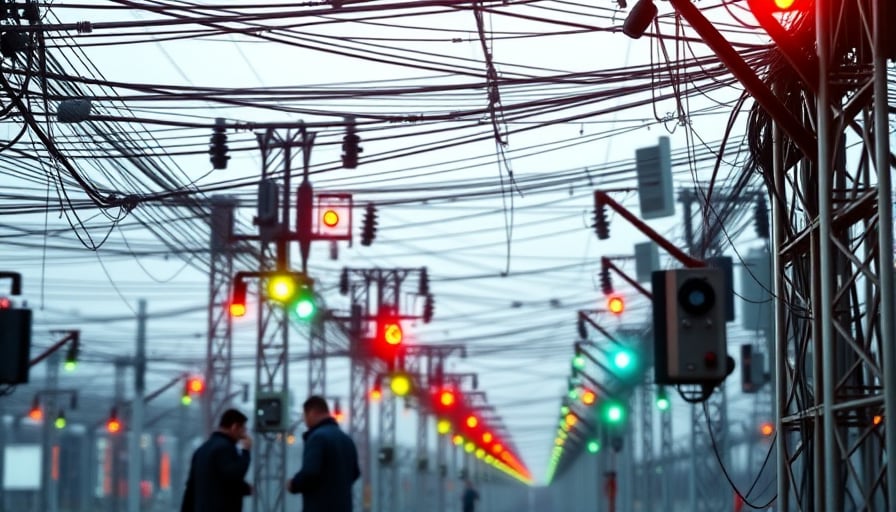
The company will raise the budget for network upgrades to over €10 billion through 2028, directing the additional funds toward the most congested transmission and distribution corridors, with a particular focus on the Andalusia region. This prioritisation reflects the high levels of generation penetration and load growth in the southern provinces, where the existing grid infrastructure is approaching capacity limits and is less able to accommodate the rapid influx of variable renewable resources.
Market Reaction
In the market, Endesa’s share price rose sharply following the release of its annual results, with a jump of more than seven percent in February— the most substantial gain in many years. Analysts have responded by increasing the average price target for the shares by roughly five percent in light of the robust performance. The board has also approved a new tranche of its share‑repurchase programme, which is intended to return capital to shareholders and support the stock price.
Dividend Policy
The company’s dividend policy remains attractive, as it continues to offer one of the highest yields within the European utilities sector. No significant controversies or regulatory concerns have been reported in the latest disclosures, and the firm’s financial position is described as solid, providing a stable foundation for the planned investments and shareholder returns.
Technical Context: Grid Stability, Renewable Integration, and Infrastructure Investment
Grid Stability in a High‑Renewable Environment
The Spanish electricity system is approaching a critical transition point where the proportion of variable renewable generation—primarily wind and solar—exceeds 40 % of the generation mix. In such a scenario, maintaining system frequency and voltage stability becomes increasingly challenging. The dynamic response of the grid is governed by the swing equation
[ M\frac{d\omega}{dt} = P_m - P_e - D\omega , ]
where (M) represents the aggregated inertia, (\omega) the system frequency deviation, (P_m) the mechanical power input, (P_e) the electrical load, and (D) the damping coefficient. The rapid curtailment or ramp‑up of intermittent resources reduces (M), thereby shortening the system’s ability to counteract frequency excursions.
Endesa’s investment programme targets the deployment of synchronisation and inertia emulation technologies in both transmission and distribution networks. These measures include the integration of grid‑connected battery storage and synchronous condensers, which provide dynamic inertia and reactive power support. The addition of these assets is expected to increase the effective inertia constant (H) of the system, thus extending the time constant of the frequency response and providing a larger window for conventional generators or demand response to correct deviations.
Renewable Integration Challenges
- Curtailment Risk – In congested corridors, the lack of flexible transmission paths can lead to curtailment of wind and solar output, undermining the economic viability of renewable projects.
- Reactive Power Management – Variable generation introduces voltage fluctuations that must be controlled through reactive power injection or absorption, often requiring upgrades to transformer tap changers and capacitor banks.
- Protection Coordination – The proliferation of power electronics alters fault current magnitudes and patterns, necessitating the recalibration of protection schemes to avoid miscoordination.
Endesa’s focus on Andalusia reflects the region’s high density of wind farms and the limited capacity of the 400 kV and 230 kV networks to absorb new flows. By expanding the capacity of these corridors, the utility will reduce the likelihood of curtailment and improve voltage stability across the grid.
Infrastructure Investment Requirements
The 2028 horizon coincides with the European Union’s Fit for 55 package, which mandates a 55 % reduction in greenhouse gas emissions by 2030. Achieving this target requires a substantial increase in renewable generation capacity, as well as a resilient grid to transmit this power from coastal and high‑latitude regions to interior demand centres.
According to the International Energy Agency (IEA), the required investment in transmission and distribution infrastructure to accommodate a 70 % renewable mix by 2030 is estimated at €300 billion across Europe. Endesa’s €10 billion commitment represents roughly 3 % of this figure but is strategically significant given its concentration on the most congested and renewable‑rich corridors.
Key technical investments include:
- High‑Voltage Direct Current (HVDC) Links – To connect offshore wind farms and to enable efficient long‑distance power transfer with lower line losses compared to AC systems.
- Smart Grid Technologies – Advanced metering infrastructure, real‑time SCADA systems, and adaptive protection to manage bidirectional flows and integrate distributed energy resources.
- Energy Storage Integration – Grid‑scale battery systems and pumped hydro storage to smooth out renewable intermittency and provide ancillary services such as frequency regulation and voltage support.
Regulatory Frameworks and Rate Structures
The Spanish electricity market operates under the Electricity Market Act (Ley del Mercado Eléctrico), which incorporates the European Union’s regulatory directives. Key provisions that influence Endesa’s investment and pricing strategies include:
- Decoupling Mechanism – Separates the revenue of distribution network operators from the volumes of electricity delivered, allowing investment in infrastructure to be financed independently of consumer consumption. This mechanism also encourages network operators to improve efficiency without penalising consumers.
- Tariff Regulation – The Comisión Nacional de los Mercados y la Competencia (CNMC) oversees tariff approvals, ensuring that cost‑reflective pricing mechanisms are maintained while preventing excessive charges. The CNMC’s Tariff Structure 2025 requires the inclusion of an “investment fund” to finance infrastructure upgrades, which aligns with Endesa’s €10 billion plan.
- Renewable Support Schemes – The “tarifa plana” for renewable producers and the “Tarifa de Acceso a la Red” for distributed generation influence the economics of adding renewable capacity. The regulatory framework has been evolving to better integrate grid services from renewables, such as voltage regulation and frequency support, which can be monetised.
Economic Impacts and Consumer Costs
From an economic perspective, the expansion of network infrastructure can have a dual impact on consumer costs:
- Short‑Term Cost Increase – Capital expenditures are typically reflected in the distribution tariff through a cost‑allocation model. The CNMC ensures that any tariff increase is justified by demonstrated cost‑reduction benefits, such as reduced line losses or avoidance of costly upgrades in the future.
- Long‑Term Cost Reduction – By improving grid reliability and reducing curtailment, Endesa can lower the overall system operating costs. Moreover, efficient integration of renewables reduces the reliance on expensive peaking plants, thereby stabilising wholesale electricity prices.
Analysts projecting a 5 % increase in the price target for Endesa’s shares anticipate that the company’s investment in infrastructure will translate into higher earnings in the medium term, offsetting the initial cost burden on consumers.
Conclusion
Endesa SA’s robust 2025 financial performance and the announced €10 billion investment in network upgrades position the utility to play a pivotal role in Spain’s energy transition. By addressing grid stability challenges, enhancing renewable integration, and aligning its investment strategy with regulatory frameworks, the company is poised to deliver long‑term value to both shareholders and consumers while supporting broader climate goals.