
Enbridge Inc. (TSX: ENB) Refines Debt Structure While Maintaining Dividend Appeal Amid Evolving Energy Landscape
Enbridge Inc. announced in early June 2026 that its subsidiary, Enbridge Pipelines Inc. (EPI), has secured the approval of the majority of medium‑term note holders to exchange those notes for new medium‑term notes issued directly by Enbridge. The exchange, completed in mid‑June, is designed to streamline the group’s debt structure without altering the financial terms for existing holders. The transaction is governed by Canadian securities regulations and, because the new notes are not registered under U.S. securities law, U.S. investors will have limited enforcement options.
Debt Refinement in a Volatile Market
The consolidation of EPI’s obligations into the parent company’s balance sheet is a prudent move in an environment where commodity prices and regulatory frameworks are in flux. By eliminating the inter‑company layer, Enbridge reduces interest‑rate exposure and simplifies capital‑raising pathways. In a period characterized by heightened volatility in natural‑gas spot prices—currently hovering around $2.50 per MWh—and fluctuating crude‑oil prices that have dipped below $80 per barrel, a more streamlined debt profile offers greater flexibility to negotiate financing terms and manage cash flow in the face of potential credit market tightening.
Dividend Stability Amid Transition Trends
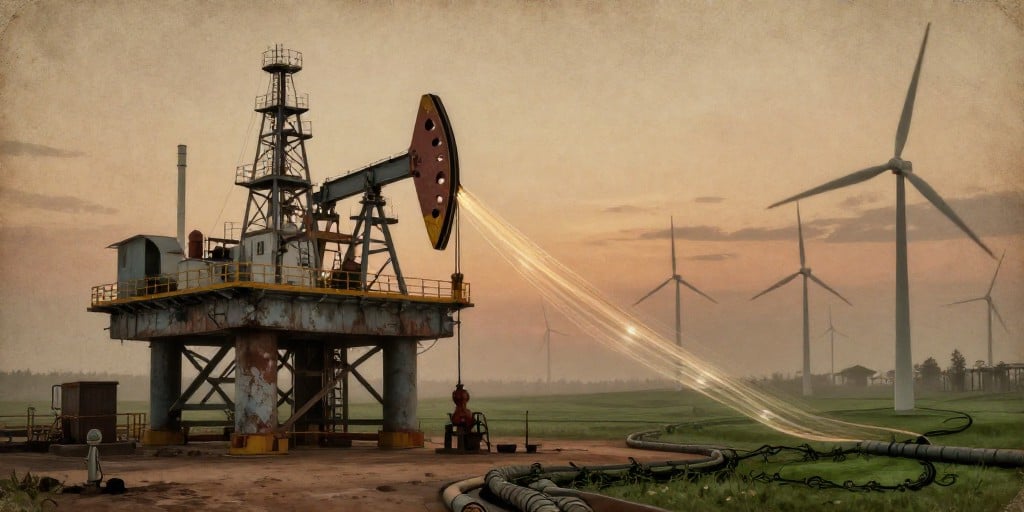
Enbridge’s dividend policy continues to be a focal point for investors seeking reliable income streams. The company’s yield—approximately 4.0 %—remains competitive relative to other Canadian utilities such as Hydro One, which offers a yield in the 3.5–3.8 % range. Analysts note that while the dividend is a key driver of shareholder appeal, Enbridge’s broader portfolio—spanning natural‑gas pipelines, oil‑transport infrastructure, and an expanding renewable‑energy footprint—provides a diversified foundation for long‑term value creation. This dual focus aligns with investor expectations for both short‑term income and long‑term capital appreciation.
Energy Market Dynamics: Supply, Demand, and Innovation
Supply‑Demand Fundamentals
Global energy demand is projected to rise by 2.8 % annually over the next decade, with natural gas consumption increasing as a preferred transition fuel. In North America, pipeline capacity has reached a plateau, making new infrastructure projects critical for meeting demand while avoiding congestion. Enbridge’s pipeline network, which transports more than 2 billion barrels of crude oil and 18 billion cubic feet of natural gas per year, remains a cornerstone of the region’s supply chain.
Commodity price analysis underscores the importance of reliable transit. Natural‑gas futures on the Henry Hub currently trade at a 12‑month average of $2.30 per MWh, while the benchmark Brent crude price averages $90 per barrel. These levels suggest sufficient revenue streams for pipeline operators, provided that operational efficiencies and cost controls remain robust.
Technological Innovations
Renewable energy production has accelerated, driven by advancements in photovoltaic (PV) panel efficiency and wind turbine blade design. Enbridge’s investment in solar farms—estimated at 250 MW of new capacity in 2026—and offshore wind projects—targeting 800 MW of cumulative capacity by 2035—positions the company to capitalize on the growing demand for clean energy. Energy storage, particularly battery‑based systems, has become a pivotal technology for grid stability. Enbridge’s exploration of a 50 MW lithium‑ion storage facility in Ontario exemplifies the company’s commitment to integrating storage solutions with its existing transmission assets.
Regulatory Landscape
Canadian energy policy continues to favor decarbonization while safeguarding the viability of traditional infrastructure. Recent amendments to the Canadian Energy Regulator Act have tightened emissions reporting requirements for pipeline operators, potentially increasing compliance costs but also creating opportunities for emissions‑reducing technologies such as carbon capture and storage (CCS). In the United States, the Biden administration’s infrastructure bill includes provisions for upgrading interstate pipeline safety, which may influence cross‑border operational costs for Enbridge.
Balancing Short‑Term Trading and Long‑Term Transition
Short‑term trading activities in the pipeline and renewable‑energy sectors are influenced by immediate price swings in oil and gas futures, as well as by inventory levels reported by the American Petroleum Institute. However, Enbridge’s long‑term strategy—characterized by substantial capital allocation toward pipeline upgrades, renewable‑energy acquisition, and storage infrastructure—positions the company to benefit from the broader energy transition. The company’s financial flexibility, bolstered by the recent debt restructuring, provides a buffer against market volatility and enables it to seize opportunistic investments in emerging technologies.
Conclusion
Enbridge Inc.’s recent financing maneuver, coupled with its steadfast dividend policy, reflects a balanced approach that reconciles short‑term shareholder expectations with long‑term infrastructural commitments. By consolidating its debt, maintaining yield competitiveness, and advancing renewable‑energy initiatives, Enbridge is well‑equipped to navigate the evolving dynamics of global energy markets—where supply‑demand fundamentals, technological innovation, and regulatory developments converge to shape the future of energy transportation and production.