
Corporate News
Emera Inc. Shares Stabilize Amid Strategic Transition Toward Clean Energy
On Thursday, the Toronto Stock Exchange recorded Emera Inc. (EMR) shares at a level close to the recent trading range, marking a modest pullback after a period of upward momentum. The Canadian utility firm, which manages a diverse portfolio of electric and natural‑gas assets across Canada, the Caribbean, and parts of the United States, continues to focus on transitioning its operations toward cleaner energy sources. Investor sentiment remains cautious, with the stock trading near its upper half of the 52‑week range, suggesting that while the market acknowledges the company’s strategic initiatives, it also maintains a prudent stance amid broader market volatility.
Technical Context: Power Generation, Transmission, and Distribution
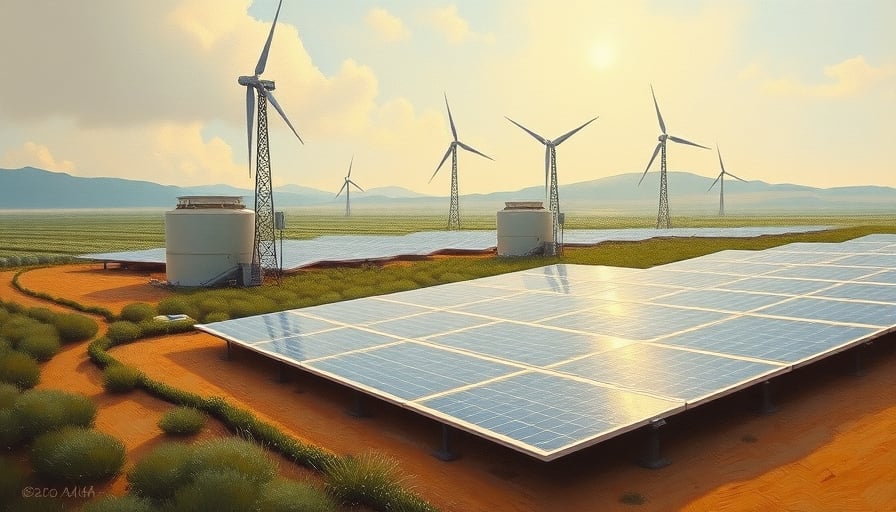
Emera’s operational portfolio spans generation assets—including gas-fired plants, hydroelectric facilities, and a growing share of renewable installations such as wind and solar—along with an extensive transmission and distribution network that delivers electricity to over 2.5 million customers. The company’s strategic shift toward lower‑carbon generation requires careful integration of variable renewable resources (VRR) into a grid traditionally dominated by dispatchable gas generation.
Grid Stability Challenges with Renewable Integration
Inertia Loss: Conventional synchronous generators provide rotational inertia that stabilizes system frequency. Replacing them with inverter‑based resources (IBRs) like solar PV and wind turbines reduces inertia, increasing the risk of frequency excursions. Emera must deploy synthetic inertia solutions (e.g., fast‑frequency response from storage or advanced inverter controls) to mitigate this risk.
Transient Stability: Rapid changes in wind or solar output can cause voltage dips and transient oscillations. Sophisticated power‑flow studies and dynamic simulations are essential to ensure that protection schemes and voltage regulators can respond without inducing cascading failures.
Load‑Frequency Interaction: The loss of natural‑gas plants necessitates new load‑frequency control (LFC) strategies. Emerging technologies such as demand response (DR) and real‑time dispatchable storage can provide the requisite LFC services, but require robust communication and market mechanisms.
Infrastructure Investment Requirements
Emera’s modernization roadmap calls for capital expenditures in the range of $1.5–2.0 billion over the next decade, with priorities including:
Transmission Upgrades: Extending high‑voltage corridors to accommodate new renewable sites, installing flexible AC transmission systems (FACTS) for voltage control, and integrating grid‑stabilizing devices like synchronous condensers.
Distribution Automation: Deploying advanced distribution management systems (ADMS), microgrids, and smart meters to support DR and enhance outage management. This also enables dynamic reconfiguration to isolate faults and maintain supply.
Energy Storage: Integrating battery energy storage systems (BESS) with capacities of 200–300 MW/200–300 MWh to provide frequency regulation, peak shaving, and renewable curtailment mitigation.
Cybersecurity Enhancements: Protecting the expanding digital control infrastructure against cyber threats is essential, particularly as the grid becomes more decentralized and interconnected.
Regulatory Framework and Rate Structures
Ontario’s Energy Act and Integrated System Operator (ISO)
In Ontario, the Energy Act, administered by the Ontario Energy Board (OEB), governs utility operations, while the Independent Electricity System Operator (IESO) manages the power system. Emera must navigate:
Rate Base Calculations: The OEB mandates that rates recover the utility’s capital cost, operating expenses, and a reasonable return on equity. As investments shift toward renewables, the rate base composition changes, influencing tariff structures.
Renewable Integration Fees (RIFs): The IESO imposes RIFs on wind and solar generators to fund grid upgrades. Emera’s own renewable assets contribute to RIF payments, which can be passed through to consumers.
Demand Response Pricing: The IESO’s market mechanisms allow utilities to offer time‑of‑use (TOU) tariffs and demand response incentives. Emera’s participation can reduce peak loads and defer costly transmission upgrades.
Federal and International Considerations
Canada’s Clean Energy Regulations: The federal government’s Clean Energy Act and associated carbon pricing mechanisms influence the cost of natural‑gas generation. Emera’s strategic pivot aligns with these policies but requires careful modeling of carbon capture and storage (CCS) options for legacy plants.
U.S. and Caribbean Interconnections: Cross‑border regulatory compliance is necessary for interconnection agreements and market participation in the Midwest Independent System Operator (MISO) and Caribbean’s Regional Electricity Market (CRM). Harmonization of standards facilitates efficient power trade.
Economic Impacts of Utility Modernization
Consumer Cost Implications
Short‑Term Rate Increases: Capital investments in transmission, distribution, and storage typically lead to rate hikes of 1–3 % over a 3–5 year horizon. However, distributed energy resources (DER) and DR can offset these increases by reducing peak demand.
Long‑Term Savings: Efficient grid operations, reduced transmission losses, and higher renewable penetration lower wholesale prices. Consumer bills may decline by 2–4 % over a decade if the grid operates at optimal levels.
Investor Perspectives
Return on Equity (ROE): Emera’s ROE projections must account for the lower marginal costs of renewable generation versus gas plants, balancing higher upfront capital against reduced fuel and carbon costs.
Risk Management: Volatility in fuel prices and renewable output introduces financial risk. Hedging strategies and long‑term power purchase agreements (PPAs) are critical tools for stabilizing cash flows.
Regulatory Confidence: Transparent engagement with regulators, adherence to environmental standards, and demonstration of grid reliability build investor confidence and may unlock favorable financing terms.
Engineering Insights on Power System Dynamics
Frequency Response Modeling: Using dynamic simulation tools (e.g., PSS®E, DIgSILENT PowerFactory), engineers model the grid’s response to sudden losses of generation. Synthetic inertia from inverters is calibrated to replicate the droop characteristics of synchronous generators.
Voltage Stability Analysis: Disturbance studies evaluate the system’s ability to maintain voltage within acceptable bounds after large renewable curtailments or load changes. The deployment of static VAR compensators (SVCs) and STATCOMs helps mitigate voltage sags.
Contingency Planning: N‑2 and N‑3 contingency studies ensure that the grid can withstand multiple line or generator outages without cascading failures. This informs the placement of redundancies and the design of protection schemes.
Smart Grid Integration: Advanced metering infrastructure (AMI) combined with real‑time data analytics enables predictive maintenance and adaptive load control, reducing unplanned outages and improving overall system resilience.
Conclusion
Emera Inc.’s share price movement reflects a market balancing recognition of its renewable transition strategy against prudent risk assessment in a volatile environment. The technical, regulatory, and economic dimensions of power system modernization—particularly grid stability, renewable integration challenges, and infrastructure investment—underscore the complex interplay between engineering solutions and market forces. As the utility continues to evolve its asset mix, its ability to deploy advanced grid technologies, navigate regulatory frameworks, and manage consumer cost implications will be pivotal in shaping a resilient, low‑carbon electricity future.