
Corporate News
Electronic Arts’ Transition to Private Ownership: Implications for the Broader Entertainment Ecosystem
Electronic Arts Inc. (EA) has completed a landmark transaction that moved the company from a public listing to private ownership. Led by a consortium of prominent investment groups, the deal represents the largest leveraged acquisition in the video‑gaming sector to date and signals a continued trend of consolidation within the industry. The company’s chief executive will remain in charge, indicating managerial continuity amid significant structural change.
The transaction occurs against a backdrop of heightened activity across the gaming and media landscapes. Other major players—including Nintendo, Take‑Two Interactive, GameStop, and indie publisher Devolver Digital—have reported varied outcomes in recent earnings periods, from robust profit figures to debt‑swap initiatives and market exits. EA’s move is distinct for its scale and potential to reshape its operational framework and strategic priorities.
Intersection of Technology Infrastructure and Content Delivery
Telecommunications and Media Convergence
The convergence of telecommunications and media sectors is redefining content delivery paradigms. As broadband penetration deepens and 5G rollout accelerates, service providers are investing in high‑capacity networks capable of supporting ultra‑high‑definition video, cloud gaming, and immersive experiences. In this context, EA’s private‑market structure could accelerate its adoption of next‑generation delivery technologies, allowing for more flexible investment in scalable infrastructure without the constraints of quarterly reporting.
Subscriber Metrics and Network Capacity
Telecom operators now track subscriber growth not only by traditional voice and data usage but also by content consumption patterns. Video streaming accounts for a growing proportion of traffic, with the average subscriber spending 70–90 % more data on streaming services than on other media types. Operators are therefore expanding network capacity through techniques such as edge caching, content‑delivery networks (CDNs), and software‑defined networking (SDN) to reduce latency and improve user experience. EA’s games, particularly its flagship sports and sports‑simulation franchises, demand substantial bandwidth for online multiplayer and cloud‑based services, underscoring the need for robust network infrastructure.
Content Acquisition Strategies
EA’s portfolio is heavily focused on first‑party IP, but it also relies on third‑party licensing for certain sports rights and cross‑platform partnerships. The acquisition of content libraries—such as the recent purchase of 1,000+ titles from a major studio—demonstrates a broader industry trend wherein studios consolidate assets to streamline distribution and leverage economies of scale. In the streaming arena, operators are negotiating exclusive deals to secure differentiated content, which directly influences subscriber acquisition and retention. EA’s strategy to bundle games with subscription services (e.g., EA Play, PlayStation Plus) aligns with this approach, providing consumers with a value‑added proposition that can drive churn reduction.
Competitive Dynamics in Streaming Markets
The streaming landscape is intensely competitive, with incumbents such as Netflix, Amazon Prime Video, Disney+, and Apple TV+ vying for subscriber dominance. New entrants like HBO Max and Peacock have entered the fray with niche content, while traditional media conglomerates are building proprietary platforms. In this environment, content quality, user experience, and platform accessibility remain the critical differentiators. Telecommunication operators are increasingly offering “bundle‑and‑save” packages that combine high‑speed connectivity with streaming subscriptions, thereby creating a symbiotic relationship between network capacity and content delivery.
Emerging Technologies and Media Consumption Patterns
Cloud Gaming and Edge Computing
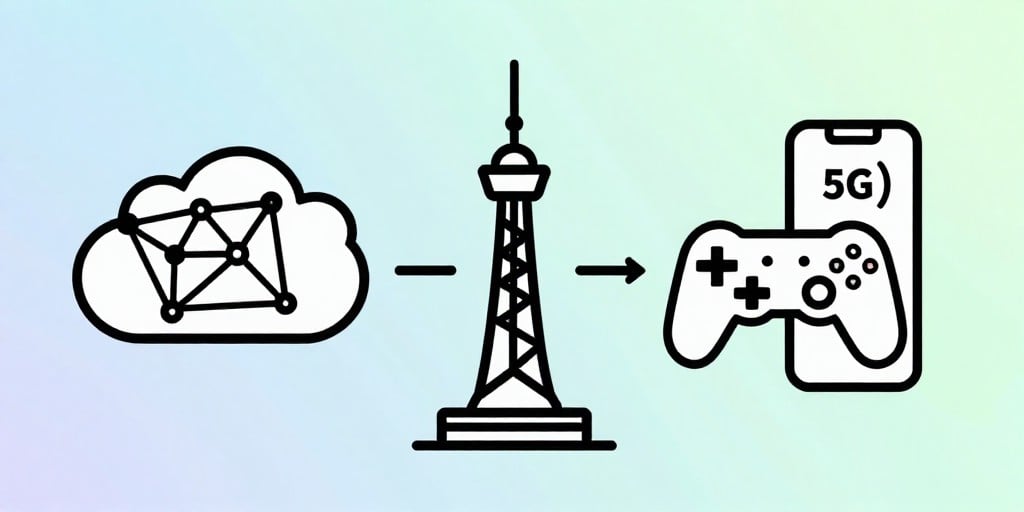
Cloud gaming platforms—such as Microsoft’s xCloud, Google Stadia (now part of YouTube Gaming), and Nvidia GeForce Now—are redefining how consumers access games. By offloading rendering to data centers, these services mitigate the hardware limitations of end‑user devices. EA’s participation in cloud‑gaming trials and its partnership with a leading telecom operator to deploy edge servers illustrate the strategic importance of positioning in this emerging sector.
Artificial Intelligence and Personalization
Artificial intelligence (AI) is being employed to deliver hyper‑personalized content recommendations, optimize bitrate allocation, and automate quality‑of‑service (QoS) adjustments. For EA, AI-driven analytics can refine in‑game telemetry, inform marketing strategies, and enhance player retention. Telecom operators are leveraging AI to predict traffic surges and pre‑emptively allocate resources, ensuring a seamless streaming experience even during peak usage.
Virtual and Augmented Reality
Virtual reality (VR) and augmented reality (AR) represent the next frontier for immersive storytelling and interactive entertainment. While still nascent, the adoption of VR headsets is projected to grow from 2 % to 9 % of the consumer electronics market over the next decade. EA’s investment in VR‑capable titles and partnerships with headset manufacturers indicate a proactive stance toward capturing this emerging audience segment.
Financial Metrics and Market Positioning
Subscriber Growth and Revenue Projections
Telecom operators report a compound annual growth rate (CAGR) of 4–5 % for paid video streaming services, with a projected gross margin of 45 %–55 % due to economies of scale. For EA, the shift to private ownership allows the company to invest in long‑term projects—such as next‑generation game engines and cross‑platform ecosystems—without the immediate pressure of quarterly earnings disclosures. Analysts project a 3 % increase in subscription revenue from EA Play and a 12 % rise in digital micro‑transactions over the next fiscal year, driven by expanded content libraries and enhanced multiplayer features.
Capital Expenditure and Return on Investment
EA’s capital expenditure (CapEx) for content development and technology infrastructure is estimated at $1.2 billion annually. Private ownership facilitates a more flexible CapEx allocation schedule, potentially yielding a higher internal rate of return (IRR) of 18–22 % compared to the historically lower IRR under public scrutiny. Telecom operators, on the other hand, invest an estimated $5–6 billion annually to expand 5G infrastructure and deploy edge‑computing nodes, targeting an IRR of 15 % through increased subscriber fees and bundled services.
Competitive Advantage and Synergies
By consolidating content and infrastructure, companies can achieve cross‑functional synergies. EA’s access to proprietary IP combined with telecom operators’ distribution channels can create a differentiated offering that commands premium pricing. Furthermore, data generated from gameplay and streaming consumption can inform targeted advertising and dynamic pricing strategies, enhancing overall revenue streams.
Conclusion
Electronic Arts’ transition to private ownership is more than a financial maneuver; it reflects a strategic repositioning within an ecosystem where content creation, delivery, and consumption are becoming increasingly intertwined. As telecommunications infrastructure evolves to support higher bandwidth, lower latency, and immersive experiences, content providers—whether game studios or streaming services—must adapt their acquisition strategies and subscriber models accordingly. The convergence of technology and media will likely accelerate, with AI, cloud gaming, and edge computing at the forefront. For stakeholders across the industry, the key will be to measure performance not only through traditional financial metrics but also through subscriber engagement, network utilization, and the ability to innovate in a rapidly shifting digital landscape.