Corporate Bond Issuance and Market Implications for E.ON SE
E.ON SE has announced a new Australian‑denominated corporate bond offering. Priced at an annual coupon of roughly six percent, the issuance will raise approximately 300 million AUD and is slated for maturity in 2032. The bond is available to investors in the euro‑zone with a minimum investment of 10 000 AUD, and the current trading price sits just above par. The company’s investment‑grade rating underscores its solid financial footing.
Technical Context: Power Generation, Transmission, and Distribution
E.ON’s financial strategy is tightly intertwined with the technical demands of modern power systems:
Grid Stability: The company’s assets span generation, transmission, and distribution networks that must remain robust against increasingly volatile renewable inputs. Grid stability hinges on precise real‑time control of voltage, frequency, and power flows, requiring advanced phasor measurement units and adaptive protection schemes.
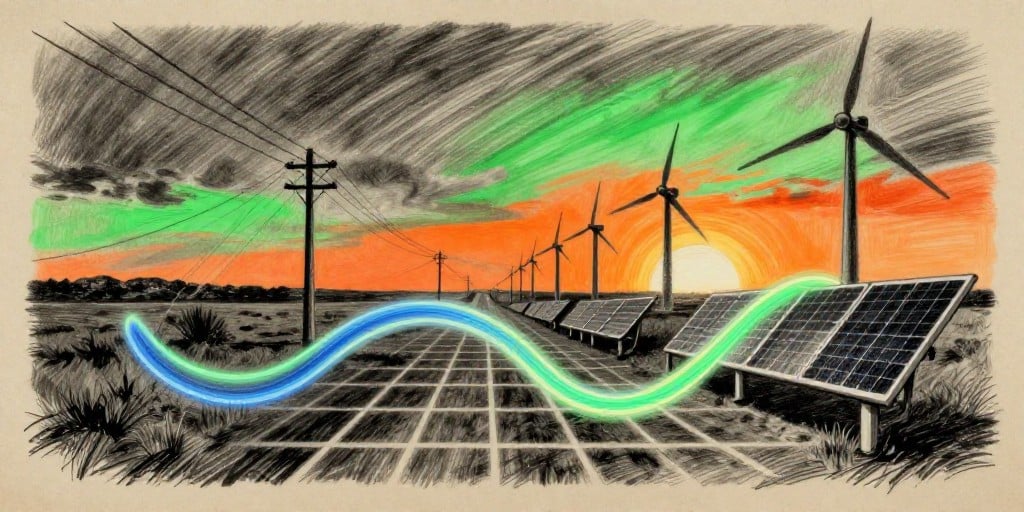
Renewable Energy Integration: Solar and wind generation, while essential to decarbonisation, introduce intermittency that stresses the network. Integration demands sophisticated forecasting, demand‑response programs, and flexible storage solutions to smooth output and maintain reliability.
Infrastructure Investment: Upgrading aging transformers, installing high‑capacity HVDC links, and deploying smart grid technologies are capital intensive. The new bond issuance is aimed at funding these upgrades, thereby mitigating congestion, reducing losses, and enhancing the network’s capacity for renewable influx.
Regulatory and Rate Structures
European Union Policies: The EU’s Green Deal and Fit for 55 framework mandate significant renewable penetration, compelling utilities to invest in grid resilience. Regulatory bodies are also tightening interconnection standards, necessitating substantial capital outlays.
Rate Design: E.ON’s cost‑of‑service rate structures must accommodate the higher capital costs of renewable integration and grid modernization. Time‑of‑use tariffs and demand charges are being re‑evaluated to reflect the cost of balancing services and to incentivise consumer participation in grid stability.
Capital Market Regulations: The Australian bond market’s regulatory environment is relatively favourable for Eurozone issuers, providing a stable venue for raising capital. However, cross‑border tax considerations and currency risk hedging strategies remain crucial for investors.
Economic Impacts of Utility Modernization
Capital Allocation: The 300 million AUD bond will likely be directed toward HVDC transmission upgrades and the deployment of distributed energy resource (DER) aggregators. This reallocation of capital can enhance the company’s asset utilisation ratio and improve its net‑worth position.
Consumer Costs: While upfront investments may temporarily elevate tariffs, the long‑term effect is a smoother, more reliable supply that reduces outage costs and system inefficiencies. In the transition to a renewable‑heavy grid, the spread of renewable generation curtails the need for fossil‑fuel peaking plants, ultimately stabilising wholesale prices.
Market Dynamics: The bond issuance, combined with a positive market reaction to falling oil prices, signals confidence in E.ON’s resilience. This can strengthen investor sentiment, lower the company’s cost of equity, and broaden its financial flexibility for future renewable projects.
Engineering Insights into Power System Dynamics
Power Flow Equations: The integration of variable renewable resources necessitates constant recalibration of the power flow model (P_i = V_i \sum_j V_j (G_{ij}\cos\theta_{ij} + B_{ij}\sin\theta_{ij})). Maintaining the operating point within the feasible region requires real‑time optimisation algorithms.
Dynamic Stability: The addition of inverter‑based resources changes the system’s inertia profile. Synthetic inertia solutions, such as droop‑controlled inverters, are now essential to preserve frequency stability during transient events.
Reliability Assessment: Probabilistic risk assessment (PRA) tools must incorporate renewable output uncertainty to evaluate system resilience. This informs the design of contingency plans and the allocation of reserve margins.
Conclusion
E.ON SE’s issuance of a 2032 Australian‑denominated bond reflects a strategic response to the technical and regulatory imperatives of the evolving electricity sector. By securing fresh liquidity, the company positions itself to address grid stability challenges, accelerate renewable integration, and modernise its transmission and distribution infrastructure. While these investments entail short‑term costs, the anticipated economic benefits—enhanced reliability, regulatory compliance, and a smoother transition to a low‑carbon grid—promise long‑term value for both the utility and its consumers.