
Impact of Recent Drone Strike on Kazakhstan’s Black Sea Export Terminal
Immediate Operational Consequences
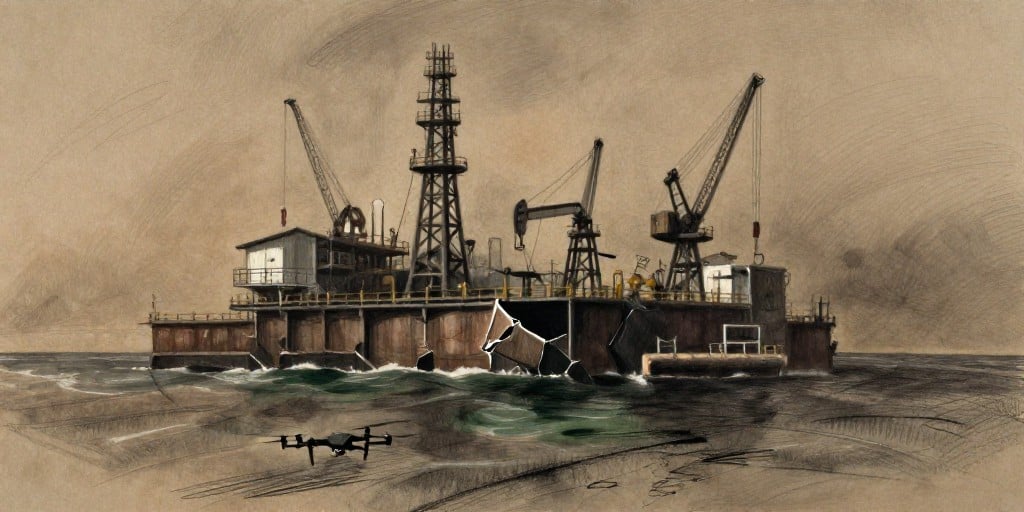
A drone strike on a crude tanker at Kazakhstan’s Black Sea export terminal has brought the facility to an abrupt halt, according to a statement released by the Caspian Pipeline Consortium (CPC). The attack struck the vessel while it was in the loading phase, forcing the CPC to suspend all oil movements at the terminal immediately. Despite the severity of the incident, no oil spills were reported, and the tanker’s cargo integrity remains intact.
The CPC characterized the event as a “terrorist attack,” underscoring its commitment to safeguarding the terminal from future disruptions. The decision to suspend operations reflects a precautionary approach aimed at mitigating both physical and reputational risks to the infrastructure and its stakeholders.
Strategic Significance of the CPC Terminal
The Black Sea export terminal is the principal conduit for Kazakh crude destined for European refineries, serving as an alternative supply route to the Middle East amid escalating tensions in that region. The terminal processes crude from projects developed by international majors—including Chevron, Exxon Mobil, and Shell—and also handles a portion of Russian oil. While CPC facilities are not subject to international sanctions, the region has become a focal point for geopolitical contestation, with Ukrainian and Russian forces intensifying attacks on vessels and port infrastructure in the Black Sea.
Given its status as the largest export pathway for Kazakh oil, any interruption at the CPC terminal carries significant implications for global energy markets. The halt in loading activities is expected to affect the supply chain for European refineries that rely on this alternative source of barrels, potentially tightening inventories and exerting upward pressure on regional crude prices.
Broader Economic and Geopolitical Context
The incident is emblematic of the broader volatility that characterizes energy logistics in the Black Sea corridor. Over the past decade, the region has experienced recurrent strikes on shipping and port facilities, often linked to broader geopolitical conflicts. The current episode underscores the fragility of supply routes that have become increasingly critical as European countries seek to diversify their energy sources away from the Middle East.
From a macroeconomic perspective, the disruption adds to the already elevated risk premiums associated with Black Sea transit. This can lead to higher insurance costs for shipping operators, increased freight rates, and a potential reallocation of trade flows to alternative routes, such as the Suez Canal or the Arctic corridor. Consequently, the incident may accelerate investment in resilient infrastructure, such as alternative pipelines and port facilities, as well as in strategic petroleum reserves.
Cross‑Sector Implications
Oil & Gas – The immediate impact on supply chain logistics will likely pressure downstream refining operations. Refiners may need to secure alternative crude sources, potentially at higher costs, which could affect their product pricing strategies.
Transportation & Shipping – The heightened security threat in the Black Sea could prompt shipping companies to adopt more expensive routes or to invest in specialized defensive measures. This shift could alter global shipping dynamics, affecting freight rates worldwide.
Insurance – The classification of the attack as a “terrorist incident” may lead insurers to revise risk models for the region, increasing premiums for vessels and facilities in or near the Black Sea.
Energy Policy – European energy policy makers may accelerate efforts to diversify supply routes, potentially revisiting existing agreements or negotiating new partnerships to ensure energy security.
Geopolitics – The attack exemplifies how non‑state actors can influence global trade flows. It may prompt a reassessment of diplomatic strategies aimed at stabilizing the region and reducing the likelihood of future incidents.
Conclusion
The drone strike on the Kazakh Black Sea export terminal is a stark reminder of the interconnected risks that shape today’s energy landscape. While the immediate operational impact has been contained, the event signals the need for robust contingency planning across multiple sectors. Stakeholders—from oil majors to shipping operators, insurers, and policymakers—must remain vigilant, adapting to evolving geopolitical realities and ensuring that supply chains remain resilient in the face of unforeseen disruptions.