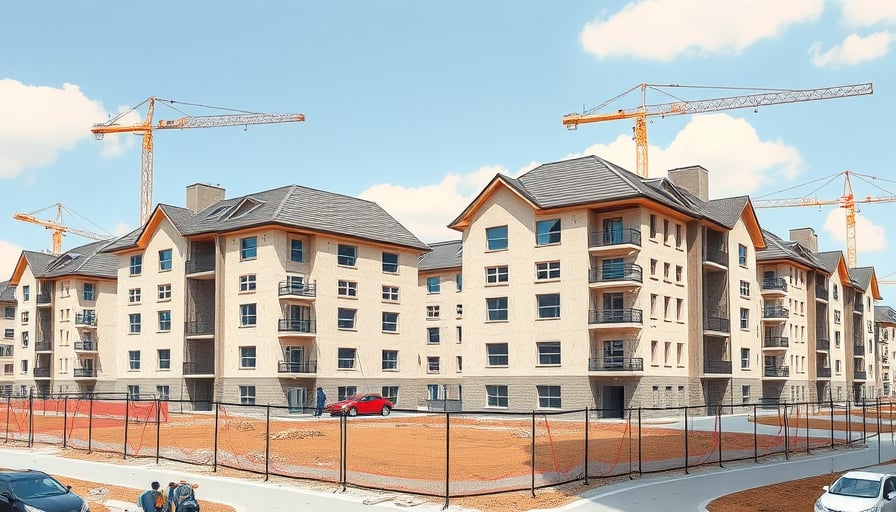
Corporate Analysis of DR Horton Inc’s Recent Share Performance
The residential construction sector has experienced a discernible contraction in equity valuations, with DR Horton Inc. (NYSE: DHI) registering a modest decline of approximately three percent in its most recent trading session. This downward movement aligns closely with contemporaneous downturns observed in comparable firms such as Toll Brothers (NYSE: TOL) and Lennar (NYSE: LNN), indicating a sector‑wide pullback rather than an idiosyncratic issue specific to DR Horton.
Market‑Wide Drivers and Economic Context
The current trajectory of the home‑building industry is heavily influenced by macro‑economic variables, particularly borrowing costs. Mortgage rates in the Phoenix market have spiked, thereby raising the financing burden for prospective homebuyers. Elevated rates are a key lever in dampening demand, as higher monthly payments reduce affordability for a significant segment of the potential market. This, in turn, is projected to generate an inventory swell and a deceleration in sales velocity for builders operating in high‑cost regions.
Nationally, the housing market is poised in a phase of heightened uncertainty. Analysts are closely monitoring the interplay between persistent inflationary pressures, the trajectory of U.S. monetary policy, and supply‑side constraints. The resultant environment has fostered a cautious stance among both buyers and builders, further contributing to the recent equity valuation compression.
Investor Activity and Shareholder Dynamics
During the latest trading period, investor participation in DR Horton’s shares remained largely unchanged. A noteworthy transaction involved Verdence Capital Advisors LLC, which acquired a modest block of shares. While this activity did not materially shift the stock’s price trajectory, it reflects ongoing evaluation of the company’s valuation in light of prevailing market conditions and macroeconomic developments.
Fundamental Assessment and Competitive Positioning
From a fundamentals perspective, DR Horton continues to exhibit strong scale and geographic diversification, traits that historically confer resilience in cyclical downturns. However, the elevated mortgage rates and inflationary backdrop are exerting downward pressure on key performance metrics, notably sales volume and gross margin compression. Competitors within the same sector have reported analogous challenges, underscoring the systemic nature of the current market environment.
Competitive positioning remains a critical lens: firms with more robust land acquisition pipelines or diversified financing options may weather the downturn more effectively. DR Horton’s ability to leverage its extensive land bank, coupled with a history of efficient supply chain management, positions it favorably against peers that may lack comparable depth in these areas.
Broader Economic Implications
The recent equity movements in home builders echo wider economic trends. The sensitivity of the residential construction sector to interest rate fluctuations underscores the interconnectedness of housing markets with broader financial conditions. As monetary authorities consider the ramifications of sustained inflation and the potential need for rate hikes, the sector may experience further volatility, influencing investor sentiment across related industries such as materials suppliers, financial services, and construction equipment manufacturers.
Conclusion
DR Horton Inc.’s modest share price decline is emblematic of a sector‑wide contraction precipitated by rising borrowing costs and inflationary concerns. While the company’s inherent competitive advantages mitigate some risks, the overarching economic environment remains a dominant factor shaping investor expectations and operational performance. Continuous monitoring of macroeconomic indicators—particularly interest rates and housing demand metrics—will be essential for stakeholders assessing the company’s long‑term prospects.