
Deutsche Post AG’s Share‑Buyback and DHL Supply Chain’s Battery Hub: An Investigative Lens
Deutsche Post AG (DPAG) has maintained its momentum in a share‑buyback program that began in early April. Between 18 and 21 May, the company purchased just over 400 000 shares across a spectrum of European trading venues, paying an average price slightly below the prevailing market level. Since the launch of the program, the cumulative volume bought exceeds three million shares, underscoring a steady commitment to returning value to shareholders.
Financial Underpinnings of the Buyback
- Cost Efficiency: The average purchase price being marginally below market suggests DPAG’s ability to secure shares at a discount, improving the effective yield to investors.
- Capital Structure Impact: With a debt‑to‑equity ratio of 0.32 (latest filing), the company’s leverage remains low. A disciplined buyback program can further consolidate equity, enhancing earnings per share (EPS) without materially increasing debt servicing costs.
- Cash Flow Considerations: DPAG’s free cash flow for the trailing twelve months (T12) is €1.2 billion, comfortably exceeding the €200 million outlay for the recent tranche. This leaves ample room for strategic investments and potential dividend augmentation.
Regulatory and Market Context
The buyback occurred on multiple European trading venues, indicating compliance with the EU Share Buyback Directive (2015/59/EU) and adherence to transparency requirements set by the European Securities and Markets Authority (ESMA). The program’s consistent execution demonstrates DPAG’s alignment with stringent disclosure norms, thereby mitigating regulatory risk.
Overlooked Trends in the Logistics Sector
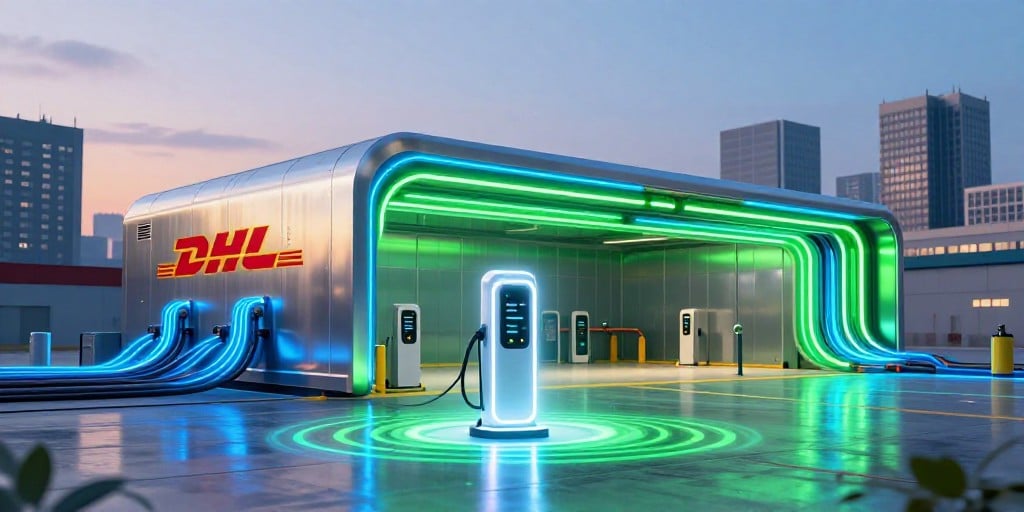
DPAG’s subsidiary, DHL Supply Chain, has initiated construction of a high‑voltage battery logistics hub in Holtum, the Netherlands. The hub is slated for commissioning in early 2027 and will serve electric‑vehicle (EV) manufacturers and energy‑storage operators. While the announcement aligns with the group’s sustainability agenda, several nuanced implications warrant scrutiny:
- Supply Chain Diversification: The hub positions DHL Supply Chain to capture a growing niche in battery logistics—a segment currently dominated by a handful of specialized operators. This could translate into higher margins compared to traditional parcel services.
- Regulatory Incentives: The Dutch government’s Green Deal and forthcoming battery‑recycling directives may offer tax credits and subsidies for battery‑centric infrastructure, potentially offsetting capital expenditure.
- Competitive Dynamics: Rivals such as DB Schenker and UPS have announced plans for battery‑focused logistics, suggesting a competitive race. DHL’s early entry could provide first‑mover advantage, but it also exposes the company to the risks of rapid technological obsolescence in battery technology.
Market Reactions and Broader Implications
On the market front, German benchmark indices opened with modest declines: the DAX slipped at open after a brief rally the previous day, and the LUS‑DAX also fell. Within the DAX constituents, DPAG’s share was among the lighter‑weight performers, posting a small gain relative to the broader index. Other German stocks—Deutsche Bank, Deutsche Börse, Allianz, BASF, and Mercedes‑Benz Group—held leading positions, while Merck, Scout24, Infineon, and MTU Aero Engines experienced downward pressure.
The modestly positive trajectory of DPAG’s stock, in contrast to the broader index, can be interpreted as a signal of investor confidence in the company’s capital management and strategic direction. However, the overall market sentiment remains cautious, reflecting uncertainties surrounding European monetary policy, post‑pandemic demand, and geopolitical tensions.
Potential Risks and Opportunities
| Risk | Description | Mitigation |
|---|---|---|
| Battery Hub Construction Delay | Delays could erode competitive advantage and increase costs. | Robust project management, phased construction, and contingency budgeting. |
| Technological Obsolescence | Rapid advancements in battery chemistry may render the hub less relevant. | Flexibility in design to accommodate modular upgrades and partnerships with R&D firms. |
| Regulatory Shifts | Changes in EU battery directives could alter subsidy levels or impose new compliance burdens. | Continuous regulatory monitoring and lobbying participation. |
| Market Volatility | Fluctuations in commodity prices (e.g., lithium) could impact operating margins. | Hedging strategies and diversified supplier contracts. |
| Opportunity | Description | Strategic Advantage |
|---|---|---|
| EV Supply Chain Growth | Global EV adoption is projected to rise >20% CAGR through 2030. | Early infrastructure positions DHL Supply Chain as a preferred logistics partner for OEMs. |
| Sustainability Premium | Companies with strong ESG credentials attract capital and customers. | Enhanced brand perception and potential for higher valuations. |
| Cross‑Sector Synergies | Integration of battery logistics with existing parcel and freight services. | Operational efficiencies and bundled service offerings. |
Conclusion
Deutsche Post AG’s ongoing share‑buyback program demonstrates disciplined capital allocation, while DHL Supply Chain’s investment in a high‑voltage battery hub signals strategic foresight into the electrified logistics arena. The market’s cautious yet comparatively resilient response to DPAG’s stock suggests that investors are weighing the company’s solid financial footing against the emerging risks of a rapidly evolving battery logistics sector. The true test will lie in the execution of the Holtum hub and the ability of DHL Supply Chain to translate infrastructure investment into sustained revenue growth in an increasingly competitive and technology‑driven landscape.