
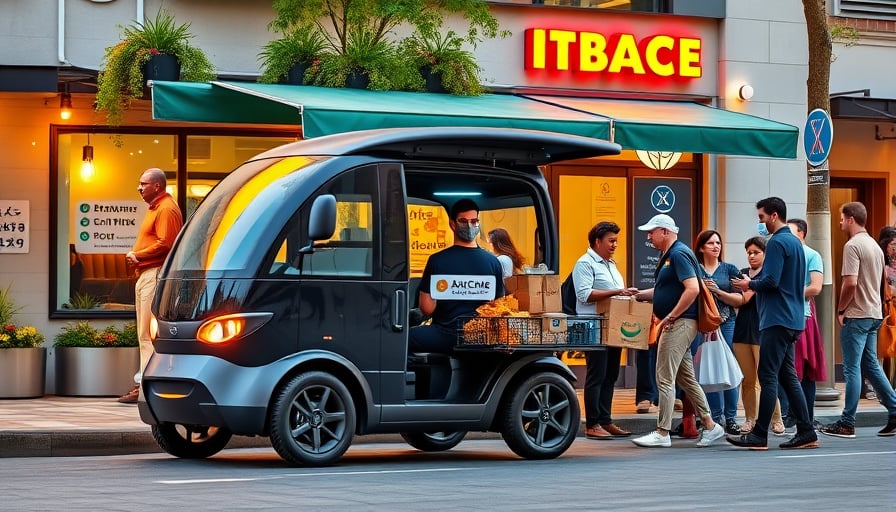
Corporate News Analysis: DoorDash and Waymo Collaboration as a Case Study in Omnichannel Innovation
Overview of the Transaction
DoorDash Inc., a leading technology‑driven food‑delivery platform, has entered a novel partnership with Waymo, Alphabet’s autonomous‑vehicle (AV) subsidiary. Under the agreement, DoorDash couriers receive a modest remuneration for operating as “door‑closers” on Waymo robotaxis. The task addresses a logistical hiccup: passengers frequently leave robotaxi doors ajar, causing the self‑driving system to halt and creating minor but cumulative traffic delays. DoorDash drivers are compensated per door‑closing action, with a verification bonus upon successful completion.
The collaboration is noteworthy not only for its immediacy but also for the way it signals broader industry trends in cross‑sector synergies, supply‑chain automation, and omnichannel retail strategy.
Strategic Implications for Consumer Goods Trends
- Shared Labor Pools
- The arrangement illustrates a shift toward a gig‑based labor ecosystem that can be leveraged across multiple verticals. By tapping into DoorDash’s existing workforce, Waymo reduces the need for a dedicated AV support staff, thereby cutting operating costs and increasing scalability.
- This trend is mirrored in other consumer‑goods sectors where platforms such as Amazon Flex and Instacart are expanding their service footprints by cross‑utilizing drivers for package pickup, grocery delivery, and now, autonomous‑vehicle maintenance.
- Demand for Immediate, Low‑Margin Services
- The modest fee per door‑closing job reflects a broader consumer demand for instantaneous, low‑margin services that enhance the user experience without significantly raising product prices. This aligns with the rise of micro‑services in consumer electronics and retail, where small, repeatable tasks (e.g., battery swapping, quick repairs) are outsourced to flexible workforces.
- Data‑Driven Service Optimization
- The verification bonus model incentivizes accurate task completion, thereby generating high‑quality data on door‑closing frequency and passenger behavior. Such data feeds into predictive maintenance models across the AV fleet, enabling proactive service scheduling and reducing downtime—an approach increasingly adopted by smart‑home and smart‑factory ecosystems.
Retail Innovation and Omnichannel Opportunities
- Integration of Physical and Digital Touchpoints
- DoorDash’s role as a door‑closer places its drivers at the physical interface of an autonomous system. This bridges the gap between online ordering and offline interaction, reinforcing the omnichannel concept where consumer experience is seamless across platforms. Retailers can emulate this by ensuring that physical store staff are trained to interact with digital services (e.g., AR‑guided checkouts, smart shelves).
- Dynamic Workforce Deployment
- By leveraging real‑time data, Waymo can deploy DoorDash drivers to high‑need zones, optimizing labor distribution based on traffic patterns. Retail chains such as Walmart and Target have adopted similar dynamic scheduling for their workforce, aligning staff availability with predicted peak shopping times.
- Brand Positioning Through Cross‑Industry Partnerships
- Both DoorDash and Waymo benefit from a co‑branding strategy that signals technological leadership and customer‑centric focus. DoorDash expands its brand beyond food delivery into broader service provision, while Waymo reinforces its commitment to operational reliability. This cross‑industry collaboration can serve as a blueprint for retailers seeking to partner with fintech or mobility startups to differentiate their brand.
Supply Chain Innovations and Long‑Term Transformation
- Autonomous Logistics as a New Supply‑Chain Layer
- The DoorDash‑Waymo partnership underscores the potential for autonomous vehicles to become a flexible, on-demand supply‑chain layer. Rather than owning dedicated fleets, companies can contract third‑party couriers to perform ancillary tasks (e.g., door‑closing, cargo loading), reducing capital expenditures.
- Resilience Through Decentralized Service Nodes
- By deploying DoorDash drivers as distributed service nodes, Waymo creates a more resilient network capable of rapid response to local disruptions. Retailers can replicate this by establishing decentralized fulfillment centers staffed by gig workers, thereby shortening last‑mile delivery times and enhancing consumer satisfaction.
- Data Integration for Predictive Maintenance
- The verification data collected during door‑closing tasks feed into Waymo’s predictive maintenance algorithms. As autonomous fleets expand, such data becomes critical for forecasting component wear and scheduling preventative repairs—an approach that can be extended to retail equipment (e.g., shelf‑stocking robots, in‑store kiosks).
Short‑Term Market Movements vs. Long‑Term Industry Transformation
- Short‑Term: The immediate financial impact of this arrangement on DoorDash’s earnings is negligible; however, it signals potential revenue diversification opportunities for the platform. Investors may view this as an exploratory step toward new gig‑based service offerings.
- Long‑Term: The collaboration exemplifies a strategic convergence of mobility and consumer services that could redefine supply chains and retail touchpoints over the next decade. As AV technology matures, we expect to see increased integration of autonomous fleets into last‑mile logistics, with gig platforms acting as flexible workforce intermediaries.
In summary, the DoorDash‑Waymo collaboration is more than a quirky partnership; it is a microcosm of emerging trends in consumer goods, retail innovation, and supply‑chain optimization. By embracing cross‑sector labor pooling, data‑driven service enhancements, and omnichannel integration, both companies are positioning themselves for sustained relevance in a rapidly evolving market landscape.