DoorDash’s Strategic Financing Move Signals a New Era for Grocery Delivery
DoorDash Inc. has announced on 23 November that it has secured a new unsecured loan facility of approximately $1.8 billion, which may be expanded to a maximum of $2 billion. The financing will cover a portion of the purchase price for the acquisition of grocery‑delivery platform Instacart, refinance existing debt of the target, and absorb transaction costs.
In addition to the term loan, the company has increased its existing revolving credit line by $1.5 billion, bringing the total commitment under the revolver to $3.5 billion. The revolver, which is set to mature in August 2031, can be used for general working‑capital purposes, including acquisitions and stock repurchases. The new term loan also reduces the outstanding commitments under a previously announced senior unsecured bridge facility, lowering the original $13 billion commitment to $11.2 billion.
The financing structure, disclosed in DoorDash’s 8‑K filing, shows that the term loan will be drawn only at the close of the Instacart transaction and will have no required amortization until its third anniversary. Interest will be based on a benchmark rate with an initial margin, and the facility is subject to customary fees and prepayment rights.
These moves underscore DoorDash’s strategy to expand its delivery ecosystem through acquisitions while managing debt levels and maintaining flexibility for future growth.
Digital Transformation Meets Brick‑and‑Mortar
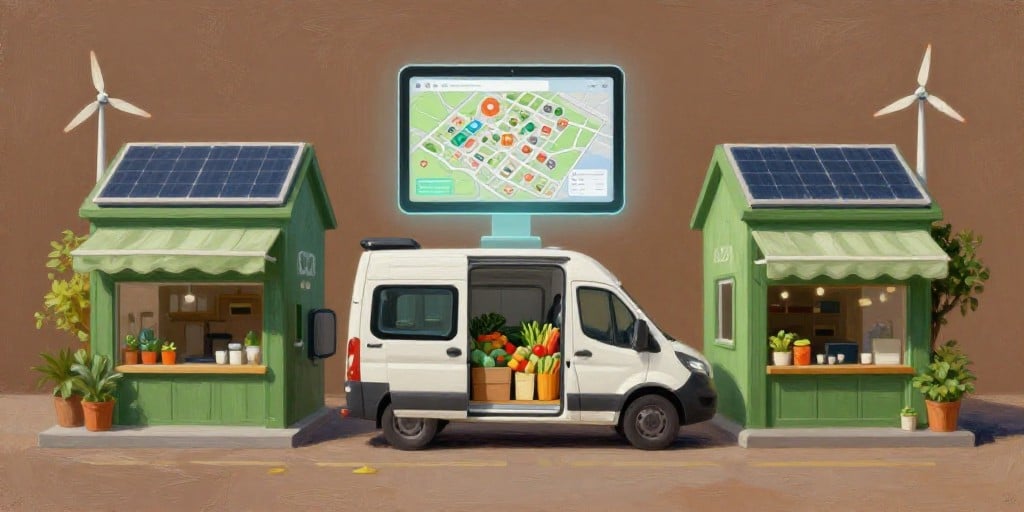
DoorDash’s financing decisions illuminate a broader shift in retail: the convergence of digital platforms with physical storefronts. As consumers increasingly seek the convenience of online ordering coupled with the immediacy of local pick‑up, delivery ecosystems must adapt to new expectations of speed, reliability, and personalization.
The Instacart acquisition will augment DoorDash’s presence in grocery delivery—a sector that has accelerated dramatically since the COVID‑19 pandemic. Grocery consumers now expect same‑day delivery, real‑time inventory updates, and seamless returns, demanding a robust digital infrastructure that can interface with a multitude of retail partners. By securing a sizeable unsecured loan, DoorDash demonstrates confidence that the synergies between its existing network and Instacart’s capabilities will generate incremental margins and broaden its customer base.
Generational Spending Patterns and New Market Opportunities
The grocery‑delivery market is increasingly shaped by generational spending habits. Millennials and Generation Z prioritize convenience and sustainability, often favoring local, ethically sourced products and digital payment methods. Baby Boomers, meanwhile, are adopting digital channels at a faster pace than previously assumed, driven by health considerations and an expanding range of e‑commerce options.
DoorDash’s capital allocation reflects an understanding of these nuanced demographic shifts:
| Generation | Key Preferences | DoorDash Opportunity |
|---|---|---|
| Baby Boomers | Trust in established brands, desire for easy‑to‑use platforms, focus on health & wellness | Expand partnerships with grocery chains that cater to seniors; develop simple UI enhancements and health‑specific product curation |
| Generation X | Work‑life balance, value quality over speed | Offer curated subscription services, loyalty rewards that emphasize cost savings and quality |
| Millennials | Sustainability, tech‑savvy, experience‑oriented | Integrate eco‑friendly packaging, real‑time delivery tracking, and social‑sharing incentives |
| Gen Z | Authenticity, rapid delivery, omnichannel experience | Leverage social‑commerce integration, AI‑powered recommendations, and micro‑delivery hubs |
By tailoring its service model to these preferences, DoorDash can capture higher basket sizes and increase customer retention across age cohorts.
Cultural Movements Driving Consumer Experience Evolution
Beyond demographics, cultural trends are redefining the consumer experience. Hyper‑localism, personalization, and ethical consumption are reshaping the way shoppers interact with brands.
Hyper‑localism: Consumers now expect local brands and independent retailers to be part of the digital ecosystem. DoorDash can serve as a conduit, enabling small businesses to reach wider audiences while preserving their local identity.
Personalization: AI and machine learning enable granular segmentation and product recommendations. DoorDash’s data analytics can deliver tailored grocery bundles, seasonal promotions, and predictive inventory management.
Ethical consumption: The rise of conscious consumerism fuels demand for transparent sourcing, fair‑trade products, and carbon‑neutral delivery options. DoorDash can collaborate with partners to provide verified product labels and offer carbon offset incentives.
These cultural currents collectively signal an evolution of consumer experiences from transactional to immersive, fostering deeper brand relationships.
Forward‑Looking Analysis: Market Opportunities and Strategic Implications
1. Vertical Integration as a Growth Lever
DoorDash’s acquisition of Instacart moves the company from a pure‑play logistics provider to a vertical‑integrated platform. This integration reduces reliance on third‑party retailers, lowers delivery costs, and creates new revenue streams such as subscription models (e.g., “Dash Unlimited” for grocery shoppers). The ability to own both the front‑end consumer interface and back‑end supply chain positions DoorDash to capture higher gross margins.
2. Capital Efficiency in an Era of Uncertainty
By opting for an unsecured loan and an expanded revolver, DoorDash maintains capital efficiency without overleveraging. The absence of collateral mitigates risk for the lender while preserving DoorDash’s balance sheet flexibility. The loan’s deferred amortization aligns cash flows with the projected earnings from the Instacart integration, ensuring that debt service obligations do not impede future investment in technology or geographic expansion.
3. Competitive Dynamics and Market Share Accretion
The grocery‑delivery arena is dominated by a few key players. DoorDash’s infusion of capital allows it to aggressively pursue market share through:
- Strategic partnerships with regional grocers and national chains.
- Marketing spend to build brand awareness among underserved demographics.
- Technology investments (e.g., autonomous delivery robots, AI‑driven demand forecasting).
As competition intensifies, DoorDash’s diversified revenue base (food delivery, grocery, and on‑demand services) provides a buffer against sector‑specific downturns.
4. Sustainability as a Differentiator
Investing in sustainable delivery solutions (e.g., electric vehicle fleets, carbon‑offset programs) not only satisfies regulatory expectations but also resonates with Gen Z and Millennial consumers. The new financing structure can support these initiatives, positioning DoorDash as a leader in eco‑friendly logistics.
5. Regulatory Landscape and Compliance
The expansion into grocery delivery brings DoorDash under stricter health, safety, and labor regulations. Adequate capital reserves will be essential to navigate potential litigation, unionization efforts, and changing food‑service standards.
Conclusion
DoorDash’s recent financing strategy illustrates a deliberate alignment of capital structure, strategic acquisitions, and consumer‑centric innovation. By bridging digital platforms with physical retail, catering to generational spending trends, and embracing cultural movements toward personalization and ethical consumption, the company is poised to transform the grocery‑delivery landscape. The combination of an unsecured term loan, a robust revolver, and reduced bridge facility commitments provides the liquidity necessary to execute its vision while preserving flexibility for future growth. For investors and industry observers alike, DoorDash’s moves underscore a broader market shift toward integrated, customer‑first ecosystems that seamlessly blend online convenience with real‑world accessibility.