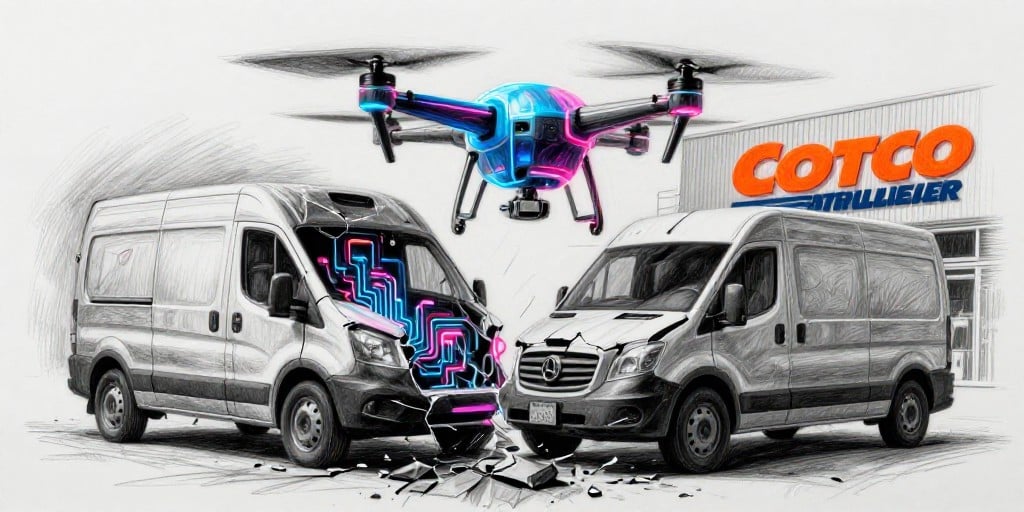
Service Outage and Strategic Expansion: DoorDash’s Dual Challenge
The on‑demand delivery market continues to evolve rapidly, with incumbents striving to balance operational reliability against aggressive growth initiatives. DoorDash Inc. recently found itself at the intersection of these priorities, experiencing a significant service disruption while simultaneously broadening its partnership ecosystem and testing novel delivery technologies.
Night‑Time Outage Highlights Operational Fragility
On the evening of September 27, thousands of DoorDash users reported that the application failed to load, place orders, or log in. The incident, which began early in the evening and peaked as a surge of complaints was recorded by outage‑tracking services, prompted widespread frustration on social media. Users cited error messages and unresponsive functionality that impeded their ability to access the app’s core services.
The outage underscored DoorDash’s heavy reliance on a seamless digital experience—a critical asset in a sector where latency and downtime translate directly into lost revenue and customer churn. While the company has historically invested in scalable cloud infrastructure, the event raises questions about its ability to sustain service availability amid rapid growth and increasingly complex supply chains. In the broader context of the gig‑delivery ecosystem, the incident illustrates the fragility that can accompany rapid scaling, especially when third‑party APIs and merchant integrations are tightly coupled to the platform.
Expanding the Marketplace: Costco Partnership
In contrast to the disruption, DoorDash has been actively expanding its partnership network. The platform recently announced a collaboration with Costco, enabling same‑day delivery of Costco products across the United States. This move taps into Costco’s strategic focus on attracting younger shoppers through third‑party delivery channels, a demographic that has proven challenging for traditional retail models.
The partnership complements DoorDash’s existing collaborations with Instacart and Uber Eats, reinforcing its position in the on‑demand grocery and household goods segment. By securing access to Costco’s extensive product catalogue, DoorDash can offer consumers a broader selection while increasing order volume and basket size. Moreover, the partnership may generate incremental revenue through per‑order fees and enhanced data insights into consumer purchasing patterns—an advantage that could inform dynamic pricing and inventory management strategies.
Autonomous Last‑Mile Exploration: Drone Pilots with Lowe’s and Wing
Parallel to its marketplace expansion, DoorDash has been testing emerging delivery technologies. The company has partnered with Lowe’s and Alphabet’s Wing to pilot drone delivery of small home‑improvement items within 20 minutes in a North Carolina test market. These pilots aim to explore autonomous last‑mile solutions that could reduce costs for lightweight, time‑sensitive orders.
While drone delivery remains in the early stages of deployment, DoorDash’s involvement signals a willingness to diversify its logistics capabilities beyond the traditional rider‑based model. By integrating aerial logistics, DoorDash could potentially bypass traffic congestion, reduce delivery times, and lower per‑order operational costs. However, the initiative also introduces regulatory hurdles, airspace coordination challenges, and safety considerations that the company must navigate carefully.
Strategic Implications and Market Dynamics
DoorDash’s recent events illustrate a broader trend in the delivery industry: firms are simultaneously investing in platform robustness while pursuing high‑growth partnership strategies and technological experimentation. The dual focus carries several implications:
Operational Resilience vs. Expansion: A failure in the digital layer can erode consumer trust, yet it may also accelerate investment in infrastructure and fail‑over mechanisms. The cost of downtime is amplified when the platform’s reach extends to major retailers like Costco and high‑traffic pilots such as drone delivery.
Competitive Positioning: By securing partnerships with both established brick‑and‑mortar players (Costco, Lowe’s) and cutting‑edge logistics innovators (Wing), DoorDash positions itself as a hybrid ecosystem that can cater to a wide range of consumer needs—from grocery to household goods to niche, rapid‑delivery items.
Economic Drivers: The continued growth of e‑commerce, rising consumer expectations for speed, and the shift toward omnichannel retail create a fertile environment for DoorDash’s strategic initiatives. Moreover, the economic trend toward automation and efficiency aligns with the company’s drone pilot experiments, potentially offering a competitive edge if scalability and regulatory approval are achieved.
Sector Cross‑Pollination: DoorDash’s engagement with grocery, home‑improvement, and autonomous delivery technologies demonstrates how a single platform can bridge traditionally separate sectors. This cross‑pollination not only diversifies revenue streams but also mitigates risk by spreading reliance across multiple market segments.
Conclusion
DoorDash’s September 27 outage and concurrent partnership and technology expansions embody the inherent tension in the on‑demand delivery space: the need to maintain an impeccable digital experience while relentlessly pursuing growth through strategic alliances and innovation. How the company balances these objectives will shape its competitive trajectory in a market that increasingly rewards both reliability and agility.