
Domino’s Pizza Inc. Reports Modest Q2 2026 Growth Amid Strategic Expansion
Domino’s Pizza Inc. announced its second‑quarter 2026 financial results on July 20 2026, delivering a nuanced picture of continued resilience in the fast‑food segment. While global retail sales edged upward, the company’s performance reflected a blend of incremental same‑store growth in the United States and a marginal decline in international markets. Operating and net income rose by a few percentage points, largely driven by stronger order volumes across both delivery and carry‑out channels.
Key Financial Highlights
- Global Retail Sales: Up modestly year‑over‑year; same‑store sales in the United States remained slightly positive, counterbalancing a minor dip in international sales.
- Operating Income: Increased by a few percentage points, underscoring tighter cost control and improved operational efficiency.
- Net Income: Mirrored the operating income trend, reflecting the company’s ability to translate sales growth into earnings.
- Capital Allocation: Board announced a quarterly dividend of approximately $2.00 per share and authorized additional share repurchases, signaling confidence in future cash flows.
- Store Expansion: Added 209 new stores during the quarter, including 26 openings in the United States, reinforcing a geographic diversification strategy.
Investor Reaction and Market Context
Shares of Domino’s advanced in the pre‑market session prior to the earnings call, demonstrating investor confidence in the company’s strategic initiatives. A technical glitch forced the call to be rescheduled, yet Domino’s maintained transparency by providing investor queries through its standard communication channels.
In related filings, a senior officer disclosed share transactions executed under a Rule 10b5‑1 trading plan, with holdings remaining predominantly direct. This activity underscores the importance of maintaining rigorous compliance and governance practices during periods of heightened investor scrutiny.
Strategic Editorial Perspective
Consumer Goods Trends
The modest uptick in global retail sales reflects broader consumer behavior shifts toward convenience and digital ordering. In a market where time poverty continues to drive demand for quick‑serve food, Domino’s has positioned itself as a leader in the delivery segment, leveraging data analytics to optimize menu offerings and promotional strategies.
Retail Innovation
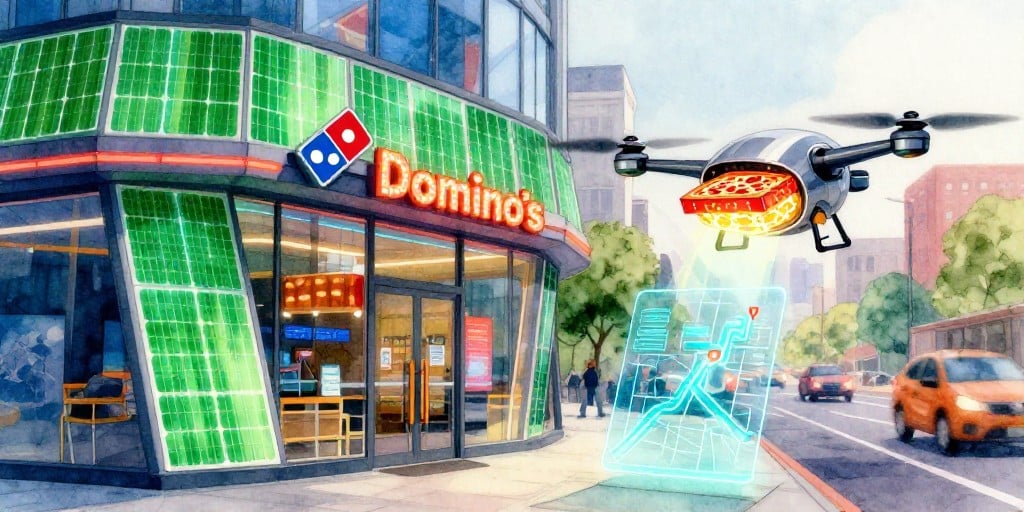
Domino’s investment in technology—such as its real‑time order tracking, AI‑driven demand forecasting, and contactless payment solutions—has accelerated the adoption of omnichannel retail. By integrating in‑store pickup with home delivery, the company delivers a seamless experience that aligns with evolving consumer expectations for flexibility and speed.
Brand Positioning
Domino’s brand narrative has pivoted toward a dual emphasis on quality and sustainability. The company’s commitment to reducing food waste, sourcing responsibly, and improving packaging materials resonates with environmentally conscious consumers. This repositioning differentiates Domino’s in a crowded fast‑food market and supports premium pricing strategies in select markets.
Cross‑Sector Patterns
Analyzing market data across adjacent consumer categories—such as coffee chains, grocery delivery services, and meal‑kit providers—reveals a cross‑sector convergence around real‑time logistics, data‑driven personalization, and subscription‑based revenue models. Domino’s continued expansion of subscription‑style loyalty programs mirrors trends seen in the beverage and snack sectors, indicating a shared strategy to deepen customer engagement and drive repeat business.
Omnichannel Retail Strategies
Domino’s integrated approach—combining online ordering, mobile apps, and traditional drive‑through service—highlights the efficacy of a hybrid retail model. The company’s ability to scale new store openings while simultaneously investing in digital infrastructure positions it to capitalize on the next wave of consumer expectations, including same‑day delivery and curb‑side pickup.
Supply Chain Innovations
The company’s supply chain enhancements—such as regional distribution centers, predictive inventory management, and partnerships with local suppliers—have reduced lead times and improved cost efficiency. These innovations are critical as the industry navigates volatile commodity prices and geopolitical disruptions. Domino’s focus on agile sourcing aligns with broader industry shifts toward resilience and sustainability.
Short‑Term Market Movements vs. Long‑Term Transformation
While short‑term market dynamics—such as geopolitical tensions in the Middle East and fluctuating oil prices—have exerted pressure on equity futures, Domino’s performance remained insulated due to its robust operational metrics. In the long term, the company’s strategic emphasis on omnichannel innovation, brand differentiation, and supply chain agility will likely drive sustainable growth, positioning Domino’s to navigate both cyclical volatility and structural shifts in consumer behavior.
By anchoring its growth strategy in technology, customer experience, and operational excellence, Domino’s Pizza Inc. demonstrates a compelling blueprint for success in the evolving fast‑food landscape. The company’s recent financial results reinforce its trajectory, while its continued investment in innovation signals readiness to capitalize on emerging opportunities across the consumer goods sector.