
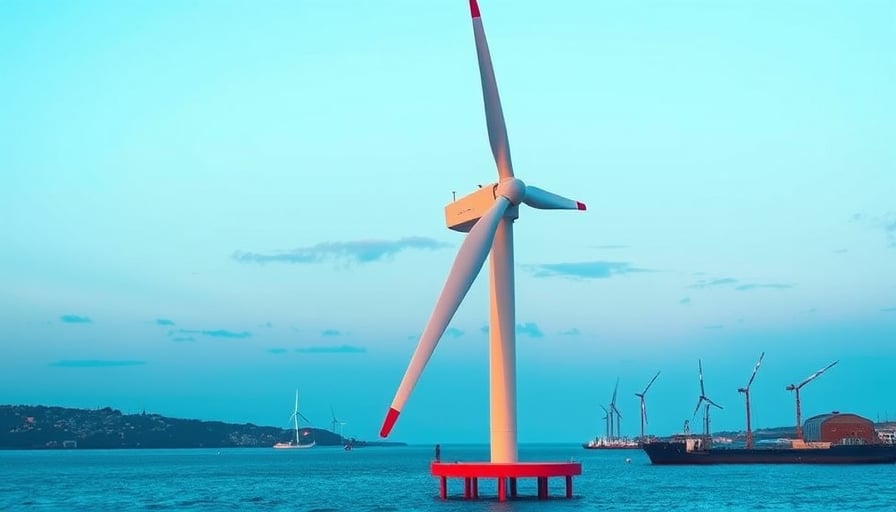
Dominion Energy Secures Court Order to Resume Offshore Wind Construction
Dominion Energy Inc. has obtained a judicial ruling that permits the company to restart construction on a wind development project off the coast of Virginia. The order, issued by Judge Jamar Walker in Norfolk, Virginia, overturned a stop‑work directive issued by the U.S. Department of the Interior that had halted several East Coast offshore wind projects on national‑security grounds.
Legal Context and Financial Implications
Dominion’s legal brief highlighted that the Interior’s pause had inflicted “significant financial harm” on the company, citing delayed cash flow, sunk capital, and contractual penalties. By securing the injunction, Dominion mitigates these losses and re‑establishes its construction timeline. The decision reflects the broader legal contention between the Department of the Interior and private developers over the scope of federal authority to impose temporary suspensions on large‑scale renewable projects.
Industry-Wide Resonance
This ruling aligns with a series of recent court decisions that have cleared the path for similar offshore wind initiatives in New York, Rhode Island, and Virginia. The pattern suggests an evolving judicial approach that balances national‑security concerns with the economic and environmental imperatives of renewable infrastructure development. Nonetheless, analysts caution that the policy landscape remains uncertain, as the Department of the Interior retains the authority to enact further restrictions or impose additional review requirements.
Strategic Positioning and Market Dynamics
From a corporate perspective, Dominion Energy’s ability to resume construction positions the company favorably within the competitive offshore wind market, where project delivery speed and cost efficiency are critical. The company’s decision to contest broader government restrictions demonstrates a proactive stance aimed at safeguarding future development opportunities and maintaining a pipeline of projects that could contribute to its long‑term renewable portfolio.
The interplay between federal regulatory actions and judicial responses underscores a key dynamic in the renewable energy sector: the need for companies to develop robust legal and compliance frameworks that can withstand shifting policy environments. This environment also compels investors to consider regulatory risk as part of their assessment of renewable project viability.
Economic and Policy Implications
The court’s ruling may influence national policy discussions around offshore wind, particularly regarding the balance between energy security and renewable expansion. By allowing projects to proceed, the decision could accelerate the deployment of clean energy generation, supporting job creation and aligning with broader climate objectives. Conversely, continued legal challenges may prompt policymakers to clarify the boundaries of federal authority, potentially leading to more predictable frameworks that benefit the industry.
In summary, Dominion Energy’s recent injunction marks a significant development in the offshore wind sector, illustrating the ongoing negotiation between corporate ambition, federal regulatory power, and judicial oversight. The case will likely continue to shape strategic planning and investment decisions across the renewable energy landscape, as companies and regulators alike adjust to an evolving intersection of environmental goals and national security considerations.