Corporate News Analysis: Dominion Energy and NextEra Energy Merger Announcement
Dominion Energy, Inc. (NYSE: D) and NextEra Energy, Inc. (NYSE: NEE) have jointly advanced a significant consolidation within the regulated utilities sector, filing a Rule 425 notice with the U.S. Securities and Exchange Commission (SEC) on October 27, 2026. The disclosure confirms that both entities have executed a definitive joint proxy statement and prospectus, which the SEC approved on July 23, 2026. This filing represents a pivotal milestone in the planned business combination and offers stakeholders a comprehensive view of the transaction’s structure, anticipated synergies, and attendant risks.
Transaction Structure and Strategic Rationale
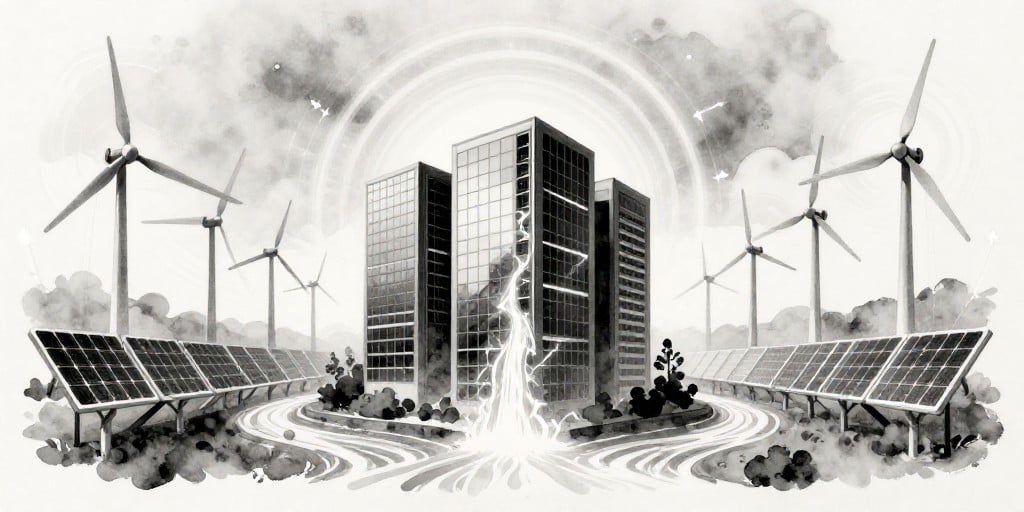
The combined entity aims to create one of the largest integrated renewable energy portfolios in the United States, leveraging NextEra’s leading position in wind and solar generation and Dominion’s extensive distribution network across the Mid‑Atlantic region. Key features of the merger include:
| Element | Description |
|---|---|
| Equity Structure | Dominion shareholders will receive a fixed number of NEE shares, subject to adjustments for anti‑dilution provisions and the execution of definitive agreements. |
| Debt Assumption | The transaction will involve the assumption of certain Dominion debt obligations, with a structured repayment schedule aligned to the combined company’s cash‑flow projections. |
| Regulatory Pathway | The merger is expected to obtain approvals from the Federal Energy Regulatory Commission (FERC), the Public Service Commission of Virginia, and the New York Public Service Commission, among other state bodies. |
| Integration Timeline | A phased integration plan spanning 24–36 months is outlined, focusing first on overlapping operations, followed by the consolidation of IT, human resources, and corporate governance functions. |
The strategic intent is to generate cost efficiencies through economies of scale, expand the renewable portfolio to meet evolving regulatory mandates, and enhance capital allocation flexibility for future infrastructure investments.
Anticipated Benefits
- Revenue Synergies – Combining Dominion’s regulated tariff structure with NextEra’s high‑margin renewable generation is projected to improve overall profitability margins by 1–2 percentage points over a five‑year horizon.
- Cost Reductions – Shared procurement of equipment, unified maintenance schedules, and consolidated procurement functions are expected to yield annual cost savings of $150–200 million.
- Regulatory Advantage – The merged entity will possess a diversified asset base that aligns with the Clean Energy Standard and the Regional Greenhouse Gas Initiative, positioning it favorably for future policy shifts.
- Capital Efficiency – Enhanced credit ratings anticipated from the combined balance sheet will lower the weighted average cost of capital by 0.3–0.5%, facilitating new renewable projects and infrastructure upgrades.
Potential Risks and Challenges
- Integration Complexity – Merging distinct corporate cultures, legacy systems, and regulatory obligations presents a non‑trivial execution risk that could delay projected synergies.
- Regulatory Approval Uncertainty – While initial filings indicate favorable conditions, the final outcome will depend on the resolution of multiple state‑level regulatory reviews, which could impose remedial requirements or delay the transaction.
- Market Reaction – Short‑term volatility in share prices could arise if investors perceive the valuation of the transaction as over‑ambitious or if integration costs exceed initial estimates.
- Financing Conditions – The transaction’s completion is contingent on securing debt and equity financing on terms that do not materially alter the agreed-upon structure.
Broader Industry and Economic Context
The utilities sector is currently navigating a shift toward decarbonization, accelerated by federal and state policy initiatives. The merger between Dominion Energy and NextEra Energy exemplifies a broader trend of consolidation among regulated utilities seeking to:
- Diversify Energy Mix – Transition from fossil‑fuel‑dependent generation to renewable sources to meet emission targets and avoid stranded asset risks.
- Improve Operational Resilience – Integrate advanced grid technologies, such as battery storage and smart‑metering, to enhance reliability and customer service.
- Access Capital Markets – Leverage combined credit strength to fund large‑scale infrastructure projects, including transmission upgrades and distributed energy resources.
In the macroeconomic sphere, the ongoing transition to a low‑carbon economy is expected to drive demand for renewable infrastructure, potentially increasing the value of assets held by a merged entity. Moreover, the combined company’s scale may improve its bargaining position with suppliers and regulators, yielding a competitive edge that extends beyond the utilities domain into adjacent sectors such as energy storage, electric vehicle charging networks, and smart‑grid services.
Stakeholder Communication
The Rule 425 notice explicitly targets NextEra employees, acknowledging that the communication contains forward‑looking statements and uncertainties inherent in a large‑scale corporate combination. Investors and security holders are encouraged to review the full registration statement and proxy materials, which are accessible on both companies’ investor‑relations websites. The filing underscores that the transaction remains subject to conditions and approvals and clarifies that no securities are being offered at this stage.
Conclusion
The Dominion Energy–NextEra Energy merger represents a strategic alignment of complementary strengths in a rapidly evolving utilities landscape. While the potential for significant value creation is evident, the transaction’s success will hinge on disciplined execution of integration plans, timely regulatory approvals, and effective risk management. The merger not only reshapes the competitive dynamics within the regulated utilities sector but also serves as a bellwether for broader economic shifts toward sustainable energy infrastructure.