
Corporate News
Dollar General Corp., a broad‑line retailer of consumer staples traded on the New York Stock Exchange, has recently undergone a series of developments that underscore the dynamic interplay between digital innovation, changing consumer demographics, and evolving retail landscapes.
Leadership Transition and Strategic Vision
The board’s recent appointment of a new chairman—following the retirement of a long‑time director—signals a potential recalibration of corporate strategy. In a market increasingly driven by agile governance and forward‑thinking leadership, this transition may open avenues for deeper integration of data‑driven decision‑making and enhanced stakeholder engagement. For investors, a refreshed board can be interpreted as a commitment to sustaining growth while managing operational risk.
Expansion of Same‑Day Delivery into Rural Markets
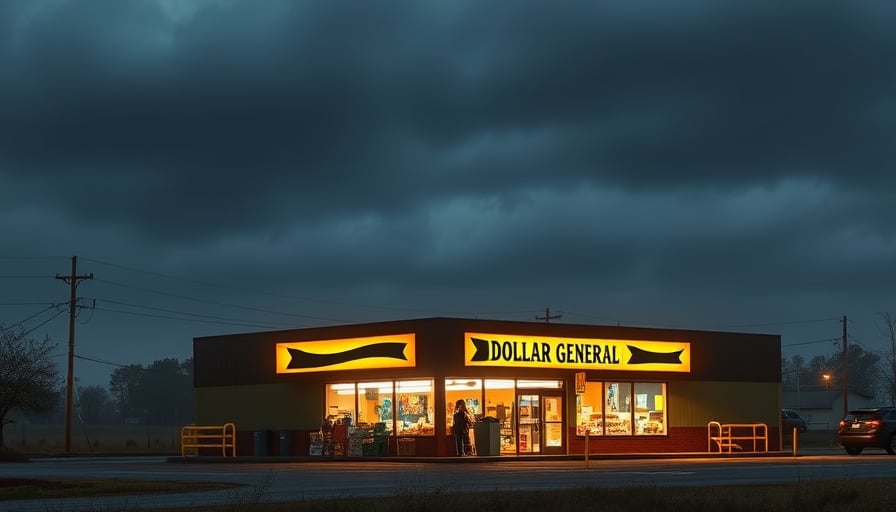
Dollar General’s announcement of an expanded same‑day delivery service, now available in more rural communities through its app and website, reflects a broader industry pivot toward blending online convenience with physical retail presence. By leveraging its extensive network of small, high‑traffic stores, the company has created a hybrid model that mitigates the “last‑mile” challenge that has traditionally hampered e‑commerce in underserved regions.
This strategy aligns with current consumer expectations: a growing segment of households—particularly in lower‑income brackets and rural areas—demands rapid, cost‑effective access to essential goods. By capitalizing on this demand, Dollar General positions itself to capture a market segment that has historically been under‑served by traditional online retailers.
Financial Performance and Investor Sentiment
In its fourth‑quarter earnings report, Dollar General surpassed analyst forecasts, delivering a performance that has attracted heightened interest from institutional investors. The company’s ability to maintain profitability while expanding services demonstrates resilience amid rising operational costs and supply‑chain volatility.
Significant share purchases by a prominent equity ETF and a substantial acquisition by a cantonal bank in Zurich underscore the firm’s appeal to both global and regional investors. Such inflows can be viewed as a vote of confidence in the company’s business model, which appears to balance steady cash flows with strategic growth initiatives.
Societal Trends and Market Opportunities
Digital Transformation Meets Brick‑and‑Mortar
The convergence of digital tools and physical retail is reshaping the consumer experience. Dollar General’s app‑based delivery model exemplifies how retailers can harness technology to extend reach without abandoning the advantages of proximity and immediacy. This dual approach is especially resonant among Generation Z and Millennials, who prioritize convenience but also value tangible interactions with product shelves.
Demographic Shifts
The United States’ demographic landscape is evolving, with a growing proportion of the population residing outside major metropolitan areas. Rural and suburban households are increasingly tech‑savvy, driving demand for omnichannel retail solutions. Dollar General’s rural expansion directly addresses this trend, positioning the brand as a provider of essential goods in communities that previously faced limited options.
Cultural Movements and Consumer Expectations
Contemporary cultural narratives emphasize sustainability, community engagement, and affordability. By offering a wide array of consumer staples at competitive prices and extending its service footprint, Dollar General taps into the “everyday hero” image—a retailer that supports the day‑to‑day lives of ordinary families. Moreover, the company’s digital initiatives can be leveraged to promote sustainable packaging, local sourcing, and transparent supply chains—values that resonate strongly with younger, socially conscious consumers.
Forward‑Looking Analysis
Continued Expansion of Delivery Services Dollar General is likely to refine its logistics network, potentially integrating autonomous delivery vehicles or partnering with local carriers to reduce costs and increase speed. Successful execution could set a benchmark for competitors seeking to bridge the rural‑urban divide.
Data‑Driven Inventory Management With an expanded digital platform, the retailer can collect granular consumer data, enabling predictive stocking and personalized promotions. This capability will enhance margin control and customer loyalty.
Evolving Store Formats The company may experiment with micro‑stores or pop‑up locations in high‑traffic rural corridors, further reducing overhead while maintaining the low‑price proposition.
Capital Allocation Positive earnings momentum and investor confidence provide a solid foundation for reinvestment in technology, real estate, and potential acquisitions that complement its core model.
Regulatory and Supply‑Chain Considerations As the retailer scales, it will need to navigate evolving regulatory frameworks around data privacy, labor, and environmental standards—areas where proactive compliance can translate into competitive advantage.
In summary, Dollar General’s recent leadership change, strategic delivery expansion, and robust financial performance illustrate how a retailer can successfully navigate the intersection of digital transformation and physical presence. By aligning its operations with demographic realities and cultural values, the company creates tangible opportunities for sustained growth and market relevance.