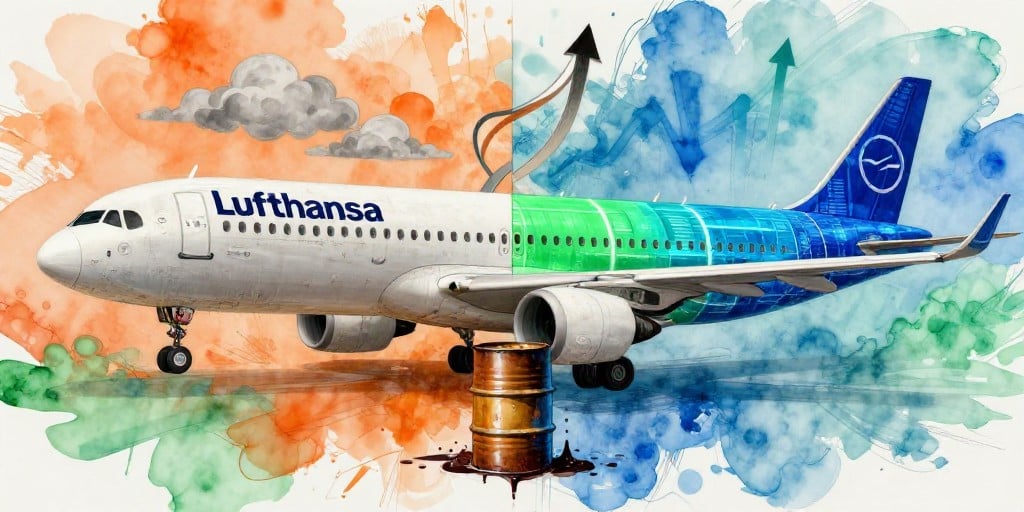
Deutsche Lufthansa Group Announces Strategic Restructuring of KLM Amid Rising Fuel Costs
Deutsche Lufthansa Group (DLG) has announced a comprehensive restructuring of its Dutch subsidiary, KLM Royal Dutch Airlines, aimed at tightening the airline’s cost base and aligning its fleet strategy with shifting market dynamics. The decision follows a projected rise in the group’s 2026 fuel bill and a modest adjustment to its capacity‑growth outlook, prompting a reevaluation of KLM’s network and operational footprint.
Fleet Rationalisation and Route Concentration
Central to the reorganisation is the retirement of older aircraft models in KLM’s fleet. By phasing out legacy narrow‑body and regional jets, the group intends to focus the carrier’s fleet on a core network of direct flights to and from Amsterdam Schiphol. This shift is designed to improve aircraft utilisation, reduce maintenance costs, and enhance scheduling flexibility across high‑yield routes. Analysts note that the move mirrors a broader industry trend toward fleet simplification as airlines seek to hedge against volatile fuel prices and capital constraints.
Workforce and Cost‑Cutting Measures
The restructuring will result in the elimination of approximately 1,000 positions within KLM, contributing to a total workforce reduction of 5,000 employees across the division. The scale of the cuts underscores the group’s commitment to cost discipline, yet it also raises concerns regarding workforce morale, operational resilience, and potential disruptions to customer service. DLG’s management has indicated that the cuts will be targeted in support functions and lower‑yield routes, but the precise impact on frontline operations remains to be seen.
Fuel‑Price Volatility and Regulatory Pressures
Fuel costs constitute the largest variable expense for airlines, and DLG’s recent projection of a higher fuel bill for 2026 reflects broader market pressures, including a resurgence in oil prices following a temporary easing in 2023. In addition, the European Union’s evolving emissions regulations—particularly the Carbon Border Adjustment Mechanism—are expected to increase compliance costs for airlines with older, less efficient fleets. By retiring older aircraft and focusing on a streamlined network, KLM aims to reduce its carbon footprint and avoid future regulatory penalties.
Market Dynamics and Competitive Landscape
The restructuring comes at a time when low‑cost carriers (LCCs) continue to erode market share on short‑haul routes, while full‑service carriers vie for premium traffic on long‑haul segments. KLM’s decision to concentrate on direct flights to Schiphol positions it to capture a larger share of the premium segment, particularly on routes to India and Asia, where demand remains robust. However, this strategy could leave the carrier vulnerable to LCC competition on secondary routes and may limit its ability to offer feeder traffic that supports long‑haul traffic flow.
Investment in Premium Offerings and Network Optimisation
Despite workforce reductions, DLG has reiterated its commitment to investing in premium offerings and network optimisation. The group’s focus on enhancing cabin experience, expanding loyalty benefits, and improving digital engagement is designed to bolster revenue per passenger and increase ancillary revenue streams. Market research indicates that consumers in high‑yield markets value differentiated services, which can translate into higher yields even as overall passenger volumes stabilize.
Financial Implications
Preliminary financial analysis suggests that the restructuring will generate an estimated €400 million in one‑time cost savings over the next fiscal year, with additional recurring savings of €70 million annually as the new fleet composition stabilises. These figures are derived from DLG’s published operating expense projections and the historical cost data for KLM’s fleet maintenance and crew operations. While the upfront investment required for fleet renewal and workforce transitions is significant, the long‑term profitability trajectory appears favourable, provided the airline can maintain load factors above 80 % on its core routes.
Potential Risks and Opportunities
Risks
- Operational Disruption: Rapid workforce reductions may affect crew availability and customer service quality.
- Market Perception: A perception of contraction could dampen investor confidence and erode market share to agile competitors.
- Regulatory Uncertainty: Future tightening of EU emissions rules could impose unforeseen costs on the newly streamlined fleet.
Opportunities
- Cost Leadership: A leaner fleet and focused network can deliver lower average cost per available seat kilometre (ASK), enhancing competitiveness.
- Premium Revenue Growth: Investments in premium services and digital channels can boost ancillary revenue, mitigating the impact of lower passenger volumes.
- Strategic Positioning in Emerging Markets: Concentrating on high‑yield routes to India and Asia aligns with long‑term growth trajectories in these regions.
Conclusion
Deutsche Lufthansa Group’s restructuring of KLM represents a calculated response to rising fuel costs, regulatory pressures, and a shifting competitive landscape. By rationalising its fleet, concentrating on a core network, and investing in premium offerings, the group aims to secure long‑term profitability while navigating the challenges of an increasingly complex airline environment. The success of this strategy will hinge on the company’s ability to manage operational disruptions, sustain high load factors, and adapt to future regulatory and market shifts.