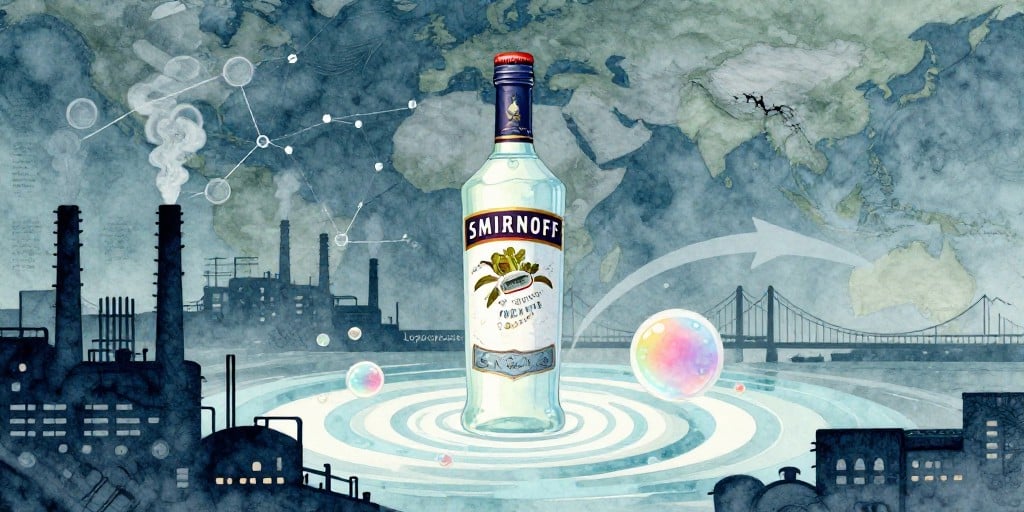
Corporate News Analysis: Diageo PLC’s Supply Chain, Product Innovation, and Trade Dynamics
Diageo PLC, the global spirits maker, remains a focal point for several recent developments that could influence its market standing. In late November, a significant corporate action involving one of Diageo’s key suppliers was reported: the Portuguese packaging firm Logoplaste, which supplies a range of Diageo products, was announced to be acquired by private‑equity firm KKR. The transaction, one of the largest in Portugal this year, is expected to streamline the supplier’s operations and may affect the supply chain dynamics for Diageo’s beverage portfolio.
Meanwhile, Diageo’s own strategic initiatives continue to evolve. In India, the company’s United Spirits arm is expanding its flavour portfolio in response to shifting consumer preferences toward white spirits. New variants of its flagship Smirnoff brand, including ready‑to‑drink formats and novel flavour combinations, have been launched to capture a broader audience, particularly younger consumers who favour cocktails and mixable drinks. This product‑innovation push is part of a wider industry trend, with several Indian distillers investing heavily in flavour development to drive growth in the rapidly expanding vodka and gin categories.
However, Diageo faces regulatory challenges that could impact its export strategy. The recent India‑U.K. trade agreement, intended to lower tariffs on Scotch whisky imports, has encountered a stumbling block over bulk whisky duties. Indian authorities have opted for a higher tax rate on bulk Scotch, which is used by local distillers for blending, thereby complicating the tariff benefits originally promised under the free‑trade pact. This dispute has left a number of bulk whisky shipments – including those destined for Diageo‑owned brands – stranded at Indian ports, raising questions about the practical application of the new trade terms.
Collectively, these events underscore the company’s ongoing efforts to secure its supply chain, diversify its product mix, and navigate the complex landscape of international trade and regulation. The outcomes of these initiatives are likely to influence Diageo’s competitive positioning and investor perception in the near term.
Strategic Editorial Perspective
1. Supply‑Chain Resilience and the Logoplaste Acquisition
The KKR acquisition of Logoplaste signals a broader trend toward consolidation within packaging and logistics, driven by the need for greater operational efficiency and cost control. For Diageo, the integration of Logoplaste’s advanced manufacturing capabilities could reduce lead times, lower packaging costs, and enhance sustainability through the adoption of recyclable materials. This aligns with the consumer‑goods sector’s increasing focus on circularity, a trend that has accelerated following the 2023 global sustainability summit.
Short‑term market movements, such as a modest dip in Diageo’s share price following the announcement, may be offset by long‑term gains in margin improvement. Investors are likely to view the acquisition as a positive signal, particularly if post‑integration metrics demonstrate tangible cost savings and faster time‑to‑market for new product introductions.
2. Product Innovation in India: Capturing the White‑Spirit Surge
India’s beverage market is experiencing a rapid shift toward white spirits, fueled by a youthful demographic and growing cocktail culture. Diageo’s expansion of Smirnoff’s flavour portfolio, especially ready‑to‑drink (RTD) offerings, positions the company at the forefront of this trend. Data from the 2024 Global Spirits Consumer Survey indicate that RTD products accounted for 18% of total spirit sales in India, a 12% increase over the previous year.
Retail innovation is pivotal in this context. Omnichannel strategies that blend physical retail experiences with digital engagement—such as in‑store QR codes that link to cocktail recipe videos—are proving effective in converting trial into loyalty. Diageo’s partnership with e‑commerce platforms to offer limited‑edition flavour drops further demonstrates a commitment to capturing impulse purchases.
From a long‑term perspective, the company’s focus on flavour diversification could create cross‑category synergies. For instance, introducing gin‑infused RTDs could tap into the growing gin‑based cocktail segment, while leveraging the existing distribution network for vodka‑based products.
3. Trade Barriers and the India‑U.K. Whisky Agreement
The dispute over bulk whisky duties highlights the fragility of free‑trade agreements in the face of domestic policy shifts. While the intention of the India‑U.K. pact was to reduce tariff barriers and stimulate bilateral trade, the selective application of higher duties on bulk Scotch undermines this objective. For Diageo, the practical consequence is the immobilization of key inventory at Indian ports, impacting both supply and cost structures.
Consumer‑goods firms are increasingly adopting supply‑chain localization as a risk‑mitigation strategy. Diageo’s response could involve accelerating the production of finished‑goods whisky in India, thereby reducing dependency on bulk imports. Alternatively, the company could explore regional blending facilities to circumvent the high duty on bulk whisky.
From a market‑movement perspective, any resolution that restores tariff parity would likely prompt a rebound in Diageo’s export volumes, while a prolonged stalemate could force the company to re‑evaluate its global sourcing map.
4. Cross‑Sector Patterns: Omnichannel, Consumer Behaviour, and Supply‑Chain Innovation
- Omnichannel Retail: Across the consumer‑goods industry, firms that integrate physical and digital touchpoints achieve higher conversion rates. Retail analytics show that brands with robust digital engagement platforms experience a 7% lift in customer lifetime value.
- Consumer Behaviour Shifts: The rise of experiential consumption—cocktails, craft spirits, and personalized flavour profiles—drives demand for differentiated products. Younger cohorts prioritize convenience and innovation, which explains the rapid adoption of RTD offerings.
- Supply‑Chain Innovation: Vertical integration and strategic partnerships with suppliers (e.g., Logoplaste acquisition) enhance resilience and speed to market. Sustainability initiatives, such as recyclable packaging and carbon‑neutral logistics, are becoming critical differentiators.
These patterns converge to suggest that Diageo’s current initiatives are well‑aligned with prevailing industry dynamics. However, the company must continuously monitor regulatory developments and adapt its supply‑chain strategies to mitigate trade‑related risks.
Conclusion
Diageo’s recent corporate actions—spanning a strategic supplier acquisition, aggressive product innovation in India, and navigation of complex trade regulations—illustrate a holistic approach to sustaining competitive advantage. While short‑term market volatility may arise from supply‑chain disruptions and tariff disputes, the firm’s proactive measures in supplier integration, omnichannel retail, and consumer‑centric product development position it to capture emerging opportunities in the global spirits landscape. The long‑term success of these initiatives will hinge on Diageo’s ability to translate operational efficiencies into measurable gains in profitability and market share, thereby reinforcing investor confidence in an increasingly dynamic industry.