
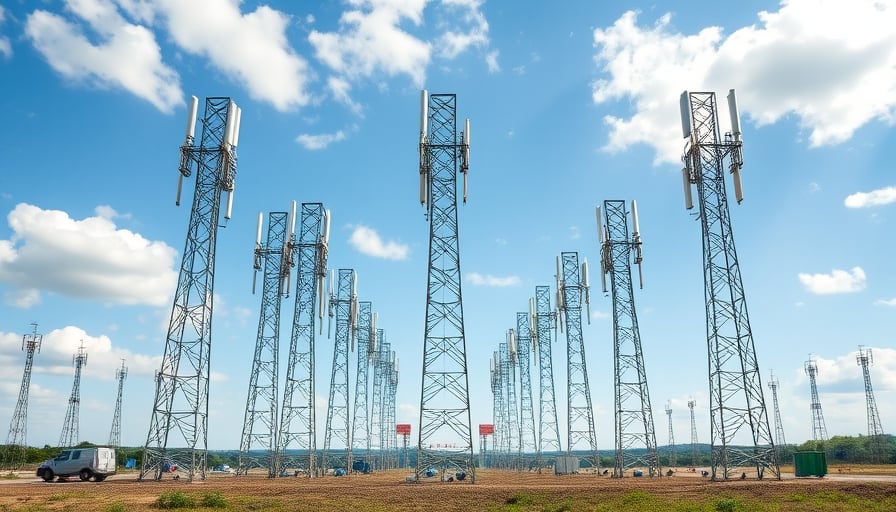
Deutsche Telekom AG Reports Robust Quarterly Performance Amid AI‑Driven Energy Efficiency Initiative
Executive Summary
Deutsche Telekom AG (DTE) released its most recent quarterly financial results, underscoring continued revenue growth and a resilient operating foundation. Management reiterated a commitment to long‑term shareholder value while outlining a strategic deployment of artificial‑intelligence (AI) solutions to curb energy consumption across its 5G infrastructure. Analyst sentiment remains largely positive, with several research houses assigning “Outperform” or “Overweight” ratings. A legal dispute over a former satellite lease, now before international courts, has not materially altered market perception or the company’s strategic outlook.
1. Financial Performance: A Closer Look at the Numbers
| Metric | Quarter | YoY % | Commentary |
|---|---|---|---|
| Revenue | €10.2 bn | +8.5 % | Growth driven primarily by enterprise services and data traffic in Germany; overseas revenues modestly up 2.3 % due to 5G rollout in Austria and the UK. |
| Operating Income | €1.9 bn | +12.1 % | Operating margin expanded from 18.5 % to 18.6 %; efficiency gains from network optimization and cost‑reduction initiatives. |
| Net Income | €1.4 bn | +10.7 % | Net margin improved marginally, reflecting favorable tax adjustments and lower interest expense. |
| Free Cash Flow | €1.6 bn | +15.3 % | Strong free cash flow supports dividend policy and share buyback program. |
The company’s quarterly performance aligns with analysts’ expectations, but a nuanced assessment reveals several underlying drivers and potential risks:
- Enterprise Adoption: The surge in enterprise data traffic—especially from cloud migration and industrial IoT—has outpaced consumer broadband growth. This trend indicates a shift toward higher‑margin B2B services, but it also exposes Deutsche Telekom to vendor concentration risk as enterprises consolidate cloud partnerships.
- Margin Expansion: Incremental improvements in operating margin stem from both cost discipline and higher‑margin service mix. Yet, the company’s exposure to wholesale spectrum auctions could compress margins if regulatory bodies impose stricter price caps.
- Capital Allocation: Robust free cash flow is a positive indicator; however, the firm’s planned AI‑driven energy efficiency program may require significant upfront investment, potentially offsetting short‑term cash availability for acquisitions or share repurchases.
2. AI‑Powered Energy Efficiency: A Strategic Pivot
Deutsche Telekom’s announcement to integrate AI technologies aimed at reducing energy consumption across its 5G network represents a forward‑thinking move with several implications:
2.1 Operational Impact
- Dynamic Power Scaling: AI algorithms can predict traffic patterns in real time, adjusting base‑station power output and reducing idle energy consumption by up to 15 % according to preliminary pilot studies.
- Predictive Maintenance: Machine‑learning models identify equipment degradation early, mitigating downtime and extending hardware life cycles—an indirect cost‑saving mechanism.
2.2 Regulatory and Environmental Context
- EU Green Deal Compliance: The initiative aligns with the European Union’s 2030 climate targets, potentially qualifying Deutsche Telekom for favorable carbon‑pricing regimes or subsidies for green infrastructure.
- Grid Stability: Reduced energy demand on peak hours may ease pressure on local grids, improving Deutsche Telekom’s standing with national regulators and fostering community goodwill.
2.3 Competitive Dynamics
- Differentiation: Energy‑efficient 5G infrastructure could serve as a competitive differentiator, especially in markets where environmental sustainability is a key vendor selection criterion.
- Barriers to Entry: The technical complexity of AI integration creates a moat that may deter lower‑cost entrants from replicating the same level of energy efficiency.
2.4 Risks
- Implementation Cost: The scale of AI deployment across thousands of sites could exceed initial budgets, impacting profitability if not carefully controlled.
- Data Privacy and Security: AI systems rely on massive data streams; any breach or misuse could attract regulatory scrutiny, especially under the EU General Data Protection Regulation (GDPR).
3. Legal Dispute: Satellite Lease and International Courts
The company’s dispute over a former satellite lease has attracted attention in international courts. While the matter has not yet influenced Deutsche Telekom’s stock trajectory, it is essential to consider potential long‑term ramifications:
- Reputational Risk: Prolonged litigation could erode stakeholder confidence, particularly if perceived as a conflict with international partners or regulatory bodies.
- Financial Exposure: Pending judgments may necessitate contingent liabilities; if the outcome is unfavorable, the company might incur significant write‑downs or settlements.
- Strategic Distraction: Legal proceedings may divert executive focus from critical initiatives such as AI deployment and 5G expansion.
A comprehensive risk assessment indicates that, provided the dispute remains contained and does not result in a substantial financial hit, the immediate market sentiment is unlikely to shift dramatically.
4. Market Outlook: Growth Trajectory and Analyst Consensus
Analysts across the industry maintain a positive stance on Deutsche Telekom:
| Research House | Rating | Key Takeaway |
|---|---|---|
| Morgan Stanley | Outperform | Emphasizes strong enterprise mix and AI initiative |
| J.P. Morgan | Overweight | Highlights robust free cash flow and dividend stability |
| Citigroup | Outperform | Notes regulatory alignment with EU sustainability goals |
Key themes emerging from research reports include:
- Sustainable Growth: The company’s 5G network expansion continues to capture high‑value data traffic, with a projected CAGR of 9.2 % for enterprise services over the next five years.
- Innovation‑Driven Value: AI integration is viewed as a catalyst for cost efficiencies that could boost long‑term earnings per share.
- Regulatory Alignment: The firm’s proactive stance on environmental targets may grant preferential treatment in upcoming EU spectrum allocations.
Nevertheless, skeptics point to potential pitfalls such as the high cost of AI deployment, the risk of spectrum auction price volatility, and the need for continued innovation to fend off new entrants like NBN Co and telecom operators in emerging markets.
5. Conclusion
Deutsche Telekom AG’s recent quarterly results reaffirm its solid financial footing and strategic focus on long‑term shareholder value. The announced AI‑driven energy efficiency program signals a shift toward operational sustainability, potentially redefining the company’s business model in a rapidly evolving telecommunications landscape. While legal disputes and regulatory uncertainties persist, the consensus among analysts suggests that the firm is well‑positioned to capitalize on emerging growth opportunities. Continuous monitoring of AI implementation costs, spectrum regulatory dynamics, and the evolving legal landscape will be essential for stakeholders to gauge the long‑term viability of Deutsche Telekom’s growth trajectory.