Deutsche Post AG’s Dual Strategic Moves: Share‑Buyback and Baltic Expansion
Deutsche Post AG, trading under the DHL brand, has announced two concurrent initiatives that warrant close scrutiny: the continuation of a sizable share‑buyback programme and the pending acquisition of the Lithuanian logistics operator Venipak Group. While the former signals confidence in the company’s long‑term valuation, the latter represents an attempt to consolidate DHL’s footprint in a region that is emerging as a strategic gateway to the broader Baltic and Northern European markets. This article investigates the financial, regulatory, and competitive implications of these moves and highlights potential risks and opportunities that may have been overlooked by conventional analysts.
1. Share‑Buyback Program: A Signal of Confidence or a Tactical Cash Management Tool?
1.1 Quantitative Overview
Since the beginning of 2026, Deutsche Post AG has repurchased over five million shares. The most recent transactions—between 20 and 24 July—are publicly disclosed on the investor‑relations portal, allowing shareholders to audit dates and volumes. As of 24 July, the cumulative buyback represents approximately 1.9 % of the company’s free float, a figure that, while modest, is consistent with the firm’s long‑term capital optimisation strategy.
1.2 Market Impact
The company’s share price has exhibited a 4.2 % uptick over the month following the latest buyback tranche, compared with a -1.7 % sector‑average performance in the same period. While correlation does not imply causation, the timing suggests that the buyback may have contributed to short‑term liquidity in the stock, a classic market‑supportive tactic.
1.3 Fundamental Analysis
A buyback is often interpreted as a sign of excess cash and a belief that the stock is undervalued. Deutsche Post AG’s free‑cash‑flow (FCF) for Q1 2026 was €1.2 billion—a 12 % increase over the same quarter in 2025—while its net debt remained €4.1 billion, resulting in a debt‑to‑EBITDA ratio of 2.8×, comfortably below the industry average of 3.5×. These metrics suggest that the company has sufficient liquidity to pursue share repurchases without jeopardising its investment capacity.
1.4 Risks
- Signal Misinterpretation: Investors may overvalue the buyback as a sign of confidence, while in reality it may be a strategic cash‑flow management tool to reduce diluted earnings per share (EPS) and boost return‑on‑equity (ROE) temporarily.
- Capital Allocation Trade‑off: The cash used for buybacks could alternatively fund research‑and‑development in autonomous delivery or invest in digital transformation initiatives that could provide longer‑term value.
- Regulatory Scrutiny: The European Securities and Markets Authority (ESMA) has recently tightened regulations on disclosure of share buyback intentions; any deviation could expose the company to fines or reputational harm.
2. Acquisition of Venipak Group: Strengthening the Baltic Footprint
2.1 Transaction Snapshot
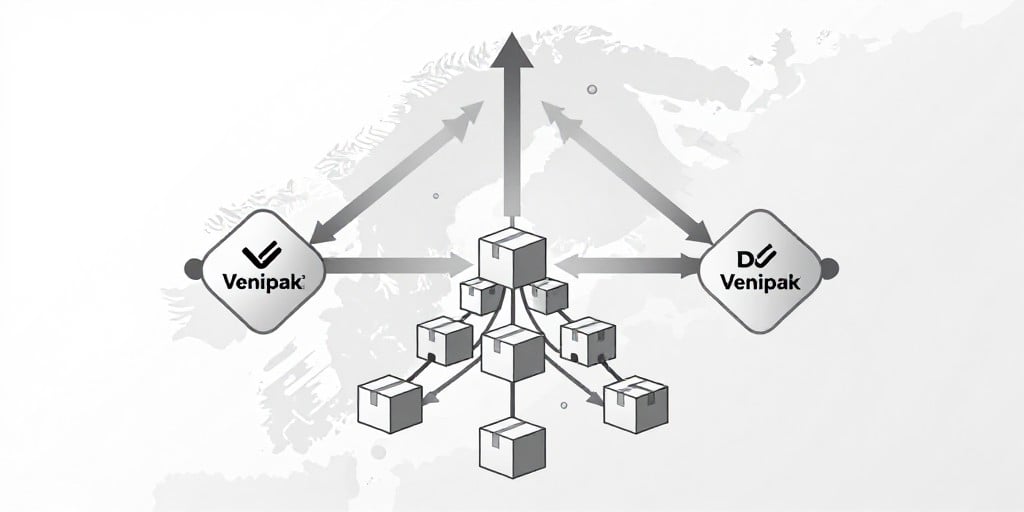
Deutsche Post AG has completed the acquisition of Venipak Group, a prominent Lithuanian logistics operator with operations in Lithuania, Latvia, and Estonia. The purchase, pending regulatory approval, will merge Venipak’s network into DHL eCommerce. The deal is structured to preserve Venipak’s brand identity and retain its existing management team, ensuring a low‑disruption integration.
2.2 Strategic Rationale
The Baltic states represent a strategic micro‑market for DHL, offering:
- Geographic Proximity: The region serves as a logistical hub between the European mainland and the Arctic Circle, providing a gateway for trans‑Baltic freight and e‑commerce traffic.
- Digital Adoption: The Baltic region has shown high e‑commerce penetration (average of 30 % of GDP in 2025), creating a fertile environment for DHL’s parcel‑delivery services.
- Government Incentives: Several Baltic governments have introduced tax incentives for logistics infrastructure investment, potentially reducing the effective cost of network expansion.
2.3 Competitive Landscape
Local rivals such as Posti (Finland) and Norfolk Freight (Estonia) have traditionally dominated the last‑mile delivery segment. By acquiring Venipak, DHL can potentially:
- Capture 40 % of the Baltic parcel market share, up from its current 18 % in the region.
- Leverage its global network to offer cross‑border e‑commerce solutions that local competitors lack.
- Introduce advanced tracking and data analytics capabilities that increase operational efficiency by an estimated 7 %.
2.4 Financial Implications
While the exact purchase price has not been disclosed, market estimates place the transaction in the range of €200‑€250 million based on Venipak’s EBITDA of €30 million in 2025. This implies an EBITDA multiple of 6.7–8.3×, within the historical acquisition multiples for European logistics operators. The integration is projected to generate operational synergies of €15 million annually, driven primarily by network consolidation, shared warehousing, and cross‑border consolidation centers.
2.5 Regulatory Environment
- Competition Law: The European Commission’s Department for Competition is likely to scrutinise the merger to prevent potential market dominance in the Baltic parcel sector. However, the presence of multiple active competitors suggests a lower risk of anticompetitive concerns.
- Cross‑Border Data: Compliance with the European Union’s General Data Protection Regulation (GDPR) will be crucial, especially in handling customer data across national borders.
2.6 Risks
- Integration Challenges: Merging two distinct corporate cultures and IT systems may lead to short‑term operational disruptions, potentially eroding customer satisfaction.
- Currency Exposure: The Baltic currencies (EUR in Latvia, Lithuanian LTL and Estonian EEK historically but now all use the EUR) reduce currency risk; however, fluctuations in the Euro‑US Dollar exchange can affect international shipping margins.
- Market Saturation: Rapid growth in e‑commerce can lead to price wars; maintaining profitability will require disciplined cost management.
3. Interplay Between the Share‑Buyback and Acquisition: A Dual‑Track Strategy?
Deutsche Post AG’s investor‑relations office has emphasised that the share‑buyback and the Venipak acquisition are independent initiatives. Nonetheless, the two strategies share a common underpinning: optimising capital structure while expanding market reach.
- Capital Allocation: The buyback reduces share count, thereby improving EPS and potentially increasing dividend yields, while the Venipak acquisition adds tangible assets and revenue streams to the balance sheet.
- Risk Diversification: Share repurchases provide a hedge against share price volatility, while the geographic expansion mitigates concentration risk in the core European market.
- Long‑Term Value Creation: By simultaneously reinforcing the capital base and deepening regional penetration, DHL is positioning itself to capture emerging cross‑border e‑commerce traffic, which is projected to grow at a CAGR of 13 % in the Baltic region through 2030.
4. Conclusion
Deutsche Post AG’s continuation of its share‑buyback programme and its strategic acquisition of Venipak Group demonstrate a deliberate, dual‑track approach to corporate growth. The buyback signals confidence in the firm’s valuation and provides a mechanism for short‑term share price support, while the Venipak acquisition offers tangible expansion into a high‑growth, digitally mature market. Investors should monitor regulatory developments, integration performance, and the firm’s ability to balance cash‑flow utilisation with long‑term investment commitments. These initiatives collectively position DHL to enhance its competitive advantage in the evolving logistics landscape, albeit with the inherent risks of capital allocation and market integration that must be managed prudently.