Deutsche Post AG Maintains Steady Upward Momentum Amid Operational Advances
On Wednesday, the Deutsche Post AG (ticker: DHL Group) continued its modest upward trajectory in the German market. The share price increased by a small percentage during both the mid‑day and closing sessions, reflecting a steady, though not dramatic, market sentiment toward the logistics firm. In the context of the broader German equity market, Deutsche Post AG ranked among the top gainers for the day in both the DAX and LUS‑DAX indices, alongside peers such as Heidelberg Materials and Siemens Energy.
Operational Efficiency Gains Through Automation
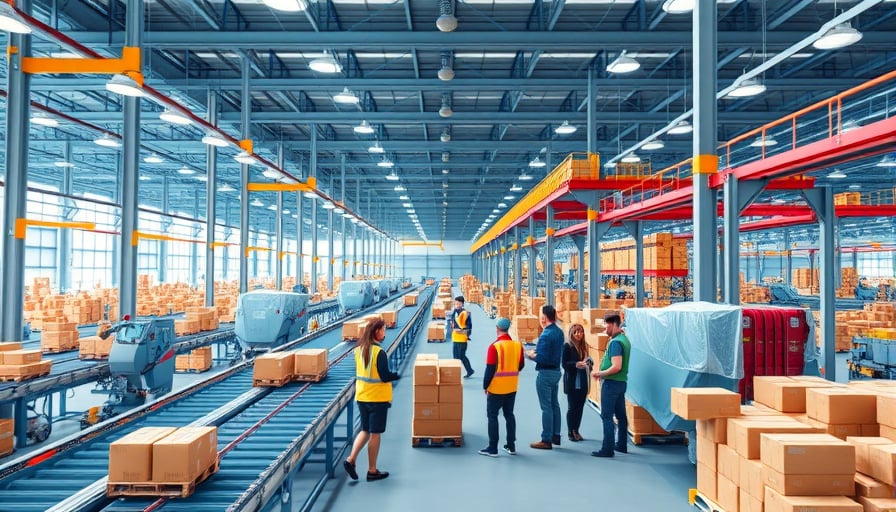
A key driver of the firm’s positive trajectory is its recent investment in automation. Deutsche Post AG announced the deployment of a new software platform that has dramatically shortened the integration time for robotic systems in its supply‑chain operations—from several weeks to only a few hours. This capability is positioned to support the company’s “Fit for Growth” efficiency programme, which targets annual cost savings of €1 billion by the end of 2026. The rapid deployment of the platform is expected to strengthen the firm’s competitive positioning against rising labour costs and skills shortages, two pervasive pressures across the logistics and transportation sector.
The automation initiative also aligns with broader industry trends toward digitization and the adoption of advanced robotics. By reducing lead times for system integration, Deutsche Post AG enhances its ability to scale operations quickly in response to fluctuating freight demand, thereby mitigating volatility in the freight market.
Financial Performance and Forward Guidance
Financially, Deutsche Post AG reported an EBIT margin of 7.4 % in 2025, despite a slight decline in overall sales. Management projects the operating profit to exceed €6.2 billion in 2026, bolstering the case for continued dividend payouts and a sizeable share‑buyback programme. These projections are underpinned by robust freight demand and the firm’s expanding global footprint.
Analysts have affirmed a positive outlook, citing the company’s strong cash‑flow generation and its capacity to invest in network expansion and technology upgrades. The forecasted operating profit margin indicates resilience to macro‑economic headwinds such as inflationary pressures and supply‑chain disruptions.
Market Capitalization and Index Impact
Within the broader German stock indices, the Deutsche Post AG remains a notable performer. Its share volume remains modest compared to larger telecom or banking names, yet its market capitalization continues to contribute significantly to the overall index value. The company’s consistent performance reinforces its standing as a core component of the DAX, providing stability for index funds and passive investors.
Cross‑Sector Connections and Economic Implications
The logistics sector’s performance has implications beyond its immediate industry. Efficient supply chains underpin manufacturing, retail, and e‑commerce, all of which are sensitive to disruptions in freight capacity and cost. Deutsche Post AG’s automation initiatives resonate with the manufacturing sector’s push toward Industry 4.0, where seamless integration between production and logistics is critical.
Moreover, the firm’s focus on cost‑efficient operations mirrors strategies adopted in the energy and telecom sectors, where capital intensity and labour costs are similarly significant. By achieving substantial savings through technology, Deutsche Post AG demonstrates a scalable model that could be replicated across other capital‑heavy industries.
Conclusion
Deutsche Post AG’s recent operational enhancements and solid financial guidance underpin a stable, growth‑oriented narrative for the firm. The company’s ability to leverage automation to improve efficiency, coupled with its strong cash‑flow position, positions it well to navigate current economic uncertainties and capitalize on long‑term trends in global logistics demand. As such, Deutsche Post AG continues to be a bellwether for the logistics sector within the broader German equity market.