
Deutsche Bank Revises Recommendation for Industrial Conglomerate to “Hold”
Deutsche Bank updated its stance on the industrial conglomerate to a “hold” rating on December 8, citing a target price that remains considerably above current market levels. The bank’s decision reflects the firm’s enduring footprint across multiple high‑growth sectors—including electronics, telecommunications, healthcare, and safety—while underscoring the necessity for disciplined execution of its growth strategy.
Management Tone and Execution Imperatives
Analysts noted that the conglomerate’s executive team has adopted a more assertive communication style, emphasizing investment in automation, digital twins, and advanced manufacturing systems. However, the bank cautioned that the company’s ability to deliver on projected earnings hinges on consistent execution of its capital allocation plans. In particular, the firm’s next‑phase expansion into additive manufacturing and predictive maintenance platforms could materially influence its profitability trajectory.
Capital Expenditure Trends in Heavy Industry
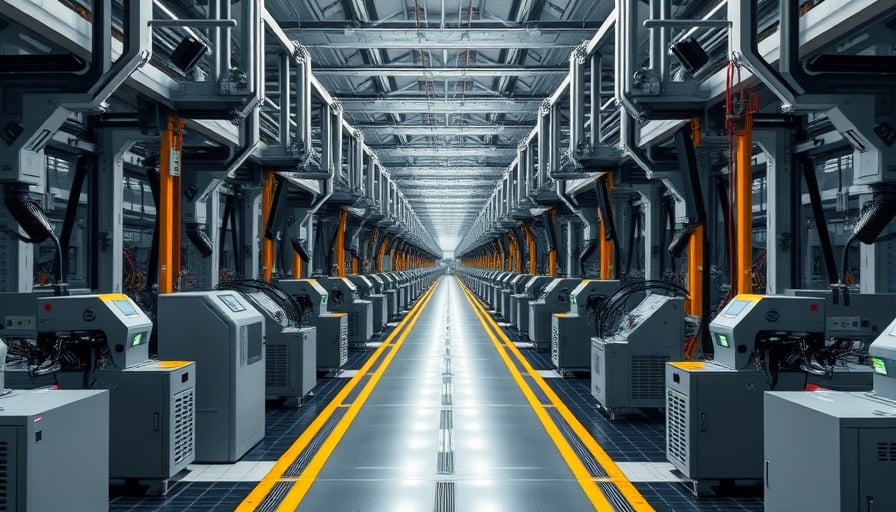
The conglomerate’s capital outlay strategy aligns with broader industry movements toward Industry 4.0 integration. Recent orders for high‑precision CNC machining centers, robotic assembly lines, and AI‑driven quality control systems signal a shift toward reducing labor intensity while boosting throughput. In 2023, the company announced a $3.2 billion capex program focused on:
| Asset Type | Capex (USD) | Strategic Rationale |
|---|---|---|
| Smart manufacturing cells | 1.1 billion | Increase cycle‑time efficiency by 12% |
| Digital twins for plant simulation | 0.8 billion | Reduce downtime via predictive analytics |
| IoT‑enabled logistics infrastructure | 0.7 billion | Optimize inbound/outbound flow |
| Sustainability retrofits (energy‑efficient HVAC) | 0.6 billion | Meet ESG targets and lower operating costs |
These investments are expected to improve productivity metrics, particularly output per employee and energy intensity per unit produced, metrics that are increasingly scrutinized by institutional investors.
Supply Chain Resilience and Regulatory Impact
Global supply‑chain volatility has prompted the conglomerate to diversify supplier bases and secure near‑shore production hubs. The firm’s recent partnership with a semiconductor fab in Germany, coupled with an automated logistics network utilizing autonomous guided vehicles (AGVs), demonstrates a commitment to mitigating geopolitical risks.
Regulatory developments—especially the European Union’s Fit for 5G directive and the European Green Deal—also shape the conglomerate’s capital allocation. Compliance with stricter electromagnetic emission standards necessitates upgrades to telecom hardware, while carbon‑reduction mandates drive investment in low‑carbon power sources for production facilities. The company’s proactive approach to meeting these regulations positions it favorably for long‑term contracts with public sector clients.
Infrastructure Spending and Market Sentiment
In the broader macroeconomic landscape, the Dow Jones Industrial Average posted modest gains during the week, reflecting a stable trading environment that supports the conglomerate’s share performance. This broader market confidence is bolstered by a sustained rise in infrastructure spending across North America and the European Union, which has led to a surge in demand for industrial equipment and high‑technology components.
The company’s share price, while currently below the bank’s target, has benefited from a positive trajectory in industrial output indices. Analysts expect that the combination of steady demand, strategic capex, and a robust regulatory compliance framework will underpin a gradual rally in shareholder value.
This article synthesizes Deutsche Bank’s latest rating change with an in‑depth analysis of capital investment trends, productivity gains, and the regulatory environment shaping the industrial conglomerate’s strategic direction.