
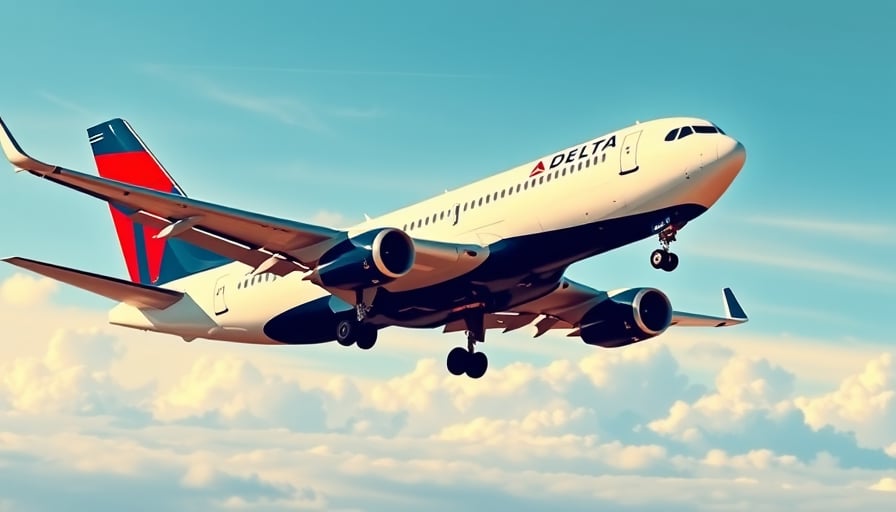
Delta Air Lines Inc. Reports Strong Q4 2025 Performance and Fleet Modernisation Plans
Delta Air Lines Inc. announced a rebound in its fourth‑quarter 2025 earnings, citing accelerated revenue growth across all regions and a return to healthy demand levels. The airline’s president highlighted a temporary slowdown in November, attributed to a government shutdown, and noted that this event is expected to modestly impact pre‑tax profitability. Management underscored balanced domestic expansion at key hubs, a focus on product‑pricing alignment, and continued growth initiatives in Asia and the Middle East.
Financial Highlights
- Revenue Growth: Delta reported accelerated revenue growth across all geographies, driven by both domestic and international traffic.
- Pre‑Tax Profitability: The November shutdown induced a brief dip in bookings; however, the company expects only a modest effect on pre‑tax profit for the quarter.
- Balanced Domestic Growth: Expansion at domestic hubs is proceeding in a measured, capacity‑aligned fashion, ensuring sustainable growth without compromising load factors.
Fleet Modernisation
Delta has placed an order for thirty Boeing 787‑10 Dreamliners, reinforcing its strategy to modernise its fleet. The 787‑10, with its extended range and increased cabin capacity, is positioned to enhance Delta’s long‑haul network, particularly in high‑yield markets such as Asia and the Middle East. The procurement aligns with industry trends favouring fuel‑efficient, technologically advanced narrow‑body aircraft to improve operational economics and passenger experience.
Analyst Coverage
Research houses maintain a largely positive stance on Delta’s outlook:
- TD Cowen and BMO Capital continue to recommend the stock and uphold supportive price targets.
- UBS has reduced its target level, reflecting a more cautious view amid market volatility and competitive pressures.
Despite these variations, Delta’s share price has maintained a steady upward trajectory in recent trading sessions, reflecting investor confidence in the airline’s operational performance and strategic initiatives.
Sector Context
Delta’s performance illustrates key dynamics in the airline industry:
- Resilience to Macro‑Economic Shocks: The temporary booking slowdown linked to the government shutdown underscores the sensitivity of travel demand to macro‑economic disruptions. Nevertheless, the swift rebound highlights the sector’s inherent elasticity.
- Fleet Renewal as a Competitive Lever: Orders for newer aircraft models, such as the Boeing 787‑10, are increasingly viewed as a means to lower fuel costs, reduce maintenance burdens, and enhance customer experience—factors that directly influence competitive positioning.
- Global Expansion Balancing Act: While domestic growth remains steady, Delta’s emphasis on Asia and the Middle East reflects broader industry migration towards high‑growth emerging markets, which offer higher yield opportunities compared to saturated domestic routes.
Broader Economic Implications
The airline’s performance dovetails with broader economic trends:
- Travel Demand Recovery: Global tourism and business travel are gradually normalising, bolstered by easing pandemic restrictions and improved consumer confidence.
- Fuel Price Volatility: Fuel costs remain a significant variable; Delta’s investment in fuel‑efficient aircraft is a prudent hedge against future volatility.
- Capital Allocation in Aviation: The mixed analyst outlook exemplifies the tension between aggressive fleet investment and prudent financial metrics, a balancing act many carriers face as they navigate post‑pandemic restructuring.
Conclusion
Delta Air Lines’ Q4 2025 results, coupled with its strategic fleet upgrade and focused expansion plans, underscore the airline’s commitment to sustaining growth while adapting to evolving market conditions. While short‑term disruptions like the government shutdown pose challenges, the company’s balanced approach to domestic and international growth, coupled with a forward‑looking investment in modern aircraft, positions it favorably within an increasingly competitive global aviation landscape.