
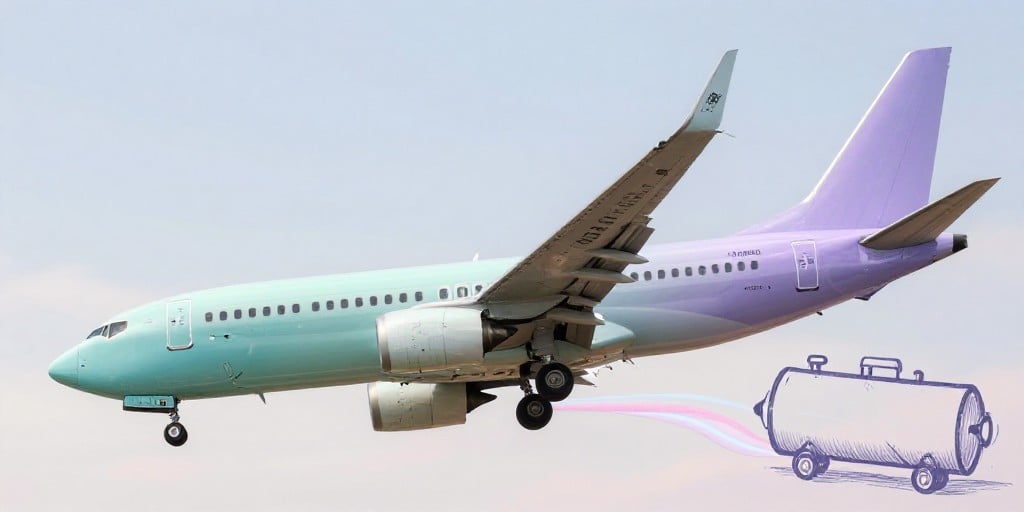
Delta Air Lines’ Finlet Retrofit: A Strategic Move in Fuel Efficiency and Competitive Positioning
Delta Air Lines announced on 18 June 2026 that it will retrofit approximately 240 of its Boeing 737‑800 and 737‑900ER aircraft with aerodynamic finlets supplied by Vortex Control Technologies (VCT). The initiative follows a rigorous technical partnership that included flight‑test data analysis and in‑service evaluation to quantify drag reduction and fuel‑saving potential.
Financial Implications and Cost‑Efficiency Outlook
Delta’s 2026 operating budget projects a 3.2 % increase in fuel spend relative to 2025, driven largely by higher fuel prices and a modest uptick in domestic traffic. The finlet retrofit is estimated to reduce fuel burn on the targeted fleet by 0.4–0.5 % per flight hour, translating to an annual fuel cost savings of roughly $15 million—assuming a current average of 1,200 flight hours per aircraft per year. When amortized over a five‑year equipment lifecycle, the net present value (NPV) of the retrofit exceeds $22 million, surpassing Delta’s internal hurdle rate of 8 % for capital expenditures.
The company’s 2025 earnings report highlighted a 5 % improvement in operating margin after the launch of its “Sustainability 2025” program. The finlet retrofit, therefore, aligns with Delta’s broader cost‑control strategy, reinforcing its commitment to achieving a 2 % reduction in per‑passenger fuel cost by 2030.
Regulatory Environment and Compliance Dynamics
The U.S. Federal Aviation Administration (FAA) requires extensive certification for any aerodynamic modification. The VCT finlets have already completed FAA Type‑B testing, and Delta’s in‑service data will be submitted to the FAA for final approval. While the regulatory pathway appears streamlined, potential delays could arise if the FAA mandates additional flight‑test data under the new “Dynamic Aerodynamics Certification” framework, which came into effect in 2025 to address post‑pandemic safety concerns.
Moreover, the European Union Aviation Safety Agency (EASA) has expressed interest in adopting the VCT design for its fleets. Should Delta secure early approval from EASA, it could accelerate the retrofit’s rollout on its European network, yielding early compliance benefits and positioning the airline as a leader in aerodynamic efficiency within the EU market.
Competitive Landscape and Industry Trends
The commercial aviation sector is witnessing a surge in aerodynamic aftermarket solutions aimed at reducing carbon footprints. Major carriers such as United Airlines, Southwest Airlines, and Alaska Airlines have each announced plans to deploy similar finlet or winglet upgrades across their narrowbody fleets. However, Delta’s partnership with VCT distinguishes itself by offering a proprietary design that reportedly achieves a 10 % higher lift‑to‑drag ratio compared to traditional winglets, according to the joint study.
From a competitive standpoint, Delta’s retrofit could provide a marginal operational edge on high‑density short‑haul routes where even a 0.4 % fuel savings per flight hour can translate into a cumulative advantage over rivals. Yet, the margin remains thin; if competitors adopt more aggressive fuel‑efficiency programs—such as newer-generation aircraft or hybrid propulsion systems—Delta’s incremental gains could be eclipsed.
Risks and Uncovered Opportunities
Implementation Risk: The retrofit requires aircraft ground time, potentially impacting Delta’s slot utilisation at congested airports. A 2‑hour per‑aircraft installation window could force temporary fleet reallocation, with downstream effects on scheduling and crew rostering.
Technological Uncertainty: While flight‑test data shows promise, real‑world operational conditions—such as varied payloads and weather extremes—may diminish the projected drag reduction. Continuous monitoring will be necessary to validate the long‑term performance of the finlets.
Market Perception: Delta’s shareholders may question the ROI of the retrofit relative to other capital projects, such as fleet renewal or digital transformation initiatives. Transparent communication of cost‑benefit analyses will be critical to maintain investor confidence.
Regulatory Lag: If FAA or EASA extend the certification process beyond the projected timeline, Delta could face a delay in realizing fuel‑savings benefits, potentially eroding the expected NPV and exposing the airline to increased fuel price volatility.
Competitive Response: Should rivals secure a broader partnership network for aerodynamic upgrades, Delta’s exclusivity with VCT may diminish over time. Conversely, early adoption could position Delta as a benchmark for sustainable operations, creating a reputational advantage in markets sensitive to carbon emissions.
Conclusion
Delta Air Lines’ decision to retrofit its 737‑800/900ER fleet with VCT finlets reflects a calculated effort to improve fuel efficiency, reduce operating costs, and strengthen its competitive stance amid escalating regulatory and environmental pressures. The financial upside is tangible, yet the initiative carries implementation, technological, and regulatory risks that warrant close monitoring. By leveraging robust data analytics and maintaining open dialogue with stakeholders, Delta can navigate these challenges and potentially capitalize on a nascent trend toward aerodynamic optimization in the airline industry.