
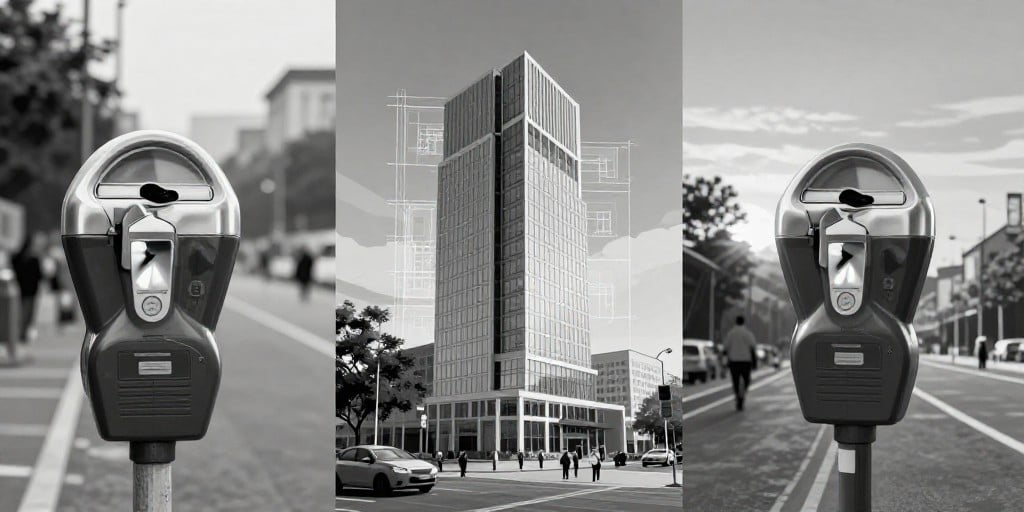
Municipal Corporation of Delhi Faces Dual Challenges in Infrastructure Expansion and Public Safety Oversight
The Municipal Corporation of Delhi (MCD) has recently drawn scrutiny for its handling of two citywide initiatives that are critical to the capital’s long‑term development and public safety. The first pertains to a large‑scale parking expansion programme, while the second involves an annual pre‑monsoon structural survey of buildings across the city. Both projects underscore the corporation’s struggle to balance rapid infrastructure growth with rigorous oversight and risk mitigation.
1. Parking Expansion Plan: Scope, Progress, and Regulatory Dynamics
1.1 Project Overview
MCD, in partnership with the Delhi Development Authority (DDA), is executing a multi‑phase plan to add substantial surface parking capacity throughout the capital. The initiative, backed by central government oversight, seeks to alleviate congestion, improve accessibility, and support the city’s burgeoning demand for vehicle accommodation. In addition to surface lots, the plan includes the construction of several multi‑storey parking structures, a component that is projected to extend the overall timeline due to higher capital costs and design complexities.
1.2 Auction Mechanism and Allocation
A significant portion of the available plots has already been awarded through electronic auctions, a process designed to promote transparency and market efficiency. While this has accelerated site allocation, it also raises questions about long‑term land use planning and the potential for uneven distribution of parking infrastructure across the city. The reliance on auctioned plots may inadvertently prioritize commercially lucrative areas, leaving underserved neighbourhoods with limited parking options.
1.3 Economic and Competitive Implications
From a macroeconomic perspective, expanding parking infrastructure can stimulate local commerce by increasing footfall in commercial districts. However, the construction of multi‑storey facilities may compete with other development priorities such as affordable housing, green spaces, and public transport enhancements. Balancing these competing interests requires a nuanced understanding of urban land use economics and the evolving preferences of Delhi’s residents, many of whom are shifting toward shared mobility solutions.
2. Pre‑Monsoon Structural Survey: Methodology, Coverage, and Safety Concerns
2.1 Survey Objectives and Progress
MCD’s annual pre‑monsoon survey aims to identify buildings that might suffer structural failure during the rainy season. As of the latest report, just over 85 % of the designated properties have been inspected, falling short of the target set for the season. Only a handful of structures have been flagged as dangerous, a figure that appears low given the city’s extensive history of building collapses.
2.2 Methodological Limitations
Critics point to the survey’s reliance on external observations, arguing that such a surface‑level approach may miss hidden defects—particularly in older or unplanned sections where building codes were historically lax. The lack of advanced diagnostic tools—such as ground‑penetrating radar or structural health monitoring sensors—could compromise the survey’s reliability, especially in densely built areas where access is constrained.
2.3 Accountability and Governance
The survey’s delayed completion and limited findings raise broader concerns about accountability mechanisms within MCD. A robust governance framework should incorporate third‑party audits, data transparency, and a clear escalation path for identified risks. In the wake of recent structural failures, the need for an integrated risk management system that aligns with national building code standards has become more acute.
3. Cross‑Sector Implications and Broader Economic Trends
The dual challenges faced by MCD echo broader trends observed in other rapidly urbanising megacities. For instance, the simultaneous pursuit of infrastructural expansion (e.g., roads, parking, transit hubs) and public safety (e.g., building inspections, disaster preparedness) often creates friction points in municipal budgets and resource allocation. Moreover, the push for efficient land use—manifested in parking expansion—must be reconciled with the global shift toward sustainable urban mobility and climate resilience.
In other sectors, such as real estate and construction, the integration of advanced monitoring technologies is becoming standard practice to preempt structural failures. Similarly, the adoption of digital procurement mechanisms (e.g., e‑auctions) is reshaping how infrastructure assets are allocated, promoting transparency but also demanding higher levels of technical proficiency from municipal administrators.
4. Strategic Recommendations for MCD
Adopt Integrated Planning Align the parking expansion programme with broader urban mobility plans, ensuring that new infrastructure supports public transport and reduces car dependency.
Enhance Survey Methodology Introduce non‑destructive evaluation techniques and digital reporting tools to improve the accuracy and coverage of structural inspections.
Strengthen Accountability Establish independent audit committees and public dashboards to track progress on both initiatives, fostering transparency and stakeholder trust.
Promote Cross‑Sector Collaboration Leverage insights from the construction and technology sectors to adopt best practices in risk assessment and asset management.
Prioritize Long‑Term Sustainability Incorporate green building standards and climate adaptation strategies into both the parking expansion and structural safety programmes.
By addressing these areas, MCD can better balance its dual mandate of fostering infrastructural growth while safeguarding public safety, thereby reinforcing the city’s resilience and aligning with contemporary urban development paradigms.