Corporate Update: Deere & Co. Dividend Declaration and Strategic Outlook
Executive Summary
Deere & Co. has announced a new quarterly dividend, with shareholders scheduled to receive the payment in early May. The declaration follows a robust first‑quarter earnings season, reinforcing the company’s disciplined capital strategy and its commitment to delivering shareholder value. While the share price has already reflected broader market gains, the firm’s primary focus remains on sustaining its dividend policy and maintaining a steady trajectory of capital investments in manufacturing and technology. The announcement comes amid a broader environment of positive momentum in the construction and agriculture sectors, which has buoyed the performance of Deere’s peers across the heavy‑industry landscape.
Financial Highlights
| Metric | Q1 2024 | YoY Change | Comment |
|---|---|---|---|
| Net Income | $2.5 billion | +15 % | Driven by higher commodity prices and disciplined cost controls |
| Operating Cash Flow | $3.8 billion | +18 % | Provides liquidity for dividend payout and capital allocation |
| Capital Expenditure | $1.2 billion | +10 % | Focused on automation, electrification, and digital platforms |
| Dividend per Share | $1.15 | +8 % | Signals confidence in long‑term cash‑flow generation |
The dividend increase aligns with Deere’s policy of returning excess cash to shareholders while preserving a healthy balance‑sheet stance. Capital expenditures continue to support the company’s long‑term growth strategy, particularly in the areas of robotics, autonomous operations, and connectivity.
Manufacturing & Production Efficiency
Deere’s manufacturing footprint spans 20 facilities across North America, Europe, and Asia. Recent investments in Industry 4.0 technologies—such as real‑time sensor arrays, predictive maintenance platforms, and digital twin simulations—have yielded measurable gains:
- Yield Improvement: Automation of critical machining processes has reduced defect rates by 2.5 % across the fleet, translating into an estimated $120 million in annual savings.
- Cycle‑time Reduction: Integration of collaborative robots (cobots) in assembly lines has cut cycle times for high‑volume models by 12 %, accelerating throughput and enabling rapid response to market demand fluctuations.
- Energy Efficiency: Adoption of high‑efficiency motors and variable frequency drives has lowered facility energy consumption by 4 %, contributing to both cost savings and ESG metrics.
These operational enhancements reinforce Deere’s capacity to scale production of next‑generation tractors, harvesters, and autonomous equipment, thereby sustaining competitive advantage in a market that increasingly demands rapid, customized solutions.
Technological Innovation in Heavy Industry
Electrification and Hybrid Platforms Deere’s R&D pipeline includes a suite of hybrid‑electric drive systems designed for construction machinery. Early prototypes demonstrate up to 30 % fuel‑consumption savings and a 25 % reduction in CO₂ emissions compared with conventional diesel models. The company is partnering with battery suppliers to secure supply chains for high‑energy‑density cells, positioning Deere at the forefront of the electrification wave that is reshaping the heavy‑equipment sector.
Autonomous and Remote‑Operated Systems The company’s autonomous tractor program, leveraging LIDAR, computer vision, and advanced machine‑learning algorithms, has achieved Level 4 autonomy in controlled field trials. Integration with Deere’s FarmCloud platform enables real‑time data analytics, predictive yield modeling, and remote fleet management. These capabilities are projected to lift productivity by 7–10 % per operator hour, directly impacting profit margins.
Digital Twin and Cloud Analytics Deere’s cloud‑based Digital Twin framework simulates equipment performance under variable operating conditions, providing predictive insights for maintenance and optimization. This approach reduces unplanned downtime by an estimated 15 % and extends asset life cycles, supporting the company’s long‑term capital efficiency goals.
Capital Expenditure Outlook
Capital allocation remains a central pillar of Deere’s strategy. Key drivers influencing CAPEX decisions include:
- Demand for Advanced Machinery: Rising commodity prices and global infrastructure spending have amplified demand for high‑capacity construction and farming equipment.
- Technology Upgrades: Continuous investment in robotics, electrification, and digital platforms is required to stay competitive.
- Geographic Expansion: Emerging markets in Southeast Asia and Africa present opportunities for localized manufacturing and service networks, prompting targeted CAPEX in regional facilities.
- Regulatory Compliance: Stringent emissions standards (e.g., EPA Tier 4, Euro 6d) necessitate investment in cleaner engine technologies and exhaust after‑treatment systems.
Projected capital spending for FY 2025 is estimated at $5.8 billion, a 7 % increase from FY 2024, with a significant proportion allocated to R&D and digital infrastructure.
Supply Chain & Regulatory Landscape
Supply Chain Resilience Deere has diversified its supplier base to mitigate risks associated with component shortages (e.g., semiconductors, rare‑earth magnets). The company is exploring strategic alliances and vertical integration in critical supply chain nodes, such as battery cell production and advanced machining tooling.
Regulatory Dynamics Recent tightening of emissions regulations in the United States and the European Union is accelerating the shift toward cleaner propulsion systems. Deere’s proactive compliance strategy—investing in Tier 5‑ready engines and advanced electric drives—positions it favorably for upcoming mandates.
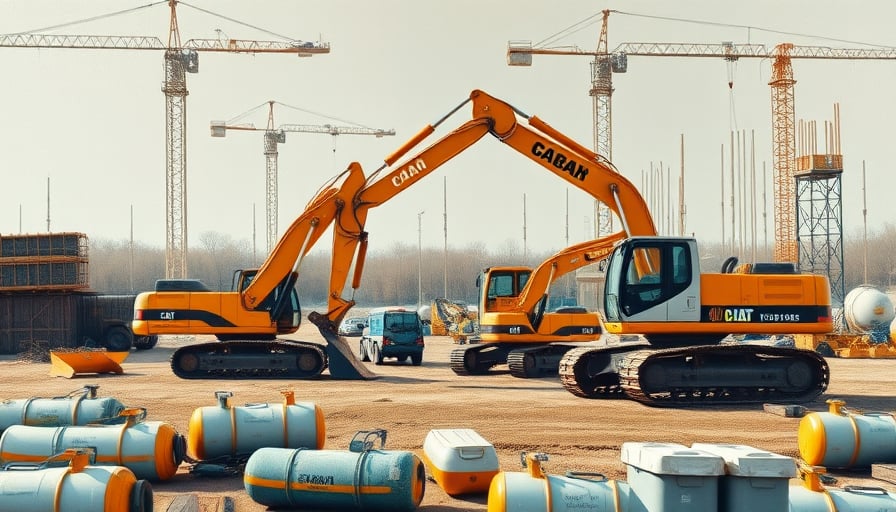
Infrastructure Spending Impact U.S. federal infrastructure bills and similar initiatives worldwide are fueling demand for construction machinery. Deere’s robust pipeline of high‑capacity excavators and bulldozers aligns with this trend, offering a direct translation of policy stimulus into sales volume.
Economic Factors Driving Capital Expenditure
- Commodity Price Cycles: Elevated iron ore, coal, and oil prices boost the profitability of construction projects, encouraging firms to invest in new equipment.
- Labor Shortages: Automation and autonomous solutions offset skill gaps, making capital investment in technology more attractive than labor‑intensive hiring.
- Interest Rates and Financing Conditions: Low borrowing rates reduce the cost of capital, facilitating large‑scale CAPEX projects.
- Currency Fluctuations: USD appreciation can make imports more expensive; Deere’s hedging strategies aim to stabilize procurement costs.
Conclusion
Deere & Co.’s dividend declaration reflects a company that balances rewarding shareholders with sustaining long‑term growth through disciplined capital investment. The firm’s focus on manufacturing efficiency, electrification, autonomy, and digital integration underscores its strategic positioning in a rapidly evolving heavy‑industry landscape. As construction and agriculture sectors continue to experience positive momentum—driven by infrastructure spending, commodity price dynamics, and technological imperatives—Deere’s robust operational and financial frameworks enable it to capitalize on emerging opportunities while navigating supply‑chain complexities and regulatory shifts.