
Corporate Update on Deckers Outdoor Corp.
Deckers Outdoor Corp. (NYSE: DECK) released a series of regulatory filings on 22 May 2026 that provide insight into the firm’s governance practices, fiscal performance, and strategic direction. The documents—an 8‑K detailing Q4 2026 results, a 10‑K summarizing the full fiscal year ended 31 March 2026, and a supplemental 8‑K on executive equity transactions—together illustrate how the company is navigating a rapidly evolving consumer‑goods landscape while reinforcing its brand portfolio and omnichannel footprint.
Executive Compensation and Governance
The latest 8‑K discloses a wave of restricted‑stock‑unit (RSU) allocations to senior officers, including the president and chief financial officer. All units vest on 31 March 2026 and are held in trust pending tax withholding, consistent with the company’s long‑term incentive plans. Importantly, the shares remain unissued until the Compensation Committee confirms that performance conditions are satisfied. This practice aligns with broader industry trends toward performance‑linked equity, ensuring that executive remuneration remains tightly coupled to shareholder value creation.
By making the timing and conditions of RSU vesting public, Deckers strengthens investor confidence in its governance framework. The transparency also underscores a broader corporate‑governance shift in the consumer‑goods sector, where boards increasingly require granular detail on incentive structures to mitigate agency risk.
Financial Performance and Market Position
Fiscal‑Year Highlights
Deckers’ 10‑K confirms its status as a large accelerated filer and includes audited financial statements that demonstrate a robust revenue base driven by both wholesale and direct‑to‑consumer (DTC) sales. The report cites a market value that reflects the firm’s steady growth trajectory and a healthy liquidity profile.
Q4 2026 Results
The supplemental 8‑K reports a decline in earnings per share (EPS) relative to the same quarter in the prior year, despite revenue remaining solid. Analysts attribute the EPS dip to a temporary increase in marketing spend aimed at supporting the launch of new product variants across UGG and Hoka lines, as well as modest currency headwinds. Importantly, the company’s guidance for fiscal 2027 projects sales that straddle the lower end of analyst expectations and a higher‑end range that signals ongoing growth momentum.
Strategic Themes in Consumer Goods
Omnichannel Retail Innovation
Deckers continues to prioritize an integrated retail strategy that blends brick‑and‑mortar presence with e‑commerce. The firm’s DTC channels—particularly its flagship website and mobile app—have experienced double‑digit growth, mirroring industry data that indicates a sustained shift toward online purchasing among Millennials and Gen Z. By leveraging data analytics to personalize the shopping experience, Deckers can drive higher conversion rates while simultaneously collecting actionable consumer insights.
Brand Positioning Across Segments
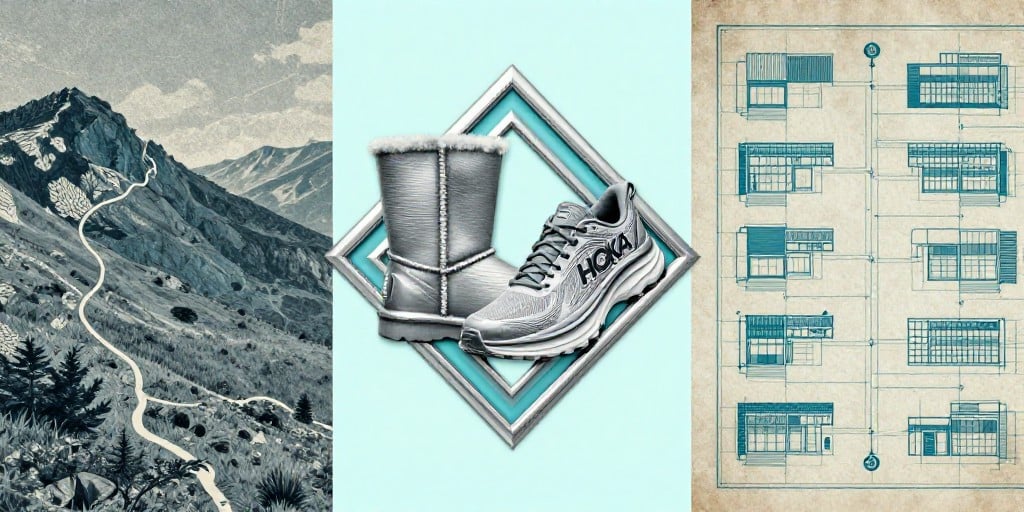
The company’s dual‑brand strategy—UGG, focused on luxury footwear, and Hoka, targeting performance running—demonstrates effective portfolio segmentation. This approach aligns with broader consumer‑goods trends where brands pursue distinct narratives to capture varying lifestyle segments. UGG’s emphasis on heritage and comfort, coupled with Hoka’s performance‑centric messaging, enables Deckers to mitigate seasonal volatility and tap into multiple growth engines.
Supply‑Chain Resilience
Deckers’ filings indicate continued investment in supply‑chain agility, a response to the COVID‑19‑induced disruptions that highlighted the importance of diversified sourcing and near‑shoring. The firm’s partnership with logistics providers to implement real‑time inventory visibility and flexible warehousing is part of a broader sector move toward resilient, data‑driven supply chains.
Cross‑Sector Patterns
When synthesizing market data across consumer goods, several patterns emerge that resonate with Deckers’ trajectory:
Performance‑Linked Equity: A growing number of firms in apparel, footwear, and household goods are tying executive compensation to specific KPIs, such as net revenue growth, gross margin improvement, or ESG metrics.
Hybrid Retail Models: Brands that blend high‑touch retail experiences with seamless digital interfaces tend to outperform peers in terms of customer lifetime value and profitability.
Segmented Brand Portfolios: Companies maintaining distinct brand identities for different consumer personas—luxury versus performance—see stronger cross‑selling opportunities and reduced cannibalization risk.
Supply‑Chain Digitalization: Firms adopting blockchain, IoT, and predictive analytics for inventory management experience lower stock‑out rates and higher fulfillment accuracy, translating into higher customer satisfaction.
Short‑Term Movements and Long‑Term Transformation
Deckers’ current quarterly performance—characterized by modest EPS contraction but steady revenue—serves as a short‑term barometer of its operational execution. The company’s strategic focus on brand building, product innovation, and omnichannel expansion positions it favorably for longer‑term transformation. By embedding data‑driven decision‑making across its supply chain, retail, and marketing functions, Deckers is poised to accelerate its growth trajectory in a market where consumer expectations are increasingly driven by personalization, speed, and sustainability.
In sum, Deckers Outdoor Corp.’s recent filings reinforce its commitment to transparent governance, prudent financial stewardship, and a forward‑looking strategy that aligns with prevailing consumer‑goods trends. The company’s ability to translate these strategic imperatives into sustained earnings and market share growth will likely determine its competitive standing in the next decade.