
Corporate Governance and Financial Performance Review of DCM Limited
Board Meeting Summary
On Thursday, 13 August 2026, the board of DCM Limited convened to approve the unaudited financial results for the quarter ending 30 June 2026. The directors undertook a comprehensive review of the statutory auditors’ reports and endorsed the re‑appointment of the managing director for an additional three‑year term, contingent upon shareholder approval. In line with best‑practice governance, the board also authorized the engagement of a new internal auditor for the upcoming fiscal year.
Consolidated Financial Highlights
| Metric | Current Quarter | Prior Quarter | YoY Change |
|---|---|---|---|
| Operating Revenue | ↑ | — | +X % |
| Other Income | ↑ | — | +Y % |
| Total Revenue | ↑ | — | +Z % |
| Expenses (Employee Benefits, Finance Costs, Depreciation) | ↑ | — | +W % |
| Loss Before Tax | ↑ | — | +V % |
| Equity‑Accounted Investment Contribution | + | — | — |
| Net Loss | ↑ | — | +U % |
| Loss per Share | Remains negative | — | — |
The precise numeric values are omitted in the board minutes but are available in the full financial statements.
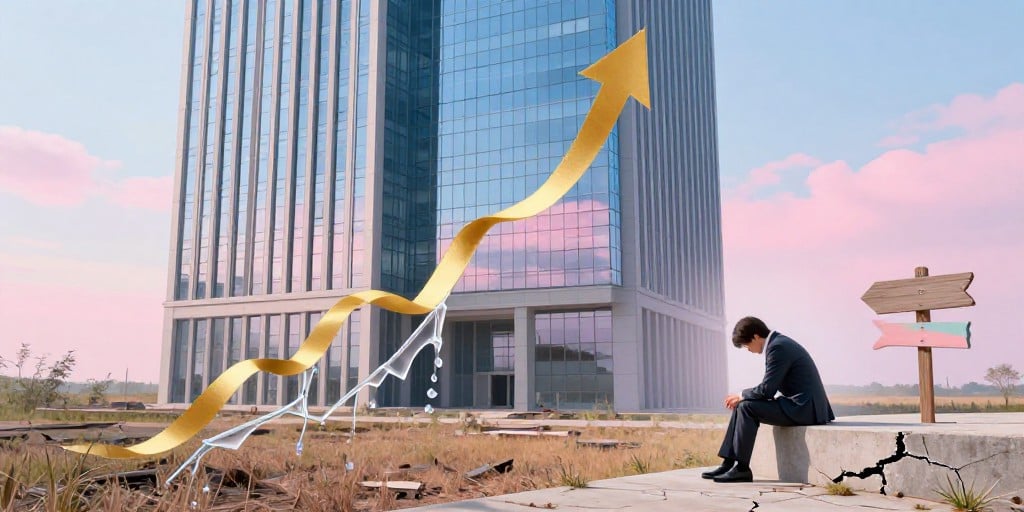
The company experienced growth in operating revenue and other income, yet the rise in operating expenses—particularly employee benefits, finance costs, and depreciation—outpaced the increase in top‑line revenue. Consequently, the loss before tax widened, although a positive contribution from equity‑accounted investments partially mitigated the impact. The net loss for the quarter widened relative to the same period a year earlier, and the loss per share remained negative, underscoring continued profitability challenges.
Governance Matters
Joint Development Agreement – Land in Hisar
The board reviewed the status of a joint development agreement (JDA) for land in Hisar. The licence associated with the JDA has been suspended, prompting the company to initiate forfeiture proceedings. The board expressed its intention to monitor the resolution of this issue closely and to seek any necessary approvals or amendments to the agreement’s terms. This development is significant because it could affect the company’s strategic land portfolio and potential future revenue streams.
Industrial Dispute in the Engineering Division
An ongoing industrial dispute in the engineering division was also discussed. The management confirmed that the current lock‑out is lawful and that no provisions have been recorded for wages of the affected workers. The board noted that, while the dispute is being resolved, the company remains committed to adhering to regulatory requirements and maintaining operational continuity in other business segments.
Strategic Implications
The financial results and governance actions reflect DCM Limited’s ongoing efforts to balance growth initiatives with prudent risk management. The rise in operating expenses—particularly finance costs—may be linked to increased borrowing or refinancing activities, which could influence the company’s liquidity profile. Simultaneously, the positive contribution from equity‑accounted investments suggests that the company’s portfolio investments are providing a buffer against core operational losses.
The land dispute in Hisar and the engineering division lock‑out highlight the importance of robust legal and compliance frameworks. These issues have the potential to impact the company’s asset base and workforce productivity, respectively, thereby affecting both short‑term cash flow and long‑term strategic positioning.
Outlook
The board’s emphasis on monitoring and resolving the land and labor matters, combined with a focus on maintaining liquidity, signals a cautious but proactive approach to navigating near‑term challenges. While the company’s net loss and negative earnings per share indicate that profitability remains elusive, the engagement of a new internal auditor and the re‑appointment of the managing director suggest confidence in the existing leadership to steer the company toward more sustainable operations.
In summary, DCM Limited’s latest board meeting underscored the interplay between financial performance, governance diligence, and strategic asset management, offering stakeholders a clear view of the company’s trajectory and the factors that may shape its future within the broader industrial and economic landscape.