Corporate Announcement: Danaher Corporation and NVIDIA Collaboration
Overview of the Partnership
Danaher Corporation has announced a strategic collaboration with NVIDIA to embed artificial‑intelligence (AI) capabilities across its laboratory instrumentation and workflow software. The alliance will harness Danaher’s expertise in scientific instrumentation, automation, and data‑handling platforms, pairing it with NVIDIA’s high‑performance computing architecture, edge‑processing solutions, and state‑of‑the‑art AI modeling tools. The initial focus will be on a curated set of instruments, with plans to expand the integration across Danaher’s broader portfolio of life‑science products.
Technical Synergy and Scientific Rationale
1. Accelerated Data Processing NVIDIA’s GPU‑accelerated platforms provide the computational bandwidth required for real‑time image analysis and high‑throughput data mining. This capability is essential for laboratories that generate terabytes of imaging and sequencing data daily. By channeling experimental data directly into NVIDIA’s edge processors, Danaher’s instruments can deliver near‑instantaneous feedback to researchers.
2. Continuous Learning Loop A key component of the collaboration is a closed‑loop system wherein experimental outcomes are fed back into AI models. This iterative process refines predictive algorithms for assay performance, reagent stability, and experimental outcomes, thereby reducing the time from hypothesis generation to validated evidence. The approach aligns with the current scientific trend toward data‑driven experimental design, which has demonstrated significant reductions in trial‑and‑error cycles in drug discovery pipelines.
3. Integration of Automation and AI Danaher’s automation technologies—including robotic liquid handlers and automated synthesis modules—will be paired with NVIDIA’s AI-driven decision engines. This integration allows for dynamic adjustment of experimental parameters (e.g., reagent volumes, incubation times) based on real‑time analytical outputs, thereby enhancing reproducibility and throughput.
Clinical Trial Data and Regulatory Pathways
While the partnership primarily focuses on instrumentation and software, its downstream impact on clinical research is significant:
Preclinical Pipeline Acceleration By providing faster, more accurate assay readouts, the combined platform can reduce the time required to generate preclinical data for IND (Investigational New Drug) submissions. The continuous learning loop enables researchers to identify sub‑optimal assay conditions early, minimizing wasted effort on ineffective experimental designs.
Regulatory Compliance The AI models will be developed under stringent validation protocols to satisfy regulatory bodies such as the FDA and EMA. The partnership emphasizes adherence to Good Laboratory Practice (GLP) and Good Manufacturing Practice (GMP) guidelines, ensuring that data generated by the integrated system is both reproducible and audit‑ready.
Post‑Marketing Surveillance For later‑phase trials, the system’s real‑time monitoring capabilities can aid in pharmacovigilance by flagging anomalous biomarker levels or off‑target effects, facilitating quicker regulatory reporting and risk mitigation.
Corporate Governance Update
In a separate disclosure, former Danaher directors Steven M. Rales and Mitchell P. Rales filed Form 4 reports on October 9, 2026. These filings detail the surrender of restricted stock unit awards and reallocation of shares held through trusts and single‑member limited liability companies. Updated figures reflect direct and indirect holdings but indicate no material change in ownership concentration or board influence.
Upcoming Autonomous Laboratory Initiative
Danaher is planning the launch of its first fully autonomous laboratory in early 2027. The facility will:
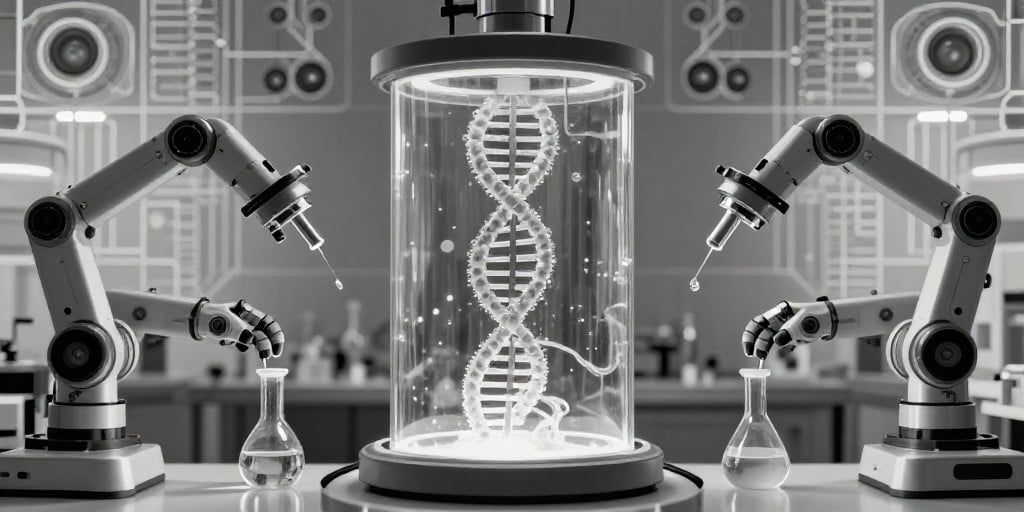
Automate Reagent Synthesis Employ robotic systems for on‑demand production of custom testing reagents, reducing lead times for early‑stage assays.
Integrate Real‑Time Imaging Utilize high‑resolution cameras and AI‑driven image analysis to monitor cell culture health and assay outcomes in real time.
Robotic Handling and Workflow Implement automated liquid handling, plate loading, and sample processing to increase throughput and minimize human error.
The autonomous lab is positioned as a “picks‑and‑shovels” investment in the AI‑driven life‑sciences market, offering exposure to critical infrastructure that underpins experimental validation of AI‑generated drug candidates.
Market Reaction and Strategic Implications
Shares of Danaher closed slightly higher on the announcement day, reflecting modest investor confidence in the AI integration strategy. No immediate operational changes or capital commitments were disclosed beyond the collaborative framework. The partnership underscores Danaher’s broader strategy of embedding AI and accelerated computing across its scientific ecosystem, thereby reinforcing its role as a leading provider of integrated life‑science solutions.
This article synthesizes corporate disclosures with a technical perspective, offering both scientific and business audiences a comprehensive view of Danaher’s strategic direction.