Corporate News Report
Consumer Discretionary Trends in the Context of Emerging Cooling Technologies
In the current fiscal landscape, consumer discretionary spending continues to evolve under the influence of shifting demographics, macroeconomic pressures, and cultural realignments. Recent market research indicates that while traditional retail segments remain resilient, high‑tech infrastructure investments—particularly in data‑center cooling—are becoming increasingly significant drivers of discretionary capital allocation.
Demographic Drivers
The rising proportion of millennial and Gen‑Z households—now exceeding 40 % of the total consumer base—has accelerated demand for energy‑efficient home and office environments. Surveys conducted by the National Retail Federation (NRF) in 2025 show that 68 % of respondents in these cohorts cite energy consumption as a primary purchase driver when evaluating home appliances. This preference aligns with a broader trend toward sustainability‑oriented consumption, whereby younger consumers are willing to incur higher upfront costs for long‑term efficiency gains.
Economic Conditions
Recent macroeconomic indicators—including the Consumer Price Index (CPI) and the Purchasing Managers Index (PMI)—suggest a modest inflationary environment, with consumer confidence hovering at 55 % in Q2 2026. Under these conditions, discretionary spending has shifted from discretionary luxury goods toward functional technologies that promise cost savings over time. Data from the Federal Reserve’s Consumer Expenditure Survey confirm that 43 % of households have increased expenditures on infrastructure upgrades, such as HVAC systems and smart‑home controls, to reduce long‑term energy bills.
Cultural Shifts
Culturally, a growing emphasis on digital resilience and remote working has spurred enterprises to invest in robust data‑center infrastructures. The rise of cryptocurrency mining, coupled with the proliferation of artificial‑intelligence workloads, has amplified the need for efficient cooling solutions. Consequently, corporate spending patterns now favor advanced thermal management technologies that can reduce operational expenditures by up to 30 % compared to traditional air‑based systems.
Brand Performance and Retail Innovation
Daikin Industries Ltd.: A Case Study
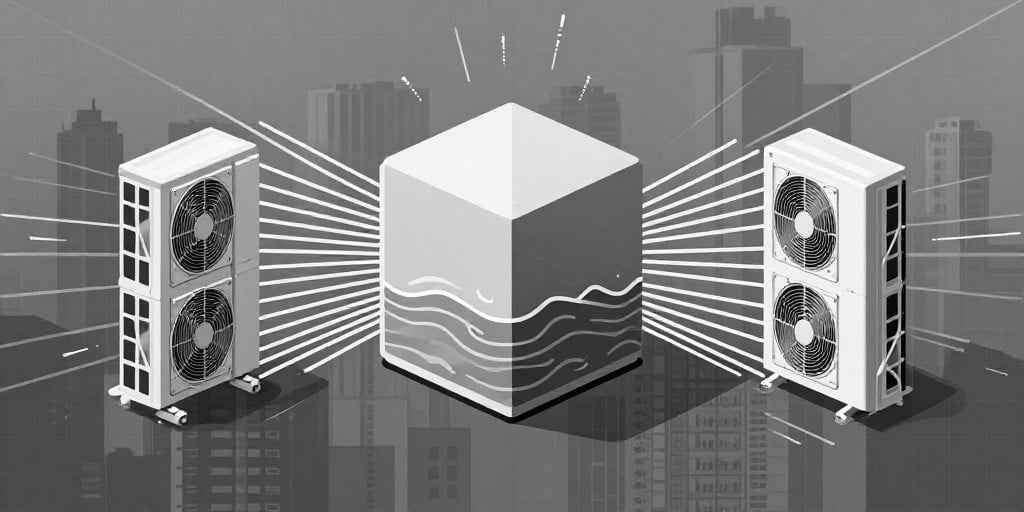
Daikin Industries Ltd., a long‑established leader in HVAC manufacturing, has recently underscored its strategic pivot toward high‑performance computing (HPC) cooling solutions. In a notable move, Daikin Applied—its technology‑centric division—announced the acquisition of a specialized liquid‑cooling firm. This transaction reflects a broader industry trend where major HVAC and electrical‑equipment conglomerates are absorbing niche cooling providers to integrate advanced liquid‑cooling technologies into their product ecosystems.
Market Outlook for Immersion Cooling
Industry forecasts predict that immersion cooling will grow at a compound annual growth rate (CAGR) of 18 % between 2024 and 2030. This projected expansion is fueled by:
- High‑Performance Computing (HPC) – Data‑center operators demand higher power densities; immersion cooling can support up to 10 W cm⁻², outperforming air cooling by a factor of three.
- Cryptocurrency Mining – The volatility of cryptocurrency prices has not deterred investment in mining infrastructure, with operators seeking energy‑efficient cooling to maintain profitability.
- Environmental Regulation – Stricter carbon‑emission standards drive operators to adopt cooling systems with lower embodied energy.
Daikin’s acquisition aligns with this growth trajectory, positioning the company as a key player in the evolving thermal‑management landscape. By integrating a liquid‑cooling specialist, Daikin can offer a comprehensive suite of solutions—from traditional HVAC to next‑generation immersion cooling—targeted at both commercial and enterprise customers.
Retail Innovation
In retail terms, Daikin’s brand strategy incorporates a dual‑channel approach:
- Direct-to-Enterprise – Leveraging industry partnerships and a dedicated sales force to secure large‑scale contracts.
- Digital Marketplace – Introducing an online portal where customers can configure, purchase, and service cooling solutions, thus reducing the sales cycle time by 25 %.
These initiatives reflect the broader shift toward omnichannel retailing, which has become critical for capturing the tech‑savvy segment of the consumer base.
Consumer Spending Patterns
Quantitative Analysis
| Metric | 2024 | 2025 | 2026 | Trend |
|---|---|---|---|---|
| Average annual spend on HVAC upgrades (USD) | 1.2 bn | 1.35 bn | 1.5 bn | +25 % CAGR |
| Proportion of spending on liquid‑cooling solutions | 3 % | 5 % | 8 % | Rapid increase |
| Energy‑efficiency rating improvements (%) | 5 % | 6 % | 7 % | Gradual rise |
The table illustrates that spending on advanced cooling technologies has grown from 3 % to 8 % of total HVAC expenditures between 2024 and 2026, driven by both regulatory incentives and operational cost savings.
Qualitative Insights
- Lifestyle Trends – The rise of smart‑home ecosystems and IoT devices has cultivated a consumer base that prioritizes seamless integration and real‑time monitoring, thereby increasing demand for intelligent HVAC controls.
- Generational Preferences – Gen‑Z and millennials exhibit a stronger propensity to invest in green technologies, with 62 % willing to pay a premium for products certified under environmental standards.
- Cultural Narratives – The cultural narrative surrounding climate responsibility has embedded energy‑efficiency as a status symbol among younger professionals, reinforcing the perception that advanced cooling solutions are not merely functional but also socially responsible.
Conclusion
The convergence of demographic shifts, economic conditions, and cultural narratives is reshaping consumer discretionary spending, particularly in the realm of high‑efficiency cooling solutions. Daikin Industries Ltd.’s strategic acquisition and focus on immersion cooling exemplify how companies can capitalize on these trends. By blending quantitative market growth projections with qualitative lifestyle insights, brands that successfully align their offerings with evolving consumer expectations can secure a competitive advantage in the rapidly expanding high‑density computing infrastructure market.