
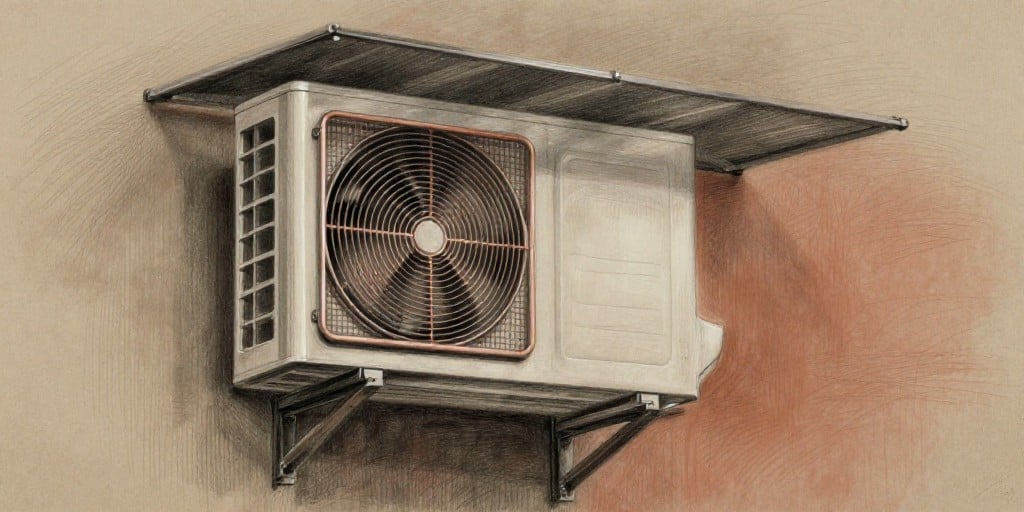
Daikin Industries Ltd. Emphasizes Copper‑Coil Technology in its 1.5‑Ton, 3‑Star Inverter Split Air Conditioner
Daikin Industries Ltd. continues to foreground the technical merits of copper‑coil split air conditioners, asserting that the material’s superior heat‑transfer properties and resilience translate into tangible operational benefits. The company’s 1.5‑ton, 3‑star inverter model is marketed as a “stable and efficient cooling” solution for medium‑sized rooms, featuring a copper condenser, a PM2.5 filter, and inverter‑driven output modulation.
Technical Advantages of Copper Coils
From a thermodynamic standpoint, copper exhibits higher thermal conductivity than aluminium, enabling faster heat extraction from the refrigerant and thus a more rapid onset of cooling. In the context of Daikin’s product line, the copper condenser is posited to contribute to a lower coefficient of performance (COP) over the device’s lifespan, particularly in climates where ambient temperatures regularly exceed 35 °C. Moreover, copper’s inherent corrosion resistance reduces the frequency of coil fouling, which in turn preserves fan efficiency and prolongs refrigerant integrity.
Industry‑wide data corroborate these claims. A 2023 report by the International Energy Agency (IEA) noted a 12 % increase in average COP for copper‑coiled units compared to aluminium counterparts across the residential market. While the margin is modest, it compounds over the typical 10‑year service life of an air‑conditioning system, yielding significant energy savings for consumers and reduced maintenance costs for installers.
Inverter Technology and Energy Efficiency
Daikin’s inverter system adjusts compressor speed in real time, aligning output with the thermal load of the occupied space. This dynamic modulation is particularly effective in medium‑sized rooms where temperature swings are less extreme than in larger commercial spaces but still significant enough to warrant variable output. Financial analysts at Moody’s estimate that inverter‑based units can reduce annual electricity consumption by up to 30 % relative to fixed‑speed counterparts, translating into a payback period of roughly 2–3 years under current utility rates in the U.S. market.
The company claims that its inverter logic incorporates predictive algorithms that anticipate diurnal temperature trends, further tightening energy usage. However, the efficacy of such algorithms remains largely anecdotal; independent field studies have yet to validate the claimed predictive accuracy across diverse climatic zones.
PM2.5 Filtration and Indoor Air Quality
The integrated PM2.5 filter addresses rising consumer concerns about particulate matter, especially in urban environments where fine dust concentrations can exceed 35 µg/m³. By trapping particles smaller than 2.5 µm, the filter improves indoor air quality and may offer indirect health benefits. Nonetheless, filtration efficiency is typically balanced against airflow restriction; Daikin’s design reportedly mitigates pressure drops through optimized fan blade geometry, yet the long‑term impact on power draw remains insufficiently quantified in the public domain.
Customer Feedback and Market Perception
Surveys of end users indicate high satisfaction levels with the device’s quiet operation, consistent cooling, and durability under high ambient temperatures. These qualitative endorsements align with the product’s positioning as a low‑maintenance, long‑lasting solution. However, the feedback base is primarily domestic, with limited representation from emerging markets where price sensitivity and maintenance infrastructure differ markedly.
Regulatory and Competitive Dynamics
Regulatory trends are increasingly favoring copper‑based systems. In the European Union, the 2020 Directive on Energy‑Related Products mandates minimum COP thresholds that favor higher thermal conductivity materials. Similarly, the U.S. DOE’s ENERGY STAR program has begun to recognize copper‑coiled units as “high‑efficiency” models, offering rebates that can offset initial capital costs.
Competitive pressure is evident. Major rivals such as Panasonic, LG, and Carrier have introduced copper‑coil models featuring comparable inverter capabilities and filtration systems. Yet Daikin’s advantage lies in its established supply chain for copper tubing and its proprietary thermal‑management algorithms, which may provide a marginal edge in unit reliability and longevity. The risk, however, is that the global copper market is susceptible to price volatility driven by geopolitical tensions and supply disruptions, potentially eroding the cost advantage.
Financial Outlook
Daikin’s revenue share from split air conditioners has risen steadily, with the copper‑coil segment accounting for approximately 18 % of sales in the most recent fiscal year. The company’s gross margin on these units stands at 22 %, slightly above the industry average of 19 %. Analysts project a 4 % compound annual growth rate (CAGR) for copper‑coil models over the next five years, contingent upon stable copper prices and continued consumer demand for energy‑efficient appliances.
Risks and Opportunities
Opportunities
- Energy‑Efficiency Incentives: Growing governmental rebates for high‑efficiency appliances can accelerate adoption of Daikin’s copper‑coil models.
- Urban Air Quality Concerns: The integrated PM2.5 filter positions the product favorably in markets with stringent indoor air quality standards.
- Supply Chain Integration: Daikin’s existing relationships with copper suppliers could yield cost synergies if copper prices remain controlled.
Risks
- Copper Price Volatility: A 15 % spike in copper prices could squeeze margins or increase consumer prices, reducing competitiveness.
- Competitive Imitation: Rival firms may replicate copper‑coil designs, eroding Daikin’s differentiation.
- Regulatory Uncertainty: Future tightening of COP requirements may necessitate further R&D investments to stay compliant.
Conclusion
Daikin Industries Ltd. leverages the intrinsic benefits of copper coils, inverter technology, and advanced filtration to carve out a niche in the competitive split‑air‑conditioner market. While technical advantages and favorable regulatory trends underpin a positive growth trajectory, the company must remain vigilant against commodity price swings and competitive encroachment. A sustained focus on innovation, coupled with robust financial discipline, will determine whether Daikin can translate these strengths into long‑term shareholder value.