Corporate News Report
Daikin Industries Ltd. Announces Pricing Adjustment and New Product Line for the Indian Market
Daikin Industries Ltd., a leading manufacturer of air‑conditioning solutions, has formally announced a planned price increase ranging from seven to twelve percent on its air‑conditioning products sold in India, effective from April 2026. The company cited a series of escalating cost pressures—particularly in raw‑material prices for copper and aluminium, heightened freight charges, and the implementation of new energy‑efficiency regulations—as primary drivers behind the adjustment.
Pricing Rationale and Market Context
The price increment follows a broader pattern observed across the HVAC sector, wherein manufacturers are implementing modest price hikes in response to rising production costs. Daikin’s decision aligns with industry expectations for incremental pricing in the coming months, a strategy aimed at preserving margins while maintaining competitiveness in an increasingly cost‑constrained environment.
- Raw‑Material Inflation: Global copper and aluminium prices have surged due to supply constraints and higher demand from construction and automotive sectors. These metals form core components of air‑conditioning units, directly impacting manufacturing costs.
- Logistics and Freight: Increased shipping freight costs, driven by higher fuel prices and limited maritime capacity, add to the overall cost base for distributors and retailers in India.
- Regulatory Compliance: New energy‑efficiency regulations require manufacturers to incorporate advanced technologies that improve unit performance while reducing energy consumption. Compliance incurs additional research, development, and certification expenses.
2026 Product Line Launch
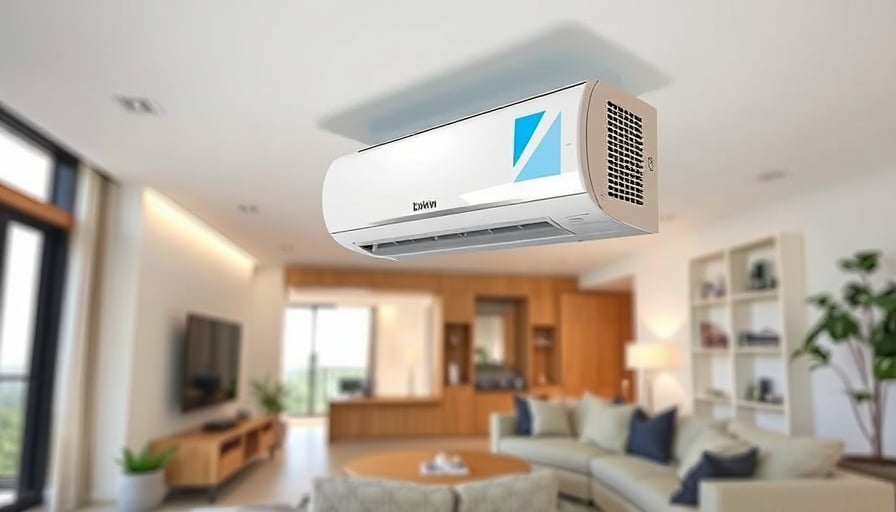
Concurrent with the pricing announcement, Daikin introduced its 2026 product portfolio, emphasizing two key technological advancements:
- Enhanced Energy‑Efficiency
- The new models feature advanced compressor technologies and inverter drives that lower power consumption by up to 15% compared to the 2025 baseline.
- Incorporation of AI‑driven temperature prediction algorithms optimizes cooling schedules, reducing energy waste during off‑peak hours.
- Smart Climate‑Control Capabilities
- Integration with IoT platforms enables remote monitoring and predictive maintenance through Daikin’s proprietary cloud service.
- The units support voice‑assistant interfaces (Amazon Alexa, Google Assistant) and offer granular occupancy sensing to adjust airflow based on real‑time room usage.
These innovations reinforce Daikin’s positioning as a technology leader in the HVAC market, particularly in the fast‑growing Indian consumer segment where energy costs and smart home integration are increasingly influential purchasing criteria.
Implications for Competitive Positioning
- Margin Preservation: The price increase, though modest, is expected to offset the heightened cost structure, helping maintain profitability in a market with narrow competitive margins.
- Differentiation Through Innovation: The 2026 product line’s focus on energy efficiency and smart features distinguishes Daikin from rivals that rely primarily on price competition.
- Regulatory Alignment: Early adoption of stringent energy‑efficiency standards may provide a regulatory advantage, positioning Daikin favorably with future Indian government incentives aimed at reducing national electricity consumption.
Broader Economic and Sectoral Connections
Daikin’s strategy exemplifies a broader trend in manufacturing sectors where rising commodity prices and tightening environmental standards compel firms to balance cost control with innovation. Similar dynamics are evident in:
- Electronics: Increasing semiconductor prices have prompted manufacturers to invest in yield‑improving technologies to sustain profit margins.
- Automotive: Rising lithium and copper costs have led vehicle makers to accelerate battery efficiency research to offset raw‑material inflation.
- Construction Materials: Higher steel and cement prices have driven the adoption of alternative materials and modular construction techniques to maintain project profitability.
By adopting a pricing strategy that reflects both current cost realities and future technology trajectories, Daikin positions itself to navigate the intersection of economic pressures and evolving consumer expectations across multiple industries.
The information herein reflects Daikin Industries Ltd.’s official statements and publicly available data as of the date of this report.