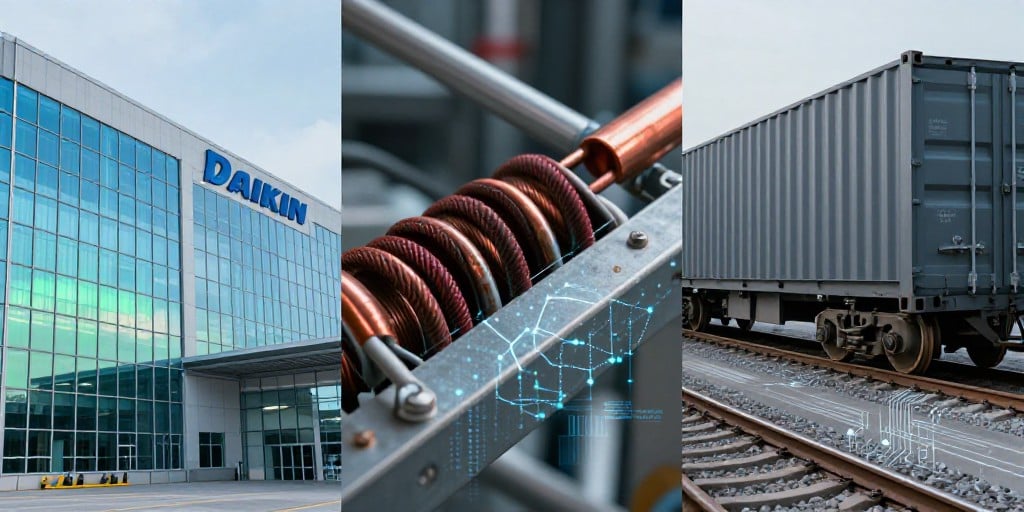
Daikin Industries Ltd Announces 5–8 % Price Increase Across Key Household Products
Daikin Industries Ltd has confirmed that it will raise the prices of several key household appliances—including air‑conditioners, LED televisions, washing machines and other consumer electronics—effective 1 October. The adjustment is a response to a sustained rise in the cost of critical raw materials such as copper and steel, coupled with higher freight and currency‑exchange expenses that have intensified amid regional tensions.
Context of the Price Revision
- Raw‑material inflation: Copper, a primary input for heating‑circuitry in air‑conditioners and LED panels, has surged sharply over the past year. Steel costs have also climbed due to global supply‑chain bottlenecks.
- Freight and logistics: Rising global shipping rates and fuel price volatility have amplified freight costs, particularly for heavy equipment and high‑value consumer electronics.
- Currency dynamics: Fluctuations in exchange rates have eroded the purchasing power of Daikin’s overseas suppliers, driving up input costs for the company’s multinational operations.
Daikin had previously increased air‑conditioning prices by 8–10 % in early September. The new revision will bring the overall rise in the 5–8 % range for its principal product categories, marking the third round of price increases this year—a trend mirrored by several competitors in the appliance sector.
Anticipated Market Impact
The company has cautioned that the hikes may modestly affect sales volumes; however, Daikin expects the impact on demand to be limited for several reasons:
- Inventory cushion: Distributors and retailers have already stocked inventory purchased at earlier, lower rates. Much of the festive‑season demand—typically the most substantial portion of Daikin’s annual sales—will be met from this pre‑hired stock.
- Timing of price implementation: Prices will take effect after the peak holiday period, allowing the company to capitalize on existing inventory before the new rates are reflected in the market.
- Price elasticity of demand: Historical data suggests that demand for household appliances remains relatively inelastic during the festive season, mitigating the adverse effect of moderate price increases.
Daikin’s management plans to monitor market conditions closely and may consider further adjustments after the festive period if input costs continue to rise.
Production and Supply‑Chain Implications
From an engineering standpoint, the price increase reflects deeper shifts in the manufacturing ecosystem:
- Component sourcing: Manufacturers are diversifying suppliers for high‑value metals to mitigate the risk of price spikes. This often involves shifting to regional suppliers or alternative alloys, which can alter manufacturing tolerances and require recalibration of production equipment.
- Automation and process optimization: To offset higher raw‑material costs, companies are investing in advanced manufacturing systems—robotic assembly lines, AI‑driven predictive maintenance, and real‑time quality control—to reduce waste and improve throughput.
- Supply‑chain resilience: The need to buffer against commodity price swings is prompting firms to increase inventory levels for critical components, thereby elevating working‑capital requirements and influencing capital‑expenditure decisions.
These operational adjustments have direct implications for capital spending. Firms that adopt higher levels of automation and predictive maintenance may see upfront capital expenditure rise by 10–15 %, but the expected return on investment is projected to materialize through reduced operating costs and increased production efficiency.
Regulatory and Economic Drivers
- Regulatory environment: Stricter emission standards for appliances, particularly in the EU and North America, require the incorporation of more expensive, low‑emission materials and technologies. Compliance adds to the cost burden and may necessitate higher retail pricing.
- Economic backdrop: Persistent inflationary pressures in global markets, coupled with tightening monetary policy, contribute to higher input costs. Meanwhile, consumer confidence remains relatively robust during holiday seasons, providing a cushion for modest price increases.
Infrastructure and Capital Expenditure Trends
In the broader industrial sector, capital‑expenditure trends are shifting toward:
- Digital twins and simulation: Investing in digital replicas of production lines allows firms to model the impact of raw‑material price changes before committing to physical modifications.
- Energy‑efficient machinery: Upgrading to high‑efficiency motors and HVAC systems reduces operating costs and aligns with sustainability targets.
- Supply‑chain analytics platforms: Leveraging big data analytics to predict component price movements can inform procurement strategies and buffer against market volatility.
These investments collectively enhance productivity metrics—yield rates, cycle times, and throughput—while bolstering resilience against volatile input markets.
Conclusion
Daikin Industries Ltd’s decision to lift prices across its core product lines underscores the ongoing challenge manufacturers face in balancing input‑cost inflation with consumer sensitivity. By timing price increases to follow the festive‑season demand peak and leveraging pre‑hired inventory, the company aims to mitigate sales impact while protecting its margins. Simultaneously, the broader industry trend toward automation, predictive maintenance, and digital supply‑chain analytics signals a shift in capital‑expenditure priorities—investments that will shape the productivity and competitive landscape for years to come.