Daikin Industries Ltd. in Context: Market Movements, Leadership Transition, and Heat‑Pump Leadership
Daikin Industries Ltd. surfaced in several market‑focused reports during the week, each highlighting a different facet of the company’s current standing within the broader Japanese equity landscape, its strategic leadership shifts, and its prominent role in the evolving heat‑pump sector.
1. Japanese Equity Performance and Sectoral Dynamics
In a late‑morning review of the Nikkei 225, Daikin was identified as a modest gainer amid a cluster of industrial and manufacturing names that pushed the index higher on Thursday. The company’s share price benefited from a general up‑trend in the Japanese index, driven largely by gains in automotive, electronics, and exporter stocks. By contrast, the banking sector displayed a mixed picture, underscoring the sectoral heterogeneity that characterizes the Nikkei during periods of market volatility.
The upward pressure on Daikin shares reflects several interrelated market dynamics:
| Sector | Key Drivers | Impact on Daikin |
|---|---|---|
| Automotive | Rising global vehicle sales; demand for advanced climate‑control systems | Enhanced revenue opportunities for Daikin’s automotive‑grade HVAC components |
| Electronics | Growth in consumer electronics and data‑center cooling | Increased need for precise temperature regulation, benefiting Daikin’s precision‑climate solutions |
| Exporters | Strong currency movements and commodity prices | Higher export margins for Daikin’s globally supplied products |
These sectoral trends reinforce the premise that Daikin’s core business remains intertwined with global industrial and consumer demand cycles. The company’s exposure to diversified end‑markets mitigates concentration risk and aligns its performance with macro‑economic drivers that transcend any single industry.
2. Strategic Leadership Transition at General Inc.
A separate corporate‑governance article announced that former Daikin executive Takeshi Ebisu has been appointed representative director and chief executive officer of General Inc., a company that emerged from a former Fujitsu General entity and has recently become part of Paloma Rheem Holdings. Ebisu’s background includes a decade as executive vice‑president and board member of Daikin Industries, as well as the role of president and chief executive of Daikin’s U.S. subsidiary, Goodman Manufacturing.
The leadership transition is positioned as a strategic initiative to streamline decision‑making and accelerate business development both domestically and abroad. By infusing General Inc. with Ebisu’s deep expertise in HVAC engineering and international market dynamics, the company aims to:
- Accelerate product innovation by leveraging Daikin’s research capabilities and cross‑border collaboration frameworks.
- Enhance operational efficiencies through the adoption of best practices developed within Daikin’s global supply chain.
- Expand market reach by aligning General Inc.’s product portfolio with emerging demands in natural refrigerants and electrified cooling solutions.
This move exemplifies a broader trend in the industry, where legacy manufacturers seek to consolidate talent and knowledge across corporate boundaries to sustain competitive advantage amid rapid technological change.
3. Daikin’s Position in the Heat‑Pump Market
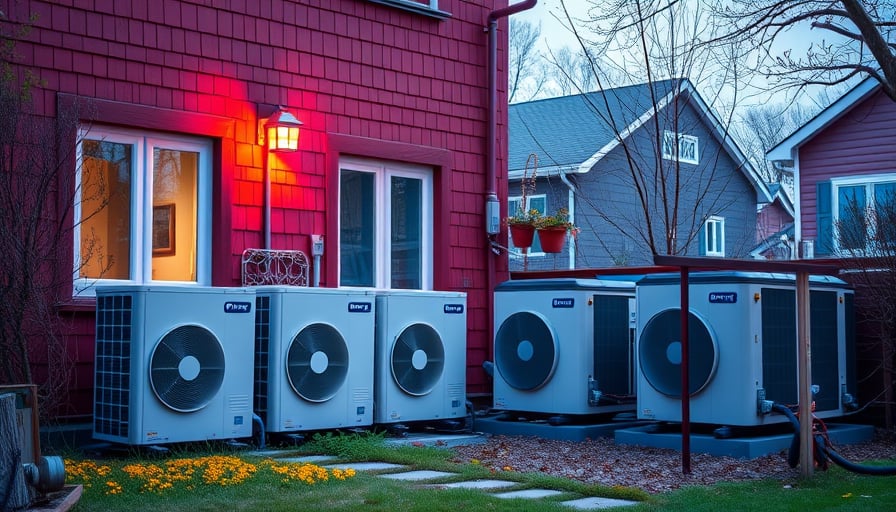
A global market outlook report on heat‑pump technology listed Daikin as one of the key players shaping competition through technology differentiation and integration with renewable energy solutions. The report underscores the company’s significant involvement in the deployment of efficient, low‑emission heating and cooling systems across major economies.
Key insights from the heat‑pump analysis include:
| Trend | Implication for Daikin |
|---|---|
| Electrification of Heating | Daikin’s portfolio of air‑source and ground‑source heat pumps positions it favorably to capture market share as utilities transition away from fossil‑fuel‑based systems. |
| Strict Energy‑Efficiency Targets | Daikin’s continued investment in R&D yields high‑performance units that meet and exceed global standards, enhancing brand credibility. |
| Adoption of Natural Refrigerants | The company’s early adoption of HFO and ammonia refrigerants reduces its carbon footprint, aligning with corporate sustainability goals and regulatory requirements. |
These industry dynamics illustrate how Daikin’s core competencies in HVAC engineering, coupled with its proactive stance on sustainability, enable it to remain a significant contributor to the broader shift toward cleaner, more efficient climate‑control technologies.
4. Cross‑Sector Implications and Economic Context
Daikin’s activity across the three focal areas—equity performance, leadership transition, and heat‑pump innovation—demonstrates a cohesive strategy that aligns with broader economic trends:
- Supply‑Chain Resilience: By leveraging its global manufacturing network, Daikin mitigates disruptions that have become more pronounced in post‑pandemic supply chains.
- Capital Allocation: The company’s focus on high‑margin, high‑technology products reflects disciplined capital deployment, a principle shared by leading technology and automotive firms.
- Sustainability Momentum: Daikin’s leadership in natural refrigerants and electrified heat pumps dovetails with global climate policy shifts, creating new growth opportunities for firms that can innovate rapidly.
In sum, Daikin Industries Ltd. exemplifies a corporate model that integrates sectoral market awareness, strategic leadership alignment, and technological innovation to navigate the complex, interrelated forces shaping the current economic landscape.