
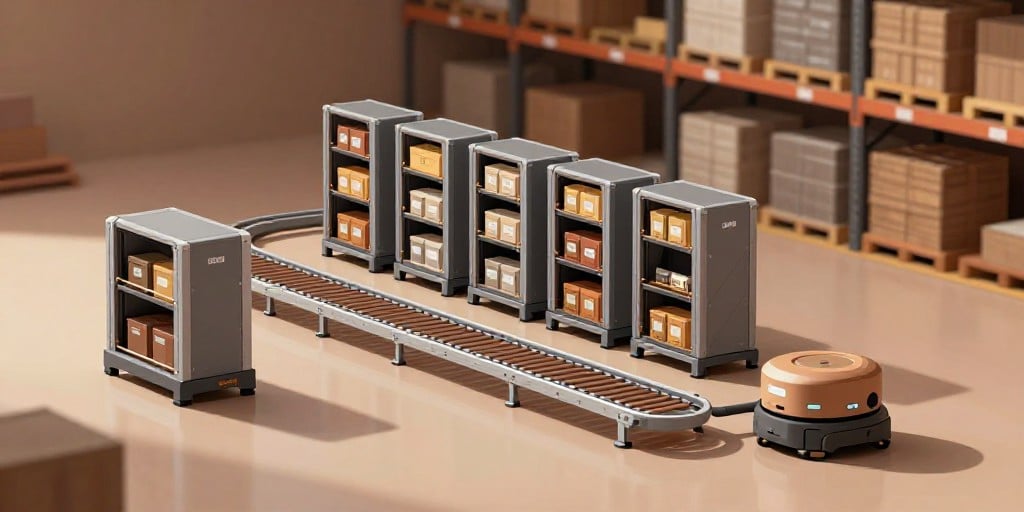
Corporate Analysis: Daifuku Co. Ltd. and the Evolving Automated Material Handling Market
Market Context and Growth Outlook
The automated material handling sector is projected to expand markedly over the next decade, driven primarily by the acceleration of e‑commerce and the demand for higher throughput and inventory accuracy. Analysts estimate compound annual growth rates (CAGR) of 6–8 % for the global automated storage and retrieval systems (AS/RS) market, with conveyor and warehouse execution software segments showing parallel increases. This trajectory is underpinned by broader supply‑chain trends: firms are re‑engineering warehouses to support omnichannel fulfillment, real‑time visibility, and rapid order cycles.
Daifuku’s Position Within the Sector
Daifuku Co. Ltd. occupies a pivotal niche in this landscape. The company’s portfolio—encompassing automated storage and retrieval systems, conveyor technologies, and integrated warehouse execution software—aligns closely with the core drivers of the market. Its strengths lie in:
- Integrated Automation Ecosystems: Unlike many vendors that specialize in isolated hardware or software modules, Daifuku delivers end‑to‑end solutions. This integration spans storage racks, retrieval machines, conveyor networks, and execution software, facilitating seamless data flow and operational coordination.
- Long‑Term Service Support: Daifuku’s service contracts and proactive maintenance programs reduce downtime and extend asset life, appealing to buyers seeking predictable capital and operating expenditures.
- Global Service Footprint: A worldwide network of service centers and technical teams allows the firm to support multinational customers, reinforcing its reputation as a reliable partner in complex deployments.
These attributes give Daifuku a competitive advantage over rivals that offer either hardware or software in isolation, especially in environments where integration complexity can be a barrier to entry.
Competitive Dynamics and Emerging Trends
While fixed automation—such as conventional AS/RS and conveyor systems—remains the dominant modality, the industry is witnessing a gradual shift toward mobile robotics. Retrofit projects increasingly incorporate autonomous mobile robots (AMRs) to provide flexibility in legacy warehouses lacking the infrastructure for fixed systems. This trend indicates:
- Demand for Adaptability: Firms are prioritizing solutions that can evolve with changing product mixes and storage requirements without extensive re‑engineering.
- Cost Considerations: Mobile systems often entail lower initial capital outlays, appealing to smaller operators and those with constrained budgets.
Daifuku’s focus on integrated ecosystems positions it to capitalize on both fixed and mobile solutions. By incorporating AMR technologies into its portfolio, the company can offer hybrid systems that leverage the reliability of fixed infrastructure with the flexibility of mobile units.
Regulatory and Sustainability Drivers
Regulatory frameworks and sustainability imperatives are increasingly shaping procurement decisions:
- Safety and Cybersecurity Standards: New regulations mandate robust safety protocols and secure data handling in automated environments. Daifuku’s emphasis on secure, compliant software architecture meets these requirements.
- Energy Efficiency and Recyclability: Environmental guidelines favor equipment that reduces energy consumption and facilitates end‑of‑life recycling. The company’s investment in energy‑efficient conveyors and recyclable components aligns with these expectations.
Compliance with such standards is not merely regulatory compliance but a competitive differentiator, as buyers evaluate vendors based on their ability to deliver “green” solutions that meet corporate sustainability goals.
Barriers to Adoption
Despite its strengths, Daifuku faces several challenges inherent to the market:
- Supply‑Chain Volatility: Fluctuating raw material costs and geopolitical tensions can disrupt the availability of critical components, affecting lead times and pricing.
- High Capital Expenditures: Deploying comprehensive automation suites requires significant upfront investment, which can deter smaller operators or those operating in cost‑sensitive markets.
- Complex Integration in Legacy Facilities: Retrofitting existing warehouses with modern automation can be technically challenging, slowing adoption and increasing implementation costs.
Addressing these barriers—through flexible financing options, modular deployment strategies, and robust integration services—will be essential for sustaining growth.
Strategic Outlook
Daifuku’s commitment to technology innovation and its integrated approach place it in a favorable position to capture emerging opportunities as the automated material handling market matures. By leveraging its global service capabilities, expanding its mobile robotics offerings, and aligning with evolving regulatory and sustainability mandates, the company can continue to deliver differentiated value to clients across diverse industries. The convergence of e‑commerce growth, supply‑chain resilience demands, and technological advancement signals a robust trajectory for both the sector and Daifuku’s strategic initiatives.