
Dividend Adjustment and Digital Transformation at CSX Corp.
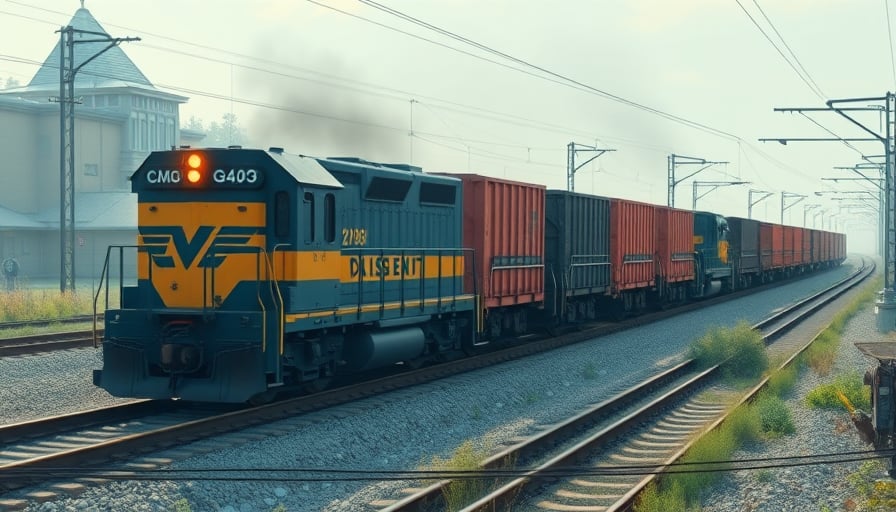
CSX Corp. has announced a modest increase in its quarterly dividend, raising the payment by around eight percent to $0.14 per share. The move comes after the company’s leadership highlighted that flat industrial results are restraining growth in rail freight, prompting a review of operational efficiencies. In a related development, CSX has partnered with Infosys and Microsoft to modernise its data platform, deploying the Infosys Topaz framework and Microsoft Fabric to streamline data consolidation, enhance reporting, and introduce real‑time analytics. This initiative is intended to support the company’s broader strategy of integrating artificial‑intelligence capabilities into its freight and logistics services. The combined actions reflect CSX’s focus on maintaining shareholder returns while investing in technology that supports long‑term operational resilience.
Dividend Increment: A Calculated Signal or a Cosmetic Move?
While an eight‑percent uptick in dividends may appear modest, it signals CSX’s intention to sustain investor confidence amid a period of industry stagnation. Analysts at Morgan Stanley projected a 4.8% dividend growth in the current fiscal year, placing CSX’s move above expectations. However, the company’s earnings per share (EPS) for the quarter were $1.27 versus a prior EPS of $1.35, indicating a contraction in profitability. The dividend payout ratio therefore increased from 31% to 33%, a subtle shift that could strain future cash flows if operating margins do not improve.
The dividend decision also reflects an ongoing debate about the optimal balance between shareholder returns and capital allocation for growth initiatives. A closer examination of CSX’s capital expenditure (CapEx) history reveals a $2.1 billion spend in FY2023, a 5% decline from FY2022, yet the company’s debt-to-equity ratio has risen from 0.72 to 0.84. This suggests that the firm is leaning more heavily on debt to fund operations, raising concerns about leverage under uncertain freight demand.
Flat Industrial Results: What Drives the Stagnation?
The company’s leadership cited flat industrial results as a primary constraint. Industrial freight volumes in North America grew only 1.2% year-over-year in Q4 2025, compared with a 3.8% increase in Q4 2024. A comparative analysis of the North American Freight Index (NAFI) indicates that rail freight shares of total freight traffic have dipped from 18% to 17% since 2023. Contributing factors include:
- Commodity Price Volatility – Fluctuations in steel and grain prices have led to uneven demand cycles.
- Competition from Intermodal Services – The growth of truck‑to‑rail intermodal corridors has eroded CSX’s traditional rail freight market share.
- Regulatory Constraints – Recent EPA tightening on diesel emissions has prompted some shippers to shift to greener modes, marginally reducing rail volumes.
These dynamics suggest that CSX’s core freight business may face headwinds unless it can diversify services or innovate cost structures.
Digital Transformation: Infosys Topaz Meets Microsoft Fabric
CSX’s collaboration with Infosys and Microsoft underscores a strategic pivot to data‑centric operations. By integrating the Infosys Topaz framework with Microsoft Fabric, CSX aims to create a unified data lake that consolidates disparate operational datasets (track usage, train scheduling, freight manifests). The key anticipated benefits include:
- Real‑time analytics to optimize dispatch and maintenance schedules.
- Predictive maintenance leveraging AI models to reduce downtime.
- Enhanced customer portals that provide live shipment visibility.
From a financial standpoint, the joint initiative is projected to generate a $12 million annual cost saving by reducing manual data reconciliation and improving asset utilization. However, the initial investment of $35 million for system integration and staff training raises questions about short‑term profitability.
Regulatory and Competitive Landscape
Regulatory Environment
- The U.S. Surface Transportation Board (STB) has introduced new transparency mandates that require rail carriers to publish granular data on track utilization. The new data platform positions CSX to comply efficiently, potentially avoiding compliance penalties.
- The EPA’s upcoming “Clean Rail” directive will impose stricter emission standards; AI‑enabled routing could help CSX reduce fuel consumption, aligning with regulatory goals.
Competitive Dynamics
- Major competitors such as Union Pacific (UP) and Canadian National Railway (CNR) have already deployed advanced analytics platforms. A comparative snapshot shows UP’s AI initiative is 18% more mature, with a $28 million investment over the last two years.
- The rise of high‑speed intermodal hubs presents a threat; CSX’s real‑time analytics could counter by offering faster, more reliable services.
Risks and Opportunities
| Risk | Impact | Mitigation |
|---|---|---|
| Leverage Increase | Potential liquidity strain | Prioritise debt repayments, explore equity financing |
| Technology Adoption Lag | Delay in realizing AI benefits | Adopt phased roll‑out, maintain legacy systems |
| Regulatory Overreach | Compliance costs rise | Engage proactively with STB and EPA |
| Competitive Response | Market share erosion | Offer differentiated services, expand intermodal options |
| Opportunity | Strategic Lever |
|---|---|
| AI‑Driven Freight Optimization | Use data platform to create premium AI services for clients |
| Diversified Service Portfolio | Expand into trucking partnerships or digital freight marketplaces |
| Capital Efficiency | Leverage cost savings from analytics to fund further CapEx or dividends |
Conclusion
CSX Corp.’s decision to modestly raise dividends amid flat industrial growth, coupled with a bold digital transformation partnership, illustrates a dual strategy of preserving shareholder value while investing in future resilience. The company faces significant risks from increased leverage, regulatory changes, and competitive pressures, yet the integration of AI and real‑time analytics presents a compelling avenue for operational efficiency and service differentiation. Investors and analysts will need to monitor the implementation pace of the new data platform and the trajectory of freight volumes to assess whether CSX can translate technological investment into sustainable profitability.