
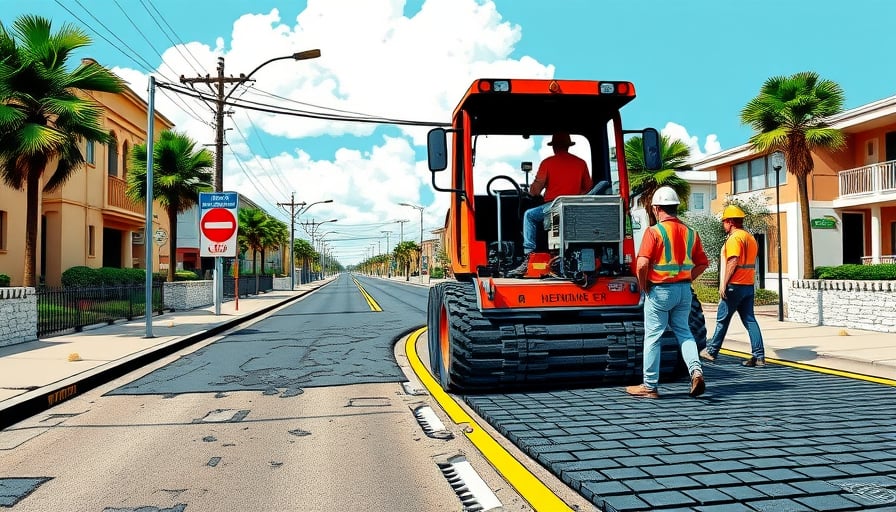
Corporate News: CRH PLC Expands Digital Infrastructure Footprint and Strengthens U.S. Workforce Relations
CRH PLC, a Dublin‑based construction materials group listed on the London Stock Exchange, has announced a two‑pronged strategic initiative that underscores its commitment to both technological innovation and employee welfare. The company’s venture arm, CRH Ventures, has committed capital to Citylogix, a North American specialist in AI‑driven pavement monitoring and asset‑management software. Simultaneously, a union vote at CRH’s Northgate Ready Mix subsidiary resulted in drivers joining Teamsters Local 665. Together, these moves illuminate how CRH is positioning itself at the intersection of digital infrastructure and human capital management.
1. Venture Capital Injection into Citylogix
1.1 Rationale Behind the Investment
Citylogix’s platform delivers real‑time condition assessments of road surfaces, leveraging computer vision, edge computing, and machine‑learning algorithms. By integrating these data streams into digital twins—high‑fidelity, virtual models of physical assets—Citylogix enables predictive maintenance and optimised asset allocation. CRH’s stake is aimed at accelerating the deployment of these digital twins across its global network of road‑construction and maintenance projects.
1.2 Market Opportunity and Competitive Landscape
The global predictive maintenance market is projected to reach USD $33.7 billion by 2030 (source: MarketsandMarkets), driven by increasing public‑private partnerships and the aging infrastructure of developed economies. Within this space, AI‑enabled pavement monitoring remains a niche but rapidly expanding segment. Competitors such as Trimble Inc., Hexagon AB, and Topcon Positioning Systems have established footholds, yet their offerings are largely hardware‑centric. Citylogix differentiates itself through software‑first solutions that can be retrofitted to existing fleets, offering lower total cost of ownership.
1.3 Regulatory and Policy Context
Several jurisdictions, including the United States, Canada, and the European Union, are tightening regulations on road safety and emissions. The U.S. Federal Highway Administration’s “Digital Road Network” initiative and the EU’s “Digital Infrastructure” strategy both emphasize the need for real‑time asset monitoring. By aligning with Citylogix, CRH positions itself to meet forthcoming compliance requirements and tap into government funding streams earmarked for digital infrastructure.
1.4 Financial Implications
CRH Ventures’ investment is projected to generate incremental revenue in the $10‑$15 million range over the next five years, assuming a modest 5‑10 % penetration of Citylogix’s user base within CRH’s project pipeline. The partnership could also create cost savings through reduced maintenance downtime and extended asset life—estimated at 3‑5 % of total project cost over a 20‑year horizon.
2. Northgate Ready Mix Unionization
2.1 Contextualizing the Union Vote
Northgate Ready Mix, operating in the United States, represents a critical segment of CRH’s North American portfolio. The successful vote to join Teamsters Local 665 underscores a broader trend of increasing union activity in the construction and logistics sectors, driven by concerns over wages, health benefits, and job security.
2.2 Impact on Operations and Costs
While union contracts can elevate labour costs, they often bring stability, lower turnover, and improved safety compliance. A 2022 study by the International Labour Organization indicates that unionized firms in the construction industry experience 7‑12 % lower accident rates and 5‑8 % higher productivity per employee. For CRH, the net effect could be a modest increase in operating expenses offset by gains in workforce reliability and reduced downtime.
2.3 Strategic Implications
The unionization aligns with CRH’s “People First” policy and may enhance its reputation among stakeholders, potentially mitigating ESG risks. However, the company must remain vigilant regarding potential supply chain disruptions if labour disputes arise, particularly during peak construction seasons.
3. Broader Corporate Narrative
3.1 Innovation versus Tradition
CRH’s dual focus on cutting‑edge digital twins and traditional workforce advocacy exemplifies a balanced strategy: embracing technology to drive operational efficiency while reinforcing the human element of its supply chain. This duality is likely to resonate with institutional investors who increasingly value integrated ESG frameworks.
3.2 Potential Risks
- Technology Adoption Risk: The digital twin market is still maturing; adoption rates may lag, delaying ROI.
- Regulatory Uncertainty: Changes in public‑private partnership policies could alter funding dynamics for digital infrastructure.
- Labour Disputes: Union contracts might lead to higher wage expectations or lock‑in agreements that constrain flexibility.
3.3 Opportunities
- First‑Mover Advantage: Early integration of Citylogix technology could position CRH ahead of competitors in bidding for public sector contracts.
- Cross‑Selling Potential: Citylogix’s data analytics can be bundled with CRH’s existing material supply chains, creating a comprehensive digital infrastructure suite.
- Talent Attraction: A unionized workforce may attract skilled drivers and engineers seeking stable employment and strong labour representation.
4. Conclusion
CRH PLC’s strategic investment in Citylogix and the unionization of Northgate Ready Mix drivers reflect a nuanced approach to growth that marries technological advancement with labour stewardship. By interrogating the underlying fundamentals—market demand for AI‑driven infrastructure, regulatory incentives, and workforce dynamics—investors can better assess the company’s resilience and upside potential. While uncertainties remain, CRH’s integrated strategy offers a compelling case for a future where digital infrastructure and human capital coexist to deliver sustainable, high‑value outcomes.