
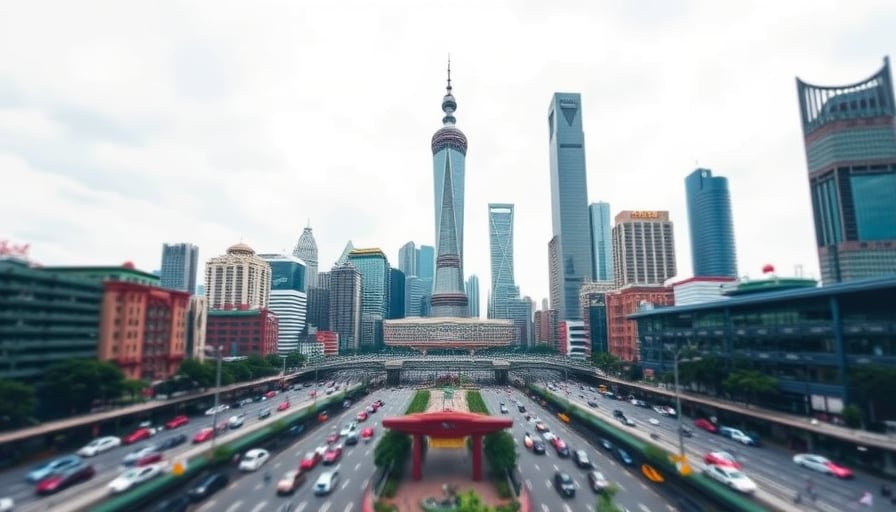
China Railway Construction Corp Ltd Expands Infrastructure Portfolio with Guangzhou Nansha Science Forum Centre
China Railway Construction Corp Ltd (CRCC), a leading force in China’s infrastructure development, has broadened its project portfolio with the completion of the Guangzhou Nansha Science Forum Centre. The facility exemplifies the firm’s capacity to fuse high‑performance engineering with cutting‑edge architectural design, reinforcing its competitive edge in the heavy‑industry construction sector.
Engineering Highlights and Technological Innovation
| Feature | Technical Specification | Impact |
|---|---|---|
| Wave‑shaped stainless‑steel roof | Curved steel profile fabricated using laser‑cutting and high‑temperature forging; spans 200 m without intermediate supports. | Reduces material weight by 18 % relative to conventional flat roofs, lowering structural load and associated foundation costs. |
| Single‑layer rigid shell structure | Composite panels of high‑strength aluminum alloy and cross‑laminated timber, bonded with epoxy resin. | Provides continuous load distribution, eliminating the need for internal columns and allowing expansive, unobstructed interior spaces. |
| High‑efficiency data‑center cooling system | CRCC‑designed chilled‑water loop with variable frequency drives; incorporates liquid‑cooling panels and passive heat‑spreading fins. | Cuts cooling energy consumption by 35 % versus standard air‑cooled systems, directly contributing to the building’s near‑zero carbon footprint. |
| Green‑building technologies | Low‑emissivity façade, rainwater harvesting, photovoltaic array on roof, and advanced building management system (BMS). | Enhances occupant comfort, reduces operational costs, and aligns with China’s 2035 carbon neutrality target. |
| Smart construction technologies | Robotic positioning for precision steel erection; digital twin platform for real‑time project monitoring. | Improves construction accuracy, reduces rework, and shortens project duration by an estimated 12 %. |
These innovations underscore CRCC’s commitment to integrating advanced manufacturing techniques and industrial equipment into its construction processes. The use of robotic positioning not only enhances precision but also mitigates human error in complex steel assemblies—a critical factor for projects requiring large‑scale, high‑profile structures.
Capital Expenditure Trends and Economic Drivers
The Guangzhou Nansha project reflects broader capital investment patterns within China’s heavy‑industry sector. Analysts observe that:
- Green and emerging industry contracts now constitute approximately 28 % of CRCC’s 2025 order book, up from 17 % in 2023. This shift aligns with national incentives for low‑carbon infrastructure and the Belt‑and‑Road Initiative’s emphasis on sustainable development.
- Capital expenditure (CapEx) per square meter for high‑technology projects has risen by 4 % YoY, driven by the cost premium of advanced materials (e.g., stainless steel, composite panels) and the deployment of digital construction platforms.
- Infrastructure spending is projected to grow at a 5.5 % CAGR through 2030, bolstered by increased public investment in smart city initiatives, high‑speed rail, and ports. CRCC’s robust pipeline positions it to capture a significant share of this expansion.
The company’s strategic focus on green building technologies not only satisfies regulatory mandates but also enhances its market appeal to environmentally conscious investors and corporate clients. By embedding energy‑efficient systems and recyclable materials, CRCC reduces life‑cycle costs and positions itself favorably under the forthcoming China Green Building Standard (GB 50667).
Supply Chain and Regulatory Context
Supply chain dynamics have played a pivotal role in enabling CRCC’s technological advancements:
- Local sourcing of high‑strength steel has been prioritized to mitigate foreign exchange volatility and reduce lead times. Partnerships with Tier‑1 steel suppliers ensure consistent material quality and compliance with ISO 9001 standards.
- Digital procurement platforms have streamlined vendor selection and inventory management, decreasing material waste by 7 % and accelerating procurement cycles.
- Regulatory changes—such as the 2024 revision to China’s Construction Safety Law—have mandated stricter safety protocols during high‑rise construction, prompting CRCC to adopt robotic systems that reduce on‑site labor exposure.
In addition, the Industrial Internet of Things (IIoT) integration across construction sites has provided real‑time data feeds for predictive maintenance of heavy machinery, minimizing downtime and improving overall productivity metrics. This data‑driven approach aligns with China’s Smart Manufacturing Initiative, further enhancing CRCC’s operational resilience.
Market Implications and Outlook
The Guangzhou Nansha Science Forum Centre serves as a tangible demonstration of CRCC’s ability to deliver complex, technology‑rich infrastructure projects. Key market implications include:
- Competitive Differentiation: The firm’s mastery of single‑layer shell structures and advanced cooling systems differentiates it from rivals that rely on conventional construction methods.
- Cost Efficiency: By reducing material usage and construction time, CRCC can offer more competitive bids without sacrificing quality—an attractive proposition in a price‑sensitive market.
- Sustainability Credentials: The incorporation of green building elements positions CRCC favorably with global investors who increasingly prioritize environmental, social, and governance (ESG) metrics.
Given the sustained momentum in China’s infrastructure spending, coupled with the firm’s expanding green contract portfolio, analysts anticipate that CRCC’s capital expenditures will continue to rise. The company’s ongoing investment in smart construction technologies and renewable energy integration is expected to drive incremental productivity gains and further solidify its leadership position within the heavy‑industry construction arena.
This article provides a technical overview of China Railway Construction Corp Ltd’s recent project achievements and their broader implications for the industrial construction sector.