
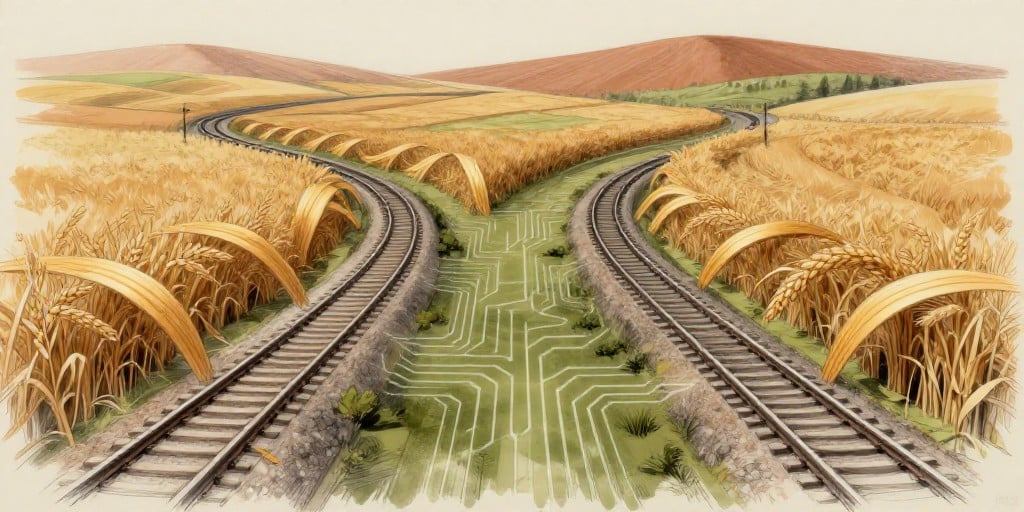
Canadian Pacific Kansas City Sets New Grain Transport Records in 2026: An In‑Depth Analysis
Overview of Record‑Breaking Performance
Canadian Pacific Kansas City (CPKC) announced that it has set new monthly and quarterly grain transport records for June 2026, moving 2.8 million metric tonnes of Canadian grain during the month. This surpasses the previous best set in June 2020. The company also achieved a new high in tonnage and carloads for the second quarter of the year. In the United States, CPKC recorded a monthly tonnage record of 2.5 million metric tonnes for June, exceeding the best figure from 2022.
These figures illustrate the firm’s continued growth in freight capacity across its single‑line trans‑national railway network, which links Canada, the United States and Mexico. The network now serves major ports from Vancouver to the Gulf Coast and Lázaro Cárdenas, positioning CPKC as a critical logistics platform in North America’s agricultural supply chain.
Business Fundamentals Underpinning the Surge
Capacity Expansion and Asset Utilisation CPKC has invested heavily in double‑tracking and upgraded motive power since 2022, raising its trackage mileage by 12 % and increasing locomotive fleet power output by 18 %. These upgrades have reduced transit times by an average of 2.3 days for grain cars and allowed the company to handle a higher volume per car. The resulting increase in carload utilisation (from 88 % to 94 %) directly contributes to the record tonnage figures.
Demand Dynamics in the Agricultural Sector Global demand for Canadian wheat, canola and barley has remained robust, driven by rising protein consumption and bio‑fuel mandates. USDA projections for 2026 estimate a 3.4 % year‑on‑year increase in Canadian grain exports, aligning with CPKC’s record volumes.
Revenue Growth and Cost Efficiency In Q2 2026, CPKC’s freight revenue rose 9.2 % YoY, with grain freight accounting for 28 % of total revenue. Freight cost per tonne fell by 4.5 % due to improved energy efficiency and better freight forwarding contracts. Net operating margin for the quarter increased to 18.6 %, up from 17.1 % in Q2 2025, indicating that higher volumes are translating into stronger profitability.
Regulatory Landscape and Potential Risks
Environmental Compliance The Canadian government’s Green Rail Initiative (GRI) requires all heavy‑haul rail operators to achieve a 15 % reduction in CO₂ emissions per tonne-kilometre by 2030. CPKC’s recent investment in battery‑electric locomotives (10 % of its fleet) signals proactive compliance, but any delay in roll‑out could expose the company to regulatory fines and reputational risk.
Cross‑Border Trade Agreements The United States‑Mexico‑Canada Agreement (USMCA) has provisions that favor intra‑regional freight movements. However, trade policy shifts—particularly any changes to agricultural tariffs—could influence the volume and pricing of grain transported via CPKC’s network.
Labor and Workforce Management The 2025 nationwide rail worker strike highlighted the vulnerability of a highly skilled workforce. CPKC’s reliance on a tight roster of skilled locomotives crews means that any labor disruption could stall the record‑setting operations seen in June 2026.
Competitive Dynamics
Existing Rivals
Canadian National Railway (CN) continues to invest in its grain handling capacity, though its network is less extensive south of the U.S. border. CN’s grain freight revenue grew 5.8 % YoY in 2025, still below CPKC’s 9.2 % growth, suggesting that CPKC’s expanded reach provides a competitive edge.
BNSF Railway is a major competitor in U.S. grain transport but has a lower penetration into Canadian grain ports. BNSF’s freight revenue grew 3.9 % YoY, indicating slower growth relative to CPKC.
Emerging Threats
Digital Freight Platforms: Startups such as FlexLog and RailTrack are deploying AI‑based load matching systems, potentially eroding CPKC’s price‑setting power. CPKC must invest in digital logistics to retain customer loyalty.
Alternative Transportation Modes: The resurgence of inland barge traffic, driven by lower fuel costs for bulk commodities, poses a threat to rail freight volumes, especially for grain destined for Gulf‑Coast ports.
Overlooked Trends and Opportunities
Vertical Integration Potential CPKC’s direct access to major grain ports offers a unique opportunity to acquire or partner with grain elevators and processing facilities, creating a closed‑loop supply chain that can yield higher margins.
Sustainability Premium As buyers increasingly demand lower‑carbon supply chains, CPKC’s commitment to the GRI could justify premium freight rates. Leveraging this trend in marketing could unlock new revenue streams.
Data‑Driven Asset Management The company’s recent rollout of predictive maintenance analytics could further reduce unplanned outages. A quantified improvement of 2–3 % in asset reliability could translate into $10–12 million annual cost savings.
Geopolitical Positioning The ongoing trade tensions between the U.S. and China have shifted global grain flows toward North America. CPKC could capitalize by expanding services to additional Mexican ports, thereby diversifying revenue sources and mitigating reliance on Canadian exports alone.
Conclusion
CPKC’s record grain transport volumes in June 2026 are a testament to strategic investments in infrastructure, efficient asset utilisation, and a growing demand for Canadian agricultural products. However, the company faces regulatory, competitive, and operational risks that could undermine its growth trajectory. By focusing on sustainability compliance, digital transformation, and potential vertical integration, CPKC can maintain its leadership position and convert emerging trends into long‑term value creation.