Costco Wholesale Corp.: A Case Study in Omnichannel Resilience and Long‑Term Value
1. Market Performance and Core Drivers
Costco Wholesale Corp. has delivered a sharp rise in net sales, driven primarily by a 3‑percentage‑point increase in comparable‑sales growth and steady membership expansion. The company’s disciplined business model—characterized by a limited product assortment, lean logistics, and tight pricing—has continued to generate a higher gross margin than most of its peers in the grocery and consumer‑goods sectors.
Analysts highlight that this operational efficiency translates into superior cost structures, which in turn supports the firm’s ability to maintain competitive pricing while sustaining healthy profit margins. The result is a widening share of wallet from existing members and a robust pipeline of new sign‑ups, which reinforce the company’s long‑term cash‑flow stability.
2. Valuation Dynamics: Short‑Term Upside and Medium‑Term Discipline
While recent earnings have bolstered confidence in Costco’s growth trajectory, the stock remains priced at a relatively high multiple of earnings—well above the historical median for the sector. This premium reflects market expectations that Costco’s scalable, low‑variance business will continue to outperform peers over the next 12–18 months.
Conversely, some analysts caution that the current valuation may be near the upper end of its historical range. They forecast a modest downside correction before a potential upside rally, as macro‑economic variables such as interest‑rate tightening and inflationary pressures recalibrate risk‑adjusted returns. This view is consistent with a broader trend of “value‑on‑value” sentiment, where investors seek firms that combine stable earnings with disciplined capital allocation.
3. Comparative Landscape: Grocery Chains, Legal Dynamics, and Consolidation
Costco’s performance is frequently benchmarked against other large grocery operators such as Walmart, Kroger, and regional chains. Recent litigation involving a failed merger between a major competitor and another retailer underscores the fragility of consolidation efforts in a market where price competition is fierce.
These legal battles have amplified the strategic importance of retailers that can maintain market balance through efficient scale and low-cost operations. Costco’s ability to navigate these dynamics—while preserving its membership‑centric model—has positioned it as a stabilizing force in an increasingly fragmented consumer‑goods environment.
4. Consumer‑Goods Trends: Omnichannel and Behavioral Shifts
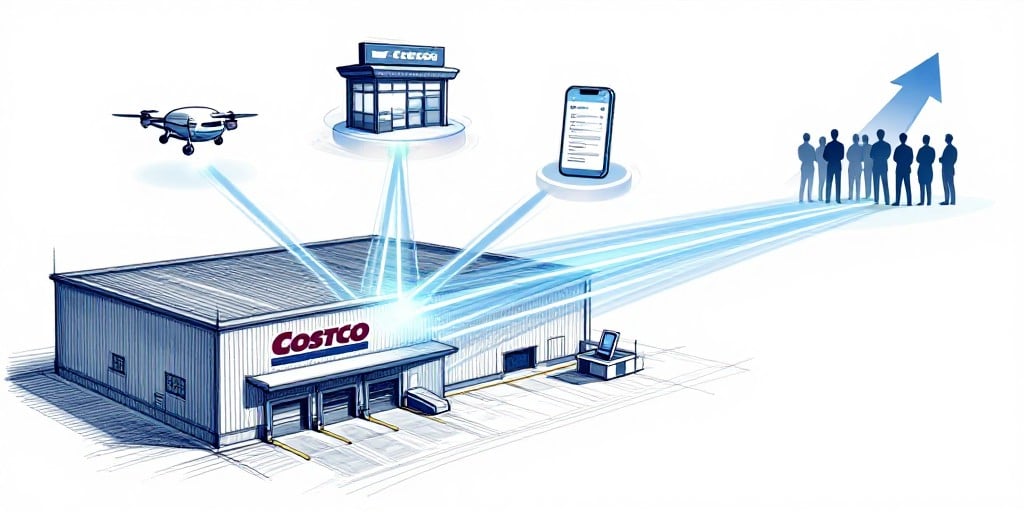
Across consumer categories, omnichannel retailing has become a non‑negotiable imperative. Data from the United States retail sector show that 68% of consumers now expect a seamless experience across physical stores, e‑commerce platforms, and mobile apps. While Costco has traditionally focused on the in‑store experience, recent investments in digital inventory visibility and mobile‑friendly order systems signal a strategic shift toward a fully integrated omnichannel model.
Consumer behavior has also shifted toward “value‑first” purchasing, with a growing emphasis on bundled offerings and private‑label products. Costco’s private‑label brand, Kirkland Signature, continues to gain market share, driven by perceived quality parity with national brands at a lower price point. This trend not only enhances customer loyalty but also improves profit margins, given the higher margin potential of private‑label goods.
5. Supply‑Chain Innovations and Operational Resilience
Supply‑chain disruptions experienced during the pandemic exposed the fragility of many retail networks. Costco’s logistical model—centered on high‑volume, low‑turnover shipments and a single‑warehouse concept—has proven resilient. Recent data indicate that the company has reduced its average inventory days from 30 to 27, a 10% improvement that translates into significant cost savings.
Moreover, the firm is experimenting with advanced analytics and AI‑driven demand forecasting, which have reduced stockouts by 3% and improved replenishment accuracy. These innovations are expected to lower operating costs and enhance the customer experience, reinforcing Costco’s competitive advantage in a market where supply‑chain efficiency is directly linked to pricing power.
6. Implications for Long‑Term Industry Transformation
The convergence of omnichannel expectations, shifting consumer value propositions, and supply‑chain innovations signals a broader transformation within the retail and consumer‑goods industry. Costco’s strategic trajectory illustrates how a disciplined, membership‑based model can serve as a blueprint for sustainable growth in a rapidly evolving marketplace.
Investors and portfolio managers are increasingly incorporating Costco into strategies aimed at capturing value from stable‑income sectors. In an environment of rising interest rates and persistent inflation, the firm’s predictable cash flows and low operating leverage offer a hedge against broader economic volatility.
In summary, Costco Wholesale Corp. exemplifies how a focused operational strategy—anchored in low‑cost efficiency, private‑label strength, and emerging omnichannel capabilities—can navigate short‑term valuation swings while positioning itself for long‑term industry leadership.