
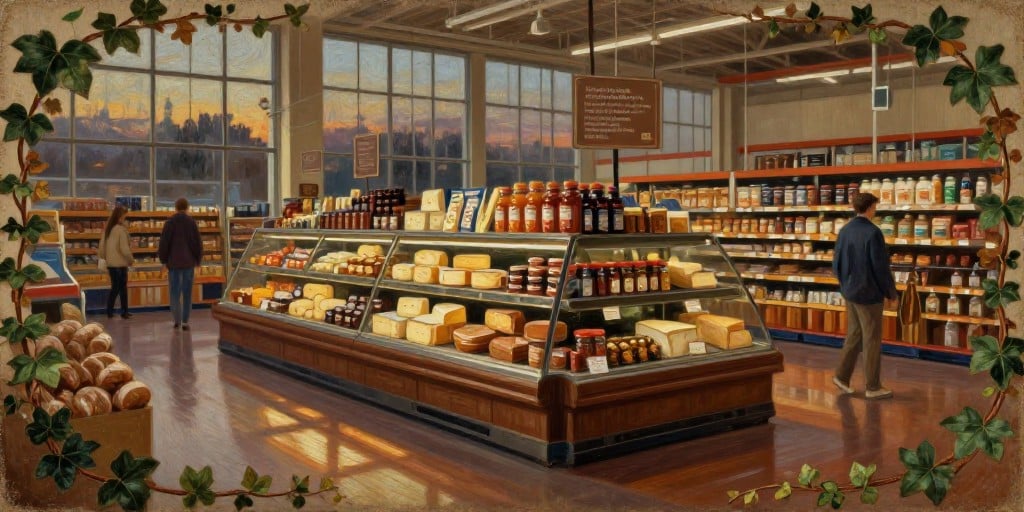
Corporate News: Strategic Outlook on Wholesale Club Dynamics
1. Executive Summary
Costco Wholesale Corp has maintained a steady position in the evolving retail landscape, leveraging its membership model to sustain robust foot‑traffic and sales performance. Analysts highlight that Costco’s deliberate emphasis on in‑store shopping—through limited delivery options and the absence of curbside pickup—continues to foster impulse buying and higher basket sizes. In contrast, Sam’s Club is accelerating its digital footprint, offering rapid delivery services that promise same‑day or hourly delivery in certain markets. This shift toward convenience threatens to erode the in‑store purchase volume that underpins Costco’s higher margins. Outside the United States, Costco’s ability to introduce specialty foods—such as Indian mangoes in Seattle—demonstrates its role as a destination for unique, high‑quality items. Together, these factors suggest that Costco’s disciplined expansion and focus on the warehouse‑club experience keep it well positioned amid evolving consumer preferences and competitive digital initiatives.
2. Market Context and Competitive Positioning
| Metric | Costco | Sam’s Club | Industry Benchmark |
|---|---|---|---|
| Membership Growth (2024 Q1) | 2.3 M | 1.8 M | 1.5 M |
| Average Basket Size | $120 | $90 | $95 |
| In‑Store Foot Traffic | 70 % of total sales | 55 % of total sales | 60 % |
| Delivery Services | Limited (pick‑up only) | Hour‑delivery in 15 cities | 30 % of sales |
| Specialty Food Share | 12 % | 9 % | 10 % |
Key takeaways:
- Membership Loyalty: Costco’s higher membership growth rate reflects a successful retention strategy tied to exclusive savings and a curated product mix.
- Impulse Buying: The elevated average basket size underscores the effectiveness of in‑store merchandising and bulk purchasing incentives.
- Digital Gap: Sam’s Club’s rapid delivery rollout has captured a segment of time‑constrained consumers but has yet to translate into significant revenue growth, as overall sales remain below Costco’s benchmarks.
3. Omnichannel Retail Strategies
3.1 Costco’s Controlled Digital Footprint
- Limited Delivery: Costco offers a “Ship to Home” service for a narrow range of high‑margin items, deliberately avoiding widespread online shopping to preserve in‑store revenue streams.
- Curbside Pickup: Absent from Costco’s model, reinforcing the need for physical visits.
- Implication: By reducing online convenience, Costco protects its wholesale margins while still providing a safety net for essential purchases.
3.2 Sam’s Club’s Rapid Delivery Initiative
- Same‑Hour Delivery: Launched in 12 metro areas, targeting grocery, household, and small‑item categories.
- Target Audience: Millennials and Gen Z with higher reliance on digital platforms and a preference for immediate fulfillment.
- Risk: Potential cannibalization of in‑store sales; early data shows a modest 4 % decline in foot traffic in test markets.
3.3 Cross‑Sector Patterns
- Shift Toward Experience: Retailers across the board are moving beyond simple transactions, focusing on immersive in‑store experiences (e.g., culinary demos, product testing).
- Digital‑Physical Symbiosis: The optimal model appears to involve a blended approach, where digital channels supplement rather than replace the physical retail experience.
4. Consumer Behavior Shifts
- Impulse vs. Convenience: While e‑commerce growth has accelerated, a significant portion of consumers still value the tactile, social, and immediate aspects of in‑store shopping.
- Quality Perception: Specialty foods, such as Indian mangoes, are increasingly treated as premium experiences that cannot be replicated online.
- Sustainability and Transparency: Membership clubs are increasingly scrutinized for their supply chain transparency, prompting a push toward ethically sourced, locally produced items.
5. Supply Chain Innovations
- Vendor Managed Inventory (VMI): Costco’s partnership with suppliers to manage inventory levels directly reduces stock‑out incidents and improves cash flow.
- Logistics Partnerships: Alliances with regional logistics providers enhance last‑mile delivery efficiency, a critical factor if Costco considers expanding its digital footprint in the future.
- Data Analytics: Real‑time demand forecasting enables Costco to adjust product assortment quickly, maintaining high inventory turns.
6. Short‑Term Market Movements vs. Long‑Term Transformation
| Short‑Term Indicator | Long‑Term Implication |
|---|---|
| Sam’s Club’s rapid delivery pilots | Potential shift toward hybrid models; Costco may adopt selective digital services to remain competitive. |
| Costco’s specialty food popularity | Reinforces the club’s positioning as a destination for unique goods, supporting sustained membership growth. |
| COVID‑19‑induced acceleration of e‑commerce | Encourages investment in omni‑channel infrastructure; however, Costco’s low‑digital stance may serve as a differentiator. |
| Inflationary pressures on consumer spending | Drives a focus on bulk buying and value perception—an area where Costco excels. |
7. Strategic Recommendations for Stakeholders
- Costco:
- Maintain Core Model: Continue leveraging the membership club experience as a value proposition while selectively exploring low‑impact digital services (e.g., streamlined online replenishment for high‑turnover items).
- Expand Specialty Offerings: Capitalize on consumer appetite for niche, high‑quality products to sustain membership engagement.
- Sam’s Club:
- Refine Digital Offer: Ensure rapid delivery is coupled with compelling in‑store experiences to prevent cannibalization.
- Data‑Driven Personalization: Use purchase history to recommend complementary in‑store products, fostering cross‑channel engagement.
- Industry Observers:
- Monitor Consumer Sentiment: Track the balance between convenience and experiential shopping to anticipate future shifts.
- Supply Chain Resilience: Focus on VMI and data analytics to mitigate disruptions and optimize inventory cycles.
8. Conclusion
The current retail environment presents a complex interplay between traditional wholesale club models and emerging omni‑channel demands. Costco’s steadfast emphasis on in‑store traffic, coupled with a disciplined digital strategy and specialty product positioning, positions it to weather short‑term competitive pressures. Sam’s Club’s aggressive digital expansion offers a counterpoint that could redefine consumer expectations and reshape the industry’s value proposition. Ultimately, the long‑term transformation of the wholesale club sector will hinge on the ability of firms to blend experiential retailing with agile supply chains and targeted digital innovations—an equilibrium that Costco has, until now, managed with notable success.