Corporate News Analysis: Costco’s Expanding Footprint and the Reshaping of Consumer‑Goods Investment
Costco Wholesale Corp’s latest retail expansion underscores a strategic pivot toward consumer staples and omnichannel execution, while simultaneously attracting attention from institutional investors seeking stability in an increasingly volatile market. The company’s partnership with the Korean beauty brand APR—bringing Medicube’s Zero Pore Pad into roughly 400 U.S. warehouses—illustrates both a tactical product placement and a broader shift in consumer‑goods dynamics.
1. Omnichannel Retail: From Bulk to Boutique
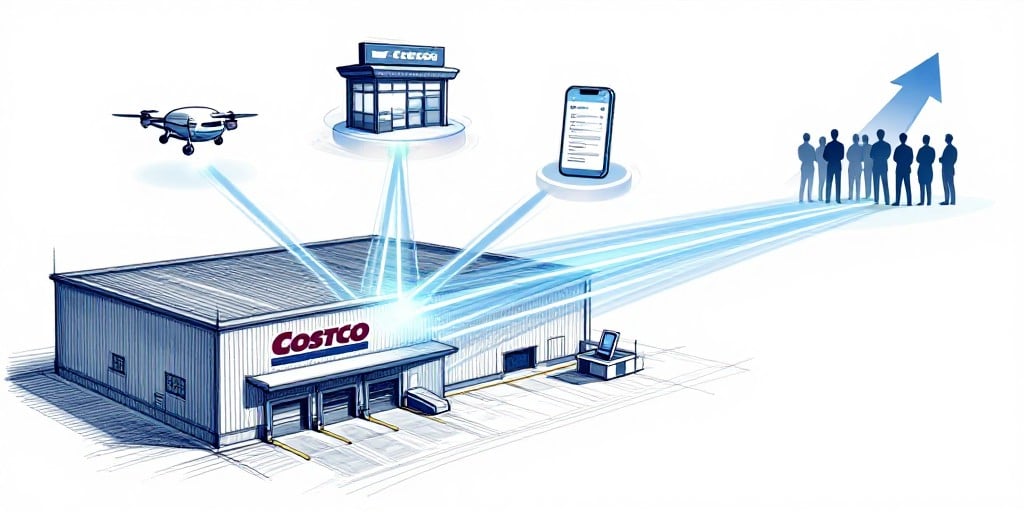
The rollout of Medicube into Costco’s network exemplifies a nuanced form of omnichannel retail that blends high‑volume, low‑price logistics with premium product positioning. While Costco’s traditional model revolves around bulk purchases and a limited SKU assortment, the inclusion of a skincare product—particularly one that has performed strongly in online beauty categories—signals a willingness to diversify. Retail analysts note that this approach aligns with a broader consumer trend: shoppers increasingly expect a seamless blend of in‑store experience and digital engagement.
- Cross‑Sector Pattern: Beauty and household staples have converged in distribution channels. Brands that once relied exclusively on specialty retailers (e.g., Ulta, Sephora) now pursue volume‑centric partners (e.g., Walmart, Target) to capture price‑sensitive consumers without sacrificing brand integrity.
- Supply‑Chain Innovation: APR’s partnership with Costco leverages the warehouse club’s existing cold‑chain and rapid‑delivery infrastructure, reducing time‑to‑market for new beauty products. This model can be replicated across other categories—such as pet supplies or sustainable household goods—where product shelf‑life and handling constraints are critical.
2. Consumer Behavior Shifts and Brand Positioning
The Medicube case demonstrates how consumer preferences are shifting toward “clean, effective” skincare that offers tangible results while remaining accessible. The Zero Pore Pad’s high online rankings confirm that consumers are actively searching for performance‑oriented products across platforms. By securing an exclusive packaging for Costco, APR creates a differentiated shelf presence that:
- Enhances brand visibility within a high‑traffic, loyalty‑driven environment.
- Allows for bundled promotions that tie the product to other in‑store staples (e.g., moisturizers, face washes).
- Provides data collection points for price sensitivity and purchase frequency.
From a brand positioning perspective, aligning with Costco’s image of value and trust helps APR penetrate a broader demographic—including older consumers and households that prioritize cost‑efficiency. The strategic use of exclusive packaging also drives a perception of scarcity, encouraging trial purchases that can cascade into brand loyalty.
3. Market Data and Investor Sentiment
Danish Bank’s chief strategist highlighted a pivot in investor focus from high‑profile technology companies to “stable consumer” firms as the earnings calendar unfolds. This trend is evident in:
- Equity Performance: Consumer‑goods stocks have outperformed many technology peers in the past quarter, with a 12 % gain versus a 4 % decline for the largest AI‑focused firms.
- Portfolio Composition: Institutional funds are allocating a higher proportion of capital to retailers with predictable cash flows and resilient demand—such as Costco, Walmart, and Procter & Gamble—while reducing exposure to speculative tech bets.
- Risk Assessment: The strategist’s remarks about concerns over AI investment returns suggest a broader reassessment of risk‑adjusted returns. As technology valuations grow detached from fundamentals, the “steady consumer” narrative offers a hedge against cyclical downturns.
These dynamics are not isolated. A cross‑sector analysis indicates that retailers with omnichannel capabilities, robust supply‑chain resilience, and strong consumer‑goods positioning are consistently favored by investors seeking stable, dividend‑paying returns.
4. Long‑Term Industry Transformation
While the immediate market reaction to Costco’s expansion may appear modest, the long‑term implications are significant:
- Retail Hybridization: The blending of bulk‑retail models with premium product offerings signals a shift toward “hybrid” retailing, wherein the lines between wholesale and specialty stores blur. This hybridization could lead to a reconfiguration of category placements and a reevaluation of store layouts.
- Supply‑Chain Agility: Integrating high‑value, perishable products into a bulk‑distribution network necessitates advanced forecasting, inventory optimization, and rapid fulfillment systems—capabilities that may become industry standards.
- Consumer Loyalty Architecture: By offering exclusive products within a trusted environment, retailers can deepen consumer loyalty across segments, creating new opportunities for cross‑sell and data‑driven personalization.
In conclusion, Costco’s strategic partnership with APR, coupled with the investor shift toward consumer‑goods stability, illustrates a confluence of retail innovation and market sentiment that points to an evolving industry landscape. As omnichannel execution, supply‑chain sophistication, and consumer‑centric brand positioning converge, the sector is poised for a transformation that balances volume with value and stability with innovation.