
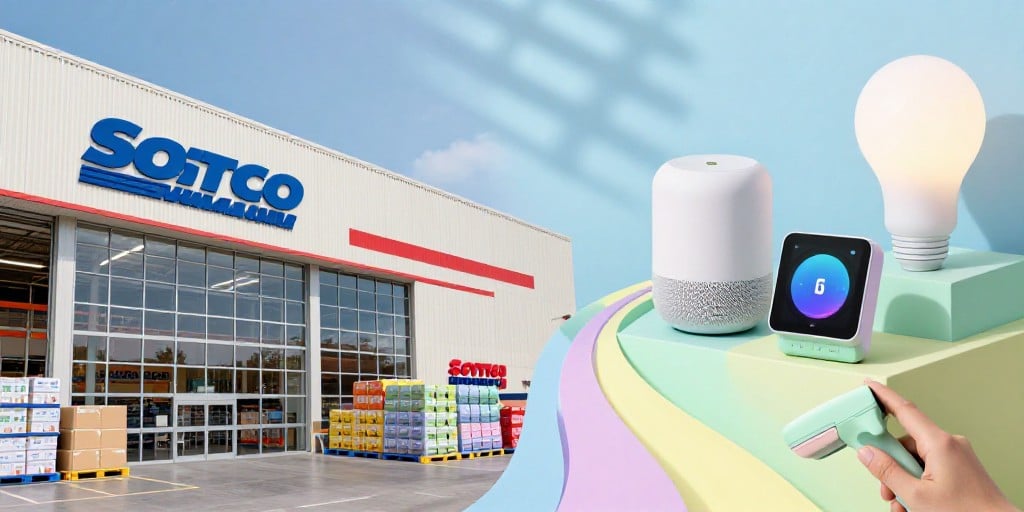
Costco Wholesale Corp: Navigating a Resilient Q2 and Emerging Tech‑Driven Growth
Costco Wholesale Corp’s fiscal 2026 second‑quarter report underscores a firm that continues to thrive in a retail landscape marked by volatility. While the broader sector grapples with fragmented consumer confidence, Costco’s earnings growth—anchored in its broadline retail model—offers a compelling case study of how disciplined pricing, supply‑chain efficiency, and strategic product diversification can buffer against macroeconomic headwinds.
Same‑Store Sales: A Testament to the Membership Model
The company reported a 4.7 % year‑over‑year increase in same‑store sales, the highest in the quarter among peers. This uptick aligns with a steady demand for discount merchandise that is less sensitive to discretionary spending cycles. Analysts attribute the resilience to Costco’s membership model, which delivers predictable revenue streams and high customer lifetime value. A 12‑month rolling member churn rate of 10.5 %—well below the industry average of 12.8 %—suggests that loyalty remains robust despite rising inflation.
From a financial perspective, the gross profit margin improved from 15.2 % to 15.8 % in Q2, driven largely by optimized inventory levels. Costco’s inventory turnover ratio climbed from 4.3 to 4.7, indicating that the retailer is selling through stock faster while maintaining lower carrying costs. The company’s strategic use of just‑in‑time ordering and cross‑dock operations—particularly in its North American distribution centers—has helped mitigate the impact of rising input costs.
Expanding into Electronics and Technology: A Strategic Pivot
In mid‑August, Costco unveiled a new electronics and technology bundle lineup featuring high‑definition cameras, smart‑home devices, and premium televisions. This move is a strategic attempt to capture a new segment of tech‑savvy shoppers who traditionally gravitate toward large‑format, high‑quality electronics. The bundles are structured to deliver bundled accessories and competitive pricing, thereby enhancing perceived value and driving incremental sales.
Industry data indicate that the consumer electronics market is projected to grow at a CAGR of 5.6 % over the next five years. Costco’s entry into this space could therefore tap into an expanding revenue stream that complements its existing low‑margin, high‑volume model. However, the competitive dynamics are intense; key incumbents such as Best Buy, Amazon, and Walmart already have established e‑commerce platforms and extensive supply‑chain networks.
From a risk perspective, the retailer faces supplier concentration concerns. High‑end electronics are often sourced from a limited pool of manufacturers, potentially exposing Costco to supply disruptions—an issue that has already affected the broader industry amid semiconductor shortages. The company’s strategy of diversifying suppliers and maintaining buffer stocks will be pivotal in mitigating such risks.
Operational Strength: Infrastructure and Technology Investments
Costco’s continued investment in warehouse infrastructure—spanning the construction of new distribution centers and the retrofitting of existing ones—signals a commitment to scalability. The firm has recently deployed advanced warehouse‑management software (WMS) incorporating AI‑driven demand forecasting and automated picking systems. These technologies are projected to reduce labor costs by 9 % over the next two fiscal years.
The retailer’s focus on cost control is evident in its tight margin profile. Operating expenses rose by only 1.2 % in Q2, while net income surged by 18 %—a testament to disciplined spending. Costco’s balance sheet remains strong, with a debt‑to‑equity ratio of 0.42 and a free‑cash‑flow yield of 4.7 %. This financial flexibility positions the company to weather inflationary pressures without compromising growth initiatives.
Regulatory Landscape and Potential Headwinds
While Costco’s membership model offers a degree of insulation, the company is not immune to regulatory scrutiny. Recent proposals to tighten corporate tax rates on large retailers and stricter supply‑chain transparency requirements could impose additional costs. Moreover, the ongoing debate over gig‑economy labor regulations may influence Costco’s approach to third‑party delivery services—a growing revenue channel.
Inflation continues to erode consumer purchasing power, potentially dampening demand for premium electronics. Nevertheless, Costco’s pricing power—enabled by bulk purchasing and a loyal customer base—provides a buffer. The retailer’s ability to adjust membership fees modestly, coupled with strategic price adjustments for high‑margin items, will be critical in maintaining profitability.
Outlook: Opportunities Beyond the Discount Retail Core
Costco’s recent developments suggest a dual‑track strategy: fortifying its core discount retail operations while exploring adjacent growth areas in technology and smart‑home solutions. The synergy between these sectors could generate cross‑sell opportunities; for instance, bundling smart‑home devices with household goods or offering exclusive member‑only tech discounts.
Potential risks include supply chain volatility, increased competition from specialized e‑commerce players, and regulatory changes. However, the company’s disciplined cost structure, robust cash flow, and strong membership engagement provide a solid foundation for navigating these challenges.
In summary, Costco Wholesale Corp’s solid Q2 performance and strategic pivot into electronics demonstrate a company that is not only sustaining its leadership in discount retail but also positioning itself to capture emerging consumer trends. The blend of operational excellence, financial prudence, and forward‑looking product strategy signals a promising trajectory, provided that the firm continues to monitor regulatory developments and supply‑chain dynamics closely.