
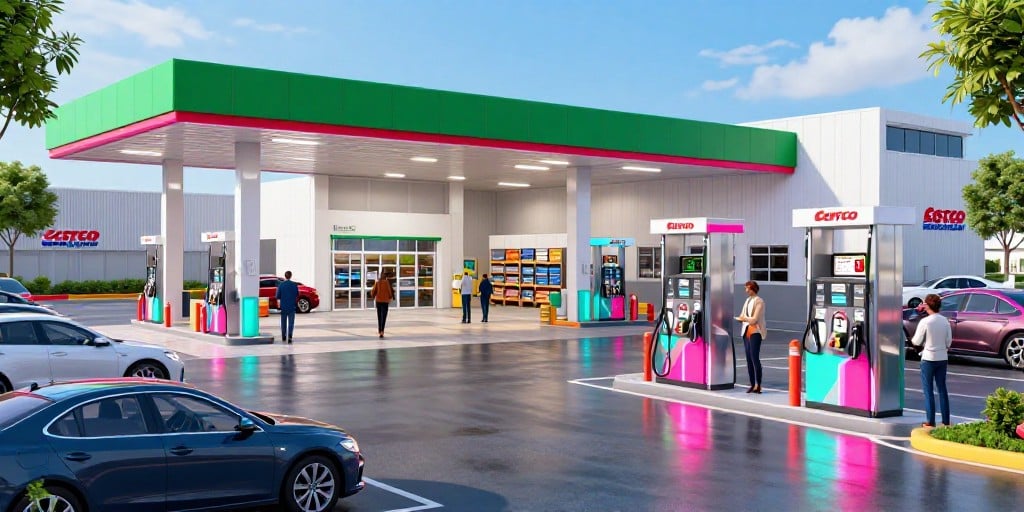
Costco Wholesale Corp Expands Footprint with Standalone Gas Stations and New Product Partnerships
Costco Wholesale Corp announced a strategic expansion of its retail footprint that aims to enhance shopper convenience and drive sales growth. The company will launch standalone gas stations adjacent to its warehouse locations, starting with a pilot site in Mission Viejo, Southern California. By positioning fuel outlets close to warehouses, Costco intends to create a seamless shopping experience, mitigate parking congestion, and attract customers who seek lower fuel prices amid recent volatility in energy markets.
Fuel Stations as a Traffic‑Generating Asset
Management emphasizes that the new gas stations are designed to be customer‑friendly and serve as a traffic generator for the broader retail operation. Analysts, however, note that the fuel business represents a low‑margin segment for Costco. They caution that a decline in gasoline prices later in the year could modestly impact the retailer’s overall merchandise gross profit. Despite these concerns, Costco’s shares have remained within a trading range that reflects a moderate buy consensus from analysts. The prevailing view holds that the retailer continues to be a solid long‑term investment, largely due to its resilient membership model and diversified product mix.
Broadening Product Portfolio with Exclusive Partnerships
Parallel to its expansion in ancillary services, Costco’s product offering continues to grow. The retailer has secured distribution agreements with several international brands, including a Japanese hair‑care line and a protein‑popcorn snack. These partnerships grant exclusive access to Costco warehouses nationwide, reinforcing the retailer’s strategy to broaden its range of private‑label and third‑party products. By expanding its private‑label portfolio, Costco sustains demand across its membership base and enhances its competitive positioning in an industry where private‑label offerings increasingly capture consumer loyalty.
Strategic Implications and Investor Perspective
Costco’s combined strategy of integrating fuel sales with its core wholesale model is under close scrutiny by investors. The potential for increased foot traffic could translate into higher ancillary sales and strengthen membership retention. Conversely, the lower margins associated with gasoline sales may exert downward pressure on profitability metrics that investors monitor. The company’s ability to navigate these trade‑offs will be pivotal in sustaining its long‑term growth trajectory.
In a broader economic context, Costco’s moves illustrate how retailers can adapt to sector‑specific dynamics—such as energy volatility—while leveraging fundamental business principles like convenience, brand diversification, and cost leadership. The company’s initiatives underscore a pattern observed across various industries: integrating complementary services can enhance customer experience and open new revenue streams, provided the associated cost structures are managed effectively.