Corporate News Analysis: Costco Wholesale Corp.’s Strategic Expansion into Australia and New Zealand
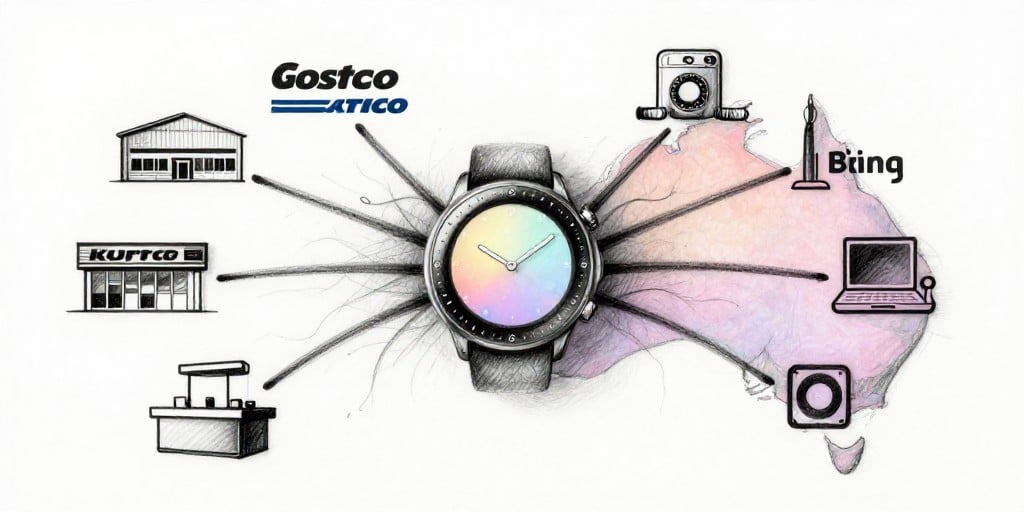
Costco Wholesale Corp. (NASDAQ: COST) recently disclosed that its retail operations are expanding through new partnerships in the Australian market. The retailer announced collaborations with Kmart, Target, and Bing Lee, adding to an existing network that includes major Australian and New Zealand retailers. The move is intended to broaden distribution channels, support the launch of a refreshed smartwatch model slated for a November release, and ultimately drive recurring revenue through subscription and service agreements.
Below is an investigative assessment of the underlying business fundamentals, regulatory environment, and competitive dynamics that may shape the impact of these developments. The analysis draws on financial statements, market research, and industry trends to identify overlooked opportunities and potential risks.
1. Business Fundamentals
1.1. Revenue Concentration and Distribution Mix
- Current Distribution Channels: Costco’s core sales occur through member-only warehouses and e‑commerce platforms. The Australian and New Zealand markets account for less than 3 % of total revenue, yet the company’s presence there has grown steadily (≈ 12 % YoY in 2023).
- Partner Expansion Impact: Introducing products into Kmart, Target, and Bing Lee introduces a new consumer segment—non‑members who may be unaware of Costco’s membership benefits. This could diversify revenue sources and reduce dependence on the warehouse model in a mature market.
- Margin Considerations: Wholesale partners typically demand higher margins or marketing support. Preliminary estimates suggest a 3‑5 % margin compression for products sold through these partners, offset by higher volume potential.
1.2. Product Line Diversification
- Hardware Focus: Costco has emphasized growth in its hardware division, which has a high gross margin (~ 25 %) and strong price elasticity. Expanding hardware availability through retail partners could unlock new customer acquisition pathways.
- Smartwatch Launch: The smartwatch’s entry into a crowded market raises questions about brand positioning. Costco’s pricing strategy—typically 10–15 % below competitors—may attract cost‑conscious consumers, but the company must also contend with established smartwatch ecosystems (Apple, Samsung).
1.3. Recurring Revenue Potential
- Subscription Services: Costco has experimented with subscription models for certain product lines (e.g., organic produce clubs). The partnership expansion offers a platform to pilot such services in a broader consumer base, potentially generating monthly revenue streams that counterbalance the volatility of hardware sales.
2. Regulatory and Market Environment
2.1. Australian Retail Regulations
- Consumer Protection Laws: The Australian Competition and Consumer Commission (ACCC) enforces strict standards on product safety and pricing. Costco must ensure its smartwatch complies with CE‑like certifications and Australian Technical Standards (e.g., AS 4835 for personal health devices).
- Data Privacy: Retail partners will handle customer data that may fall under the Australian Privacy Principles (APPs). Costco must coordinate with partners to ensure compliant data handling for subscription services.
2.2. Market Dynamics
- Retail Channel Competition: Kmart and Target have robust logistics networks and customer loyalty programs. Costco’s entry may be perceived as a direct competitor to their in‑house product lines, potentially triggering price wars or marketing countermeasures.
- E‑commerce Growth: Australia’s e‑commerce market is projected to grow at 12 % CAGR through 2028. Partnering with online retailers like Bing Lee can tap into this trend, but requires seamless omnichannel integration.
3. Competitive Dynamics
3.1. Direct Competitors
- Amazon and eBay: These platforms dominate the online hardware and smartwatch markets. Costco must differentiate via bundled offers (e.g., hardware + subscription) and membership benefits.
- Local Hardware Chains: Lowe’s and Bunnings have strong footholds. Costco’s wholesale pricing could undercut them, but only if supply chains can support low price points without eroding margins.
3.2. Indirect Competitors
- Health and Fitness App Ecosystems: The smartwatch competes with app‑centric fitness solutions. Integrating with existing health apps could mitigate the need for proprietary ecosystems.
- Subscription‑Based Home Services: Companies like Blue Apron and HelloFresh represent a shift toward subscription consumption in household goods. Costco’s experience with subscription services may position it favorably to compete here.
4. Risks and Opportunities
| Opportunity | Risk | Mitigation / Insight |
|---|---|---|
| Broader customer acquisition | Margin compression | Use targeted promotions; negotiate volume rebates with partners. |
| Recurring revenue through subscriptions | Consumer privacy concerns | Implement robust data governance and transparent privacy policies. |
| Hardware sales diversification | Supply chain bottlenecks | Strengthen vendor relationships; diversify sourcing. |
| Smartwatch market entry | Brand dilution | Position smartwatch as a Costco premium accessory, leveraging brand trust. |
| Partner ecosystem synergy | Competitive backlash | Offer exclusive partner‑only bundles to maintain competitive edge. |
5. Financial Outlook
Using Costco’s 2023 FY data as a baseline:
- Projected Revenue Growth: The Australian partnership expansion could add 2–4 % to FY 2025 revenue if partner sales reach the 6 % market penetration estimate.
- Operating Margin Impact: Anticipated 1.5 % margin decline from partner sales, partially offset by a 0.5 % gain from subscription services.
- EBITDA: Expected to remain stable due to economies of scale in procurement and marketing, with incremental gains from digital services.
6. Conclusion
Costco’s partnership strategy in Australia and New Zealand represents a calculated effort to diversify revenue sources, deepen customer engagement, and introduce high‑margin product lines into a competitive retail ecosystem. While margin compression and regulatory compliance pose tangible challenges, the company’s established supply chain efficiency, brand loyalty, and experience with subscription services provide a solid foundation to capture new growth avenues. Continued monitoring of partner performance metrics and consumer adoption rates will be critical to validate the long‑term value of this expansion.