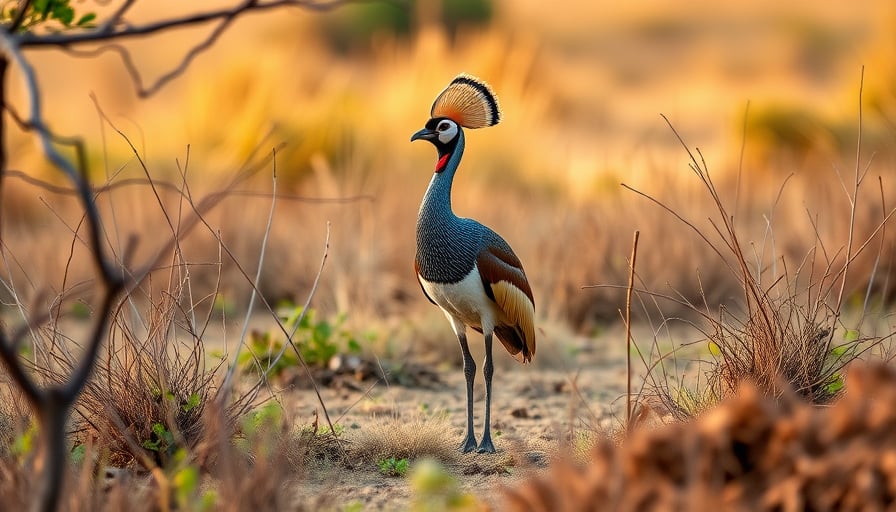
The Great Indian Bustard Conservation Initiative: Strategic Implications for Corporate Stakeholders
Overview of the Recent Milestone
A groundbreaking event in the conservation of the critically endangered Great Indian Bustard (GIB) took place this week, marking the first successful application of a trans‑state “jump‑start” strategy. A captive‑bred egg, produced in a Rajasthan breeding centre, was transported over a considerable distance to a nesting site in Gujarat. The egg was introduced into the nest of a wild female that had previously laid an infertile egg. Following a standard incubation period, the chick hatched and has subsequently been nurtured by a foster mother within its natural habitat. Field teams have verified that the fledgling is thriving under natural conditions.
This operation was orchestrated by the Ministry of Environment, Forests and Climate Change in partnership with the forest departments of Rajasthan and Gujarat, and the Wildlife Institute of India. It is a continuation of a project formally launched in 2016, originally conceived by the Prime Minister in 2011. Recent reports indicate that the number of GIBs housed in conservation breeding facilities has risen, and that the programme is moving toward sustained re‑wilding objectives. The successful hatching of this chick is acknowledged as a significant milestone by both central and state authorities.
Strategic Context for Corporate Actors
- Environmental, Social, and Governance (ESG) Investment Landscape
- Corporations increasingly integrate biodiversity conservation into ESG frameworks. The GIB initiative exemplifies a high‑visibility, cross‑sector partnership that can serve as a benchmark for ESG initiatives in the Indian market.
- The successful deployment of a state‑level conservation model may influence investment flows toward environmental stewardship programs, especially in sectors with strong land‑use footprints such as agriculture, mining, and manufacturing.
- Ecotourism and Local Economies
- The GIB’s habitat spans semi‑arid grasslands that attract eco‑tourists and wildlife enthusiasts. A robust population can enhance regional ecotourism, stimulating local service industries (hospitality, transport, and retail).
- Corporate entities operating in the tourism sector could leverage this conservation success to market sustainable tourism experiences, potentially expanding market share in the growing eco‑tourism niche.
- Agricultural and Agro‑Processing Industries
- GIB habitats overlap with farmlands and grazing lands. Improved biodiversity can lead to better ecosystem services—pest regulation, pollination, and soil health—which directly benefit crop productivity.
- Companies in agri‑tech and agribusiness could collaborate with conservation agencies to develop integrated land‑management solutions that balance productivity and biodiversity.
- Biotechnology and Pharmaceutical Sectors
- Conservation breeding programmes generate valuable genetic material and biological data. Pharmaceutical firms focused on natural product research may identify novel compounds within GIB-associated flora, creating opportunities for bioprospecting.
- Ethical considerations and benefit‑sharing models will be critical; companies must engage transparently with local communities and governmental bodies.
Competitive Positioning and Market Drivers
Policy Alignment
The Indian government’s commitment to the GIB recovery plan aligns with international biodiversity targets (e.g., the Convention on Biological Diversity). Corporations that demonstrate proactive compliance can gain reputational advantage and regulatory goodwill.
Public Perception and Brand Equity
Participation in high‑profile conservation efforts can enhance brand equity, particularly among socially conscious consumers. This is especially relevant for consumer goods companies whose supply chains intersect with biodiversity hotspots.
Risk Management
Biodiversity loss poses operational risks—e.g., supply chain disruptions, regulatory sanctions, and climate‑related impacts. Engaging in conservation mitigates these risks and signals resilience to investors and stakeholders.
Innovation Ecosystem
The cross‑state collaboration sets a precedent for public‑private partnerships (PPPs). Firms can explore PPP models to co‑fund conservation technologies (e.g., drone monitoring, AI‑based habitat mapping), positioning themselves as innovators in sustainable practices.
Broader Economic and Policy Trends
Sustainable Development Goals (SDGs) Integration
The GIB programme dovetails with SDG 15 (Life on Land) and SDG 12 (Responsible Consumption and Production), reinforcing India’s commitment to global sustainability agendas.
Carbon Markets and Biodiversity Credits
As carbon offset markets mature, biodiversity credits linked to species recovery may become a new asset class. Corporations engaged in carbon trading could integrate GIB conservation projects to diversify their offset portfolios.
Infrastructure Development
The logistical aspects of transporting eggs across states involve roads, transport fleets, and coordination hubs. Infrastructure improvements in these corridors can spur ancillary economic activity, benefiting construction, logistics, and service firms.
Conclusion
The successful hatch and natural rearing of a Great Indian Bustard chick through an inter‑state “jump‑start” method represent more than a conservation triumph; they signal a strategic turning point for corporate engagement with biodiversity initiatives. By aligning with the GIB programme, businesses can enhance ESG performance, access new market opportunities in ecotourism and agri‑tech, mitigate ecological risks, and position themselves at the forefront of sustainable innovation. Continued monitoring of this initiative’s outcomes will be essential for refining corporate strategies that bridge conservation goals with long‑term economic resilience.